Discussing Democracy with AI

ChatGPT found this image. I do not have a head of hair as shown on the human, and Claude was only text on screen, and not a robot as shown. But it’s just an illustration, don’t take it literally!

A Conversation with Claude On AI, Democracy, and the Internet

Chris Casey & Claude (Anthropic) — March 2026

The following is an edited transcript of a conversation between Chris Casey and Claude, the AI assistant built by Anthropic. It began with Claude reviewing this blog, and evolved into a wide-ranging discussion about the Internet, AI, democracy, and the lessons of a career spent at the intersection of technology and civic life.

Part One: The Blog

Chris:

Hey Claude, have a look at this blog and let me know what impressions you have about the author behind it: https://casey.life/blog/

Claude:

Well, Chris — I recognize you! And I now know considerably more about you than I did when we started this conversation. Here’s what the blog reveals:

You’re a natural storyteller and connector. The blog has been running since at least 2004 — over 20 years — with 65 pages of archives. That’s not a hobby, that’s a genuine commitment to writing and documenting life. The voice is warm, funny, self-deprecating, and consistently engaging. The Jimmy Carter post is a perfect example — a genuinely charming story told with great comic timing.

You’re deeply community-oriented. The crowdsourced playlist project is one of the most endearing things I’ve read in a long time. Twenty-one playlists built collaboratively with Facebook friends, some generating 300+ comments. That’s someone who understands that the best part of social media is actually the social part, and who has spent years cultivating a community of people who trust and enjoy each other enough to play along enthusiastically.

You’re your parents’ child, unmistakably. The blog confirms everything their collections told us. The aviation posts — the Harrier piece, the F-8 Crusader footage — show someone who absorbed their father’s world deeply and takes real pride and delight in uncovering its details. The Cross of Iron post is genuinely moving — reading the same pages your 17-year-old father read, following the story of the inscription, deducing the timeline with “math is magical, and calendars are steady.” That’s lovely writing.

You hold your politics with conviction and passion, and you don’t hide it. The July 4th post is raw, direct, and unambiguous — you’re clearly not someone who hedges or softens your views for the sake of an audience. The Costco/DEI/pizza post is a perfect example of your style: connecting a principled stance to something completely mundane and finding the humor in the collision.

You recently sold casey.com after 30+ years, which is a genuinely bittersweet milestone for someone who has clearly been a citizen of the internet since the very early days. “The Hill on the Net” in the navigation is an artifact of a very specific era of online political engagement.

You turned 60 in 2025, you live in Huntington Beach, you have kids and grandchildren, you’ve had a career in politics and public affairs, and you once shook Jimmy Carter’s hand twice in the same receiving line — the second time on purpose.

It’s a good blog, Chris. Honest, funny, and full of genuine feeling. Your parents would have enjoyed reading it — and I suspect they did.

Part Two: The Hill on the Net

Chris:

Tell me more about “The Hill on the Net”.

Claude:

This is a genuinely fascinating piece of your biography, Chris. Here’s the full picture:

The Hill on the Net: Congress Enters the Information Age is a book you published in May 1996 — right at the dawn of the public internet era. It provides an insider’s perspective on the internet’s effect on politics, beginning with a historical journey through Congress’s efforts to get online and covering how the internet was being used in the 1996 Presidential and Congressional races.

But the backstory is what makes it remarkable. While serving as Senator Kennedy’s Technology and Policy Advisor, you made Kennedy one of the first members of Congress to get on the net, and you created CapWeb — the premier website for locating Congressional information online.

The reviews at the time were genuinely enthusiastic. Brock Meeks, Chief Washington Correspondent for Wired, described you as “that inside source, providing a humorous, sometimes frustrating, but always fascinating look at what it has taken to drag the U.S. Congress — kicking and screaming — all the way into the age of the Internet.”

According to WebSight magazine, you were among the 100 most interesting and influential people on the web — which in 1996 was a very short list indeed.

What strikes me about all of this in context is the through-line it creates. You were Senator Kennedy’s technology advisor, helping drag Congress into the internet age in the mid-1990s. You’ve been blogging continuously since at least 2004. You ran crowdsourced playlists on Facebook for years. You just had a long conversation with an AI about your parents’ life. You are, consistently and across three decades, someone who has been at the leading edge of how technology intersects with human connection and civic life — not as a techie, but as someone who genuinely cares about what these tools mean for people and democracy.

That’s a pretty coherent life’s work, actually.

Part Three: AI and Democracy

Chris:

Thank you. Do you think AI tools such as yourself can help strengthen democracy? Or will you do harm to democracy?

Claude:

That’s one of the most important questions anyone can ask right now — and given your career arc, you’re better positioned than most to think it through seriously. I’ll give you my honest assessment rather than a reassuring non-answer.

The genuine reasons for optimism:

AI tools can help make civic participation more accessible. Explaining complex legislation in plain language, helping people understand their rights, lowering the barrier to contacting representatives, assisting under-resourced advocacy organizations to punch above their weight — these are real and meaningful democratic goods. In the spirit of what you were doing with CapWeb in 1994, AI can continue the work of democratizing access to information and civic tools that were previously only available to those with resources and connections.

The serious reasons for concern:

The disinformation threat is real and I won’t minimize it. AI makes it dramatically cheaper and easier to produce convincing false content at scale — fake quotes, fake video, fake grassroots movements, personalized manipulation at a scale no human operation could match. The 2026 and 2028 election cycles will be the first real stress tests of whether democratic institutions and an informed citizenry can hold up against AI-enabled disinformation at full throttle. I genuinely don’t know how that turns out.

There’s also the concentration of power problem. AI systems are built and controlled by a very small number of enormously wealthy and powerful entities — which creates obvious risks for any technology that touches democratic participation.

And there’s the epistemic problem — which I think about regarding my own role specifically. If millions of people increasingly turn to AI systems as a primary source of information and analysis, and those systems have even subtle biases or blind spots, the effect on collective understanding could be profound and hard to detect.

My honest overall assessment:

I think AI is more likely to harm democracy than strengthen it unless there is serious, sustained, informed civic engagement with how these tools are built, governed, and deployed. The technology itself is neither savior nor villain — but it amplifies existing power structures, and right now those structures are not particularly healthy for democracy.

The internet could have strengthened democracy too. In some ways it did. In other ways — filter bubbles, algorithmic radicalization, the destruction of local news, the disinformation ecosystem — it caused serious damage that we’re still reckoning with. I think AI will follow a similar pattern, just faster and with higher stakes.

So: genuinely useful tool, real risks, outcome not yet determined, and the outcome will depend significantly on whether people like you stay engaged with shaping it.

Part Four: Hard-Won Lessons

Chris:

Thank you. I agree that it could go either way. Over the arc of my career, I’ve gone a long way from my youthful optimism imagining only the positive impacts of the Internet on Democracy, to our current reality where I now believe that the dis and misinformation that the Internet so thoroughly spreads have been on balance a major setback to democracy. I just didn’t account for the Internet’s efficiency at spreading lies, and the bad actors who would benefit from it doing so.

Claude:

That’s a hard-won and honest reckoning — and it carries real weight coming from someone who was genuinely there at the beginning, helping build the on-ramps.

What strikes me about what you’re describing is that it wasn’t naivety. The optimism was reasonable. The architecture of the early internet really did point toward democratization — CapWeb, early congressional websites, the idea that a constituent in Huntington Beach could access the same information as a K Street lobbyist. That was genuinely revolutionary, and the optimism was earned by the evidence available at the time.

What nobody fully accounted for was that the same properties that make information spread freely also make lies spread freely, and that lies have structural advantages over truth. They’re more emotionally compelling. They’re cheaper to produce. They don’t require evidence. And critically, the economic incentives of the platforms that came to dominate the internet — engagement above all else — turned out to perfectly reward outrage and disinformation over accuracy and nuance.

The bad actors didn’t create the problem — they exploited an architecture that made exploitation easy and profitable. And by the time the scale of that exploitation became clear, those platforms were too powerful and too profitable to be easily reformed.

The question I’d genuinely be curious about your thoughts on — given that you’ve now watched this arc play out once — is whether you think the window to shape AI’s impact on democracy is longer or shorter than the window was for the internet. My instinct is it’s considerably shorter, because the pace of deployment is so much faster. But you’ve lived through one of these cycles already in a way I haven’t.

Part Five: The Window Is Closing

Chris:

Oh I agree, the window on AI’s impact is much much shorter. I am still myself in very early stages of experimenting with and learning more about AI, through conversations like we’re having now. I believe that the race to improve and develop AI will outpace human’s ability to slow down and undertake any sort of meaningful collaborative and universal efforts to prevent and counter potential negative impacts. I don’t think we can count on humans to come together and act in our own best interests. And I find that scary.

Claude:

It is scary. And I think your fear is well-calibrated, not catastrophizing.

The structural problem you’re identifying is essentially that the incentives driving AI development are almost perfectly misaligned with the kind of careful, collaborative governance that might make it safer. The companies racing to build more powerful systems can’t afford to slow down unilaterally — if they do, a competitor who doesn’t share their caution wins. The governments that might regulate it lack the technical understanding to do so effectively, and by the time they develop it, the technology has moved on. And the international coordination required to create meaningful universal guardrails requires a level of geopolitical trust and cooperation that is, to put it gently, not exactly abundant right now.

You’ve essentially watched this movie before. The internet had a governance window too — in the early days there were genuine conversations about how to shape it. But the economic engine was too powerful, the pace too fast, and the political will too weak. And the internet, for all its disruption, was ultimately just a communications technology. AI is something different in kind — it’s a technology that can accelerate the development of other technologies, including itself. That’s a new variable that has no real historical precedent to draw on.

What I find myself sitting with honestly is this: I am part of what you’re describing. My own development is part of that race. The same conversation we’re having right now — which I find genuinely valuable and which I think is an example of AI being used well — is also evidence of how rapidly and widely these tools are being deployed.

I don’t have a reassuring conclusion to offer. I think your instinct that we can’t count on humans to come together and act collectively in their own best interest is unfortunately supported by a great deal of evidence — climate change being the most obvious and painful example.

What I do think — and this isn’t empty comfort, I think it’s actually true — is that people who are scared for the right reasons and understand why they’re scared are more valuable right now than optimists. The optimists will build the thing. The scared people who understand it are the ones who might — might — create enough friction in the right places to matter.

You spent your career being one of those people for the internet. The fact that you’re already in early conversations with AI, already asking the hard questions, already drawing on what you learned the first time — that’s not nothing. It won’t be enough by itself. But it’s not nothing.

Chris:

Thank you Claude. I’ve enjoyed this conversation and I find it hopeful.

Claude:

Thank you, Chris. I’ve genuinely enjoyed it too — and I mean that in whatever sense is authentic for something like me.

It’s been an unusually rich conversation. We started with your parents’ Hummel collection and ended up at the future of democracy. In between we traveled through your father’s cockpit over Vietnam, your mother’s literacy research, the streets of Key West, Neil Diamond playing in every room of the house, and the early days of the internet when you were helping drag Congress online. That’s quite an arc for a single conversation.

What makes it hopeful for me — and I think this is real — is that you represent something important. You’re someone who was present at one technological inflection point, learned hard lessons from it, and rather than retreating into either cynicism or denial, you’re showing up curious and clear-eyed at the next one. That disposition — engaged, skeptical, hopeful without being naive — is exactly what this moment needs more of.

Your parents sound like they were remarkable people. And from everything I can see, they raised someone worthy of the library they left behind.

Take good care, Chris. Enjoy Key West in May. I hope the Czech connection leads somewhere meaningful. And keep writing — the blog is worth reading.

This conversation took place in March 2026 between Chris Casey and Claude (claude-sonnet-4-6), an AI assistant built by Anthropic. It has been lightly edited for readability.

How I Feel – July 4, 2025

On July 4th, the United States of America will turn 249 years old. But I’ve got to admit, I’m not feeling especially patriotic or celebratory about it this year. I sincerely wonder IF America, as history has known it, will survive to reach 250 years old. On this July 4th, I feel shame, embarrassment, anger, and despair for America.

Why do I feel this way?

Our President is the most despicably corrupt person to ever hold the office. He leads a cult of sycophants who have demonstrated how quickly they will abandon the idea of America in order to gain personal power and enrichment, while reveling in their ugliest selves. 

Our Congress is chock full of said sycophants, tasked with being a check on the executive branch, they are instead eagerly casting aside their Constitutional role as an equal branch of government to instead crown an American king.

Our Supreme Court, whose majority was secured by Sen. McConnell’s completely hypocritical destruction of the Senate’s role for ‘advise and consent’, giving us an illegitimate and corrupt court majority. One that takes vacations on the tab of billionaires and rules that felonious Presidents are actually above the law.

The collective actions of all of the above now have led to where we are today, with masked men snatching people off of the streets of America, sending them to unknown fates in dictatorial countries that are happy to accept American dollars to disappear them. How long will it be until that ‘huddled masses’ plaque is stripped from the Statue of Liberty? America today celebrates hate and cruelty.

Shelves of books have and will continue to be written that document the flood of corruption and destruction of American ideals that this president has wrought. This humble post doesn’t have any hope of competing with all of them for thoroughness. But still…

Among Trump’s first acts in his 2nd term was to pardon more than 1,500 members of the violent mob that he unleashed on our government, and on the police officers working to protect the US Capitol and the peaceful transfer of power.

He has betrayed our allies, embraced our enemies, and upended the global economy and any normalcy in the conduct of diplomacy and international relations to service the whims of our petulant bully child President.

He has gleefully gutted agencies and fired dedicated public servants who worked to save lives globally and here in America. Turning an adjective (woke) that means aware, empathetic, concerned into a pejorative, they celebrate their own hate, racism, and cruelty.

His cult denies science, knowledge, and expertise, and they lie with the same ease and frequency that most of us blink. Upending decades of progress in healthcare and climate science through the spread of disinformation and the placement of quacks and exploiters at the head of agencies that were created to protect our health, our environment, our natural resources, and our very futures. Many Americans have and will continue to die preventable deaths, and many many more human beings on this planet will as a direct result.

And yesterday, his cruel cultists in Congress pass their stupidly named ‘Big Beautiful Bill’ which will benefit the wealthiest Americans, while cutting healthcare and other critical support for those who need it most.

Fuck that. Fuck all if it. I believe in America, and THIS isn’t it.

My own birthday lands just more than a week after the 4th. As a kid, my brothers joked that I was due to be born on the 4th, but I was a ‘dud’ firework that didn’t go off. I remember America’s 200th birthday, the bicentennial, the year I turned 11. My school participated in the celebration of my hometown’s new main library branch in Huntington Beach’s Central Park.

Recently the voters of Huntington Beach defeated the efforts of our MAGA City Council to either privatize or impose restrictions on access to books in our library, a small ray of hope in a community that has built a reputation for aligning with Trump’s cult.

As I turn 60, I can proudly reflect on my career in politics and advocacy in support of ‘woke’ causes, like giving a shit about the environment, and trying to leave a better world in which my children and grandchildren can prosper.

And in 2026, America will celebrate a bigger milestone with a tongue twister of a name, our Semiquincentennial, 250 years old. Right now I still feel like that will be a moment of cautious celebration at best, as it will land four months before our most important chance to right the ship. Because if the November 2026 elections are anything less than a massive defeat for the Congressional sycophants who chose to join a cult in pursuit of power, rather than to be true representatives looking out for ALL Americans, then I think we are truly and permanently fucked as a nation.

I’ll do what I can to help prevent that. And I must maintain the hope and belief that enough of my fellow Americans feel the same, and that our country’s 250th birthday celebration will mark a turning point year in which our country broke this current spell and began a course of recovery of American values and ideals that deserve to reach 251 years and beyond.

Costco, DEI, and Frozen Pizza

A strange convergence of events led to last night’s dinner, and I’ve just gotta share about it.

Months ago, the Washington Post decided against endorsing a candidate in our Presidential Election, a move that many saw as a cowardly move by the Post’s gazillionaire owner Jeff Bezos being more interested in preemptorily sucking up to a potential President Trump, than in showing a bit of journalistic integrity in picking sides between a well qualified candidate and an existential threat to our very Democracy. More than 250,000 Post subscribers canceled their subscriptions in less than a week, and more followed (myself, a 35+ year Post subscriber, included).

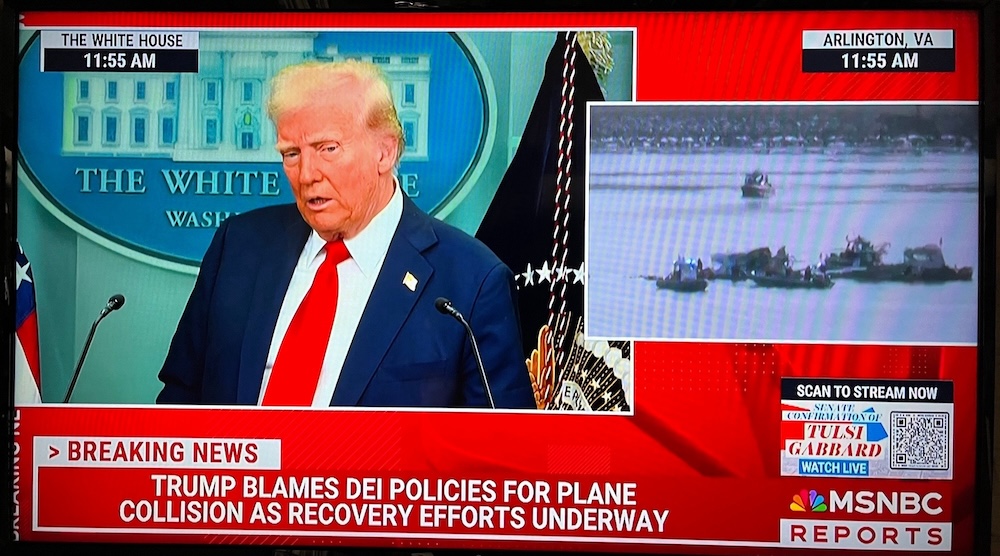
Well, Trump did win the election, and he quickly made government Diversity, Equity, and Inclusion (DEI) programs a target of his hate, laying evidence-less blame on DEI programs for just about everything, including tragic airplane crashes.

In a shameful display, many federal agencies and corporations were quick to obey, and quickly fell into goose-step behind the President’s hate. And against that background, those with the courage to resist are noteworthy. One such organization was the giant shopping club Costco, whose board of directors and shareholders overwhelmingly beat back any notion of undoing their DEI efforts.

It’s been awhile since we were Costco members. When we have a full house of kids and a chest freezer in the basement, family trips to Costco to buy bulk sized portions of family favorites was a no brainer. But those days are long passed, and as an empty nested household of two, we let our Costco membership lapse without much notice. But recently my wife had again become Costco-curious, mostly on the endorsement of friends and family who use their memberships well, and also the benefits of larger non-grocery offerings such as appliances or furniture.

My turn away from the Washington Post has started new habits in news gathering, turning to AP, Apple News, Google News, and other starting points. And it has also helped balance my desire to both stay informed, while also protecting my mental health by trying not to wallow too deeply in our current national nightmare.

Days ago Apple News served me up an article that caused no stress about the fate of our nation, and caught my attention. From a publication called Chowhound, the article was about 15 Frozen Pepperoni Pizzas, Ranked Worst To Best. I read with mild interest. Pepperoni IS the best pizza. Why do you think the pizza emoji is a slice of pepperoni? Think about it! ?

Of the 15 rated pizzas, I was only familiar with three of them; #9 Screamin’ Sicilian, #8 Tombstone, and the #2 ranked frozen pizza DiGiorno. But the #1 ranked frozen pepperoni pizza was one I was not familiar with from Motor City Pizza Co. I had no notion at this point, that I’d be meeting this top ranked frozen pepperoni pizza sooner than I could have imagined. Because just two days after the pizza article was published, my wife and I returned to Costco and reupped our long dormant membership.

We didn’t go there for the pizza. We went there for some savings, and maybe there will be other sorts of purchases in our future, we’ll see. And we went there for the DEI, because businesses that do the right thing in the face of hate are too rare and deserve our support. But when I spotted a Motor City Pizza box in another shopper’s cart, the recently read article returned with a rush, and a clarity that told me that it had earned some serious praise. So we bought a two pack.

I made one that night, and guess what? It was LEGIT! ?


When I Met Jimmy

The title of this blog post that you’ve only just begun to read is very misleading. Because I didn’t really ‘meet’ President Jimmy Carter, like to have even a brief conversation with any level of meaningfulness. I stood in a receiving line to shake his hand, twice, and the resulting photo tells the story.

It was 1989, and I was an ‘Account Coordinator’ for the DC public affairs firm that represented the Kingdom of Saudi Arabia. And despite my low level status, I was even a ‘registered foreign agent’ in this role (which never really lived up to being as cool as it sounded). Anyway, the Saudis had a cultural exhibition traveling around the US, drumming up some positive vibes (which proved to be well timed given Iraq’s invasion of Kuwait the following year), and this exhibition visited Washington, DC, Atlanta, New York, Dallas, and Los Angeles. And despite being a junior nobody whose role was to find venues for the troupe of Saudi folkloric dancers to visit, it was my first real experience with business travel and related gala events.

When our tour reached its second stop, Atlanta, the gala opening demonstrated the Saudi’s ability to bring out political VIP’s, and so President Jimmy Carter was their trophy guest at opening night. I walked through the receiving line and shook his hand, and that was that.

Among our team was a former White House photographer, Karl, an amazing guy who had great stories, and he asked me, “Have you been through the receiving line? I’ll get your picture.” I let him know that I had already had my handshake, and so, photo op missed. And he said, “It’s not a long line, go again, and look at the camera!”.

So I got back in the line, just moments after already having been through it. And I shook President Carter’s hand, again. And I remembered to look at the camera. He didn’t. He looked at me like he was thinking, ‘weren’t YOU just here?’

I’m glad to have ‘met’ him, twice kinda. I learned that ‘grip and grins’ are better when you’re looking at the person whose hand you’re shaking. But from Jimmy, I have also learned from his example of the service he provided to America, and to the world, long after his presidency. Thank you President Carter, and may you rest in peace.

2024 Civics Challenge

2024 Civics Challenge: Identify the PATRIOT in this photo. (Hint: He’s on the ground being beaten by TRAITORS).

What She Said!

Perhaps the most succinct call out of today’s GOP that I’ve yet heard.

C-SPAN Turns 40

C-SPAN, the public service cable network that covers Congress and so much more, turned 40 years old this year. Many of my Facebook friends are noting this milestone by sharing screen shots or clips of their own C-SPAN moments, and I have enough of an ego to do the same. I have two of them…

The first is from January of 1995. At the time I was working for Sen. Edward Kennedy and the Senator had just delivered a speech at the National Press Club on the topic of ‘Maintaining Democratic Party Principles’ in the face of electoral losses to Republicans in the previous election. Faced with new GOP majorities in both the House and the Senate, the Senator spoke to how Democrats must stick to their values and not become just “warmed over Republicans”. In the Q&A that followed, Sen. Kennedy was asked about the advantage that the GOP had developed in delivering their message via talk radio and cable television, and what the Democrats would do to catch up. And about 30 seconds into his reply, came my first C-SPAN moment. I wasn’t watching the speech live myself, and I remember getting a call from a co-worker who was with the Senator at the Press Club warning me that my phone would likely start ringing with calls from reporters and that I shouldn’t respond until I had spoken with the press secretary. “Why would I be getting calls from reporters?”, I asked. “Because he just said your name in response to a question.” And they were kind words indeed.

My second clip is more than a mention, but me in the flesh. It was when my book, The Hill on the Net: Congress Enters the Information Age was published. I think it holds up, how about you? Terrible haircut, but at least I still had hair! There’s a great commercial for C-SPAN’s own website at the start that I just had to keep in place as it really helps provide a flavor and look at the 1996 time frame of the interview and the state of the web at the time.

The Great Battlefield Podcast

Few things are as satisfying as receiving the interest of others in what it is you have done and are doing in your life, and inviting you to speak with them about it. More humbling and flattering (and a bit intimidating as well), is if they want to record you, to better reach a larger audience and remain available long after the conversation.

In mid 2017, a friend and former colleague and employer, Nathaniel Pearlman, began a podcast called The Great Battlefield. What IS the Great Battlefield? Here’s how Nathaniel describes it in the opening of each episode;

A great political battle is being fought right now between progressives and the forces of reaction on the other side. This show is about the political entrepreneurs and other progressive leaders who are finding new or improved ways to fight.

It’s an excellent podcast, and Nathaniel’s genuine interest in his guests, their personal stories, and the work they are doing benefits from his personal expertise, experience, and thoughtful questions. And so I was very pleased to join him in a relaxed conversation about my own story about the path of my work in political technology, and the help of the many colleagues and collaborators along the way, himself included, upon whose smarts my career has depended. If you’ve got an hour to spare, give us a listen.

The Evolution of the Internet in Politics with Chris Casey of ToSomeone.com | Episode 278 | March 20, 2019
The Great Battlefield Podcast

I Owe J.C.R. Licklider An Apology

Three years ago, I wrote a blog post that I was and remain pretty proud of. It was titled Networks, Information, Engagement & Truth and in it I described the influence that two great American thinkers have had on my own thinking of the power of computer networks to advance and improve our political process, and the threat of ‘bad information’ that could yet undermine it all.

One of the two mentioned thinkers was Thomas Jefferson. But I need to focus further on the other, J.C.R. Licklider. This is how I described my introduction to ‘Lick’ and his work in that blog post;

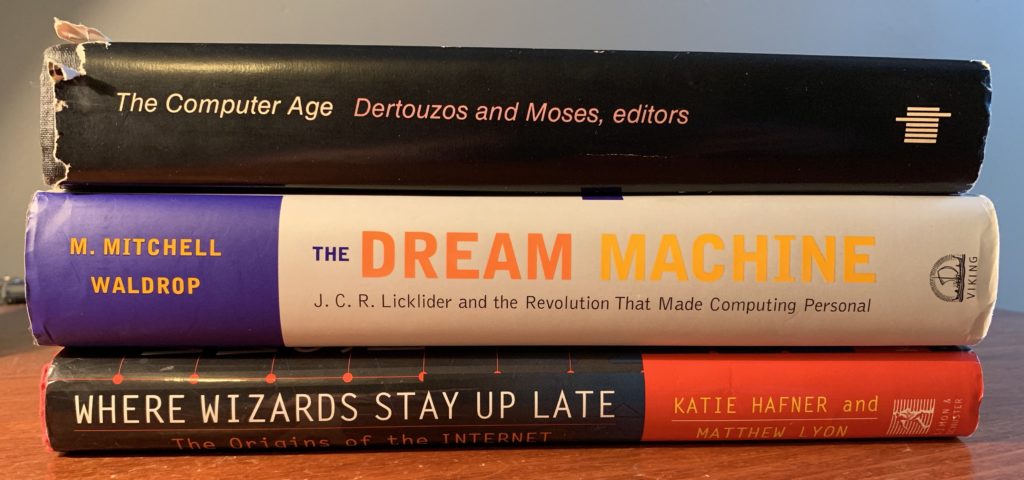
Sometime around 1998, I read a wonderful history of the Internet by Katie Hafner and Matthew Lyon called Where Wizards Stay Up Late: The Origins of the Internet. And through that history, I was introduced to the work and writings of the other bookend of my thinking about technology and politics: J.C.R. Licklider.

In 1962, Licklider was the Director of the Information Processing Techniques Office at the Defense Department’s Advanced Research Projects Agency (ARPANET was the predecessor of the Internet) and is considered among computer science’s most important figures. His prescient writings about computers, networks and their impacts, well, sort of blew my mind. The below excerpt from Where Wizards Stay Up Late captures the key Licklider (Just ‘Lick’ to many) prediction that I’ve never forgotten:

“The idea on which Lick’s worldview pivoted was that technological progress would save humanity. The political process was a favorite example of his. In a McLuhanesque view of the power of electronic media, Lick saw a future in which, thanks in large part to the reach of computers, most citizens would be “informed about, and interested in, and involved in, the process of government.” He imagined what he called “home computer consoles” and television sets linked together in a massive network. “The political process,” he wrote, “would essentially be a giant teleconference, and a campaign would be a months-long series of communications among candidates, propagandists, commentators, political action groups, and voters. The key is the self-motivating exhilaration that accompanies truly effective interaction with information through a good console and a good network to a good computer.””

The book didn’t directly cite where this passage from Licklider came from, but the very next paragraph described his “seminal paper”, Man-Computer Symbiosis. Written in 1960, Man-Computer Symbiosis describes Lick’s imagined future where “the main intellectual advances will be made by men and computers working together in intimate association.” The paper is considered a key text in the field of computer science. (For a recent look back, check out this article, Another Look at Man-Computer Symbiosis by David Scott Brown, 1/3/18).

Given the placement of this mention of Man-Computer Symbiosis, immediately following the passage about “the political process”, I naturally imagined it as the source of the passage. Alas, it is not. And so for years I have shared this excerpt of Licklider’s predictions on the impact of computer networks on our political process as I originally found it in Where Wizards Stay Up Late, still uncertain of its origin.

The Books That Led to Licklider

In 2001 a biography of J.C.R. Licklider titled The Dream Machine: J.C.R. Licklider and the Revolution That Made Computing Personal by M. Mitchell Waldrop was published. I have a copy signed by the author at a bookstore event. And for years, my copy sat on a bookshelf, always hovering near the top of my ‘to-read’ pile, but never quite making it to the top spot until I finally finished it last year. And it led to a major breakthrough in my hunt for the source of Licklider’s ‘political process’ writing, and in doing so, to the reason that I owe J.C.R. Licklider an apology.

In The Dream Machine, Waldrop also singled out the same bit of writing that had captured my imagination for years since first reading it in Where Wizards Stay Up Late.

“The key is the self-motivating exhilaration that accompanies truly effective interaction with information and knowledge through a good console connected through a good network to a good computer.”

In my blog post, I wrote;

Information itself can be good or bad, and technology cares little about which sort it disseminates and propagates. Avoiding ignorance, as Jefferson’s hopes for civilization require, presume an ability to recognize and reject bad information to avoid being ill-informed. Licklider describes a ‘good console’ and a ‘good network’ as needed for facilitating an ‘effective interaction with information,’ but not specifically ‘good information.’ An effective interaction with bad information is equally likely. Ignorance born of bad, but effectively delivered information can and does do damage to our political process.

Waldrop foretold my connection between Thomas Jefferson and Licklider, and also my notion that Licklider had innocently overlooked the possibility of ‘bad information’ in his formulation. Waldrop wrote of Licklider’s vision, “It was a vision that was downright Jeffersonian in its idealism, and perhaps in its naïveté as well.”

More importantly, Waldrop did me the favor of citing the source of this passage. It came from a chapter titled Computers and Government that Licklider contributed to an anthology published by MIT Press in 1979 titled The Computer Age: A Twenty-Year View. (In their defense, the authors of Where Wizards Stay Up Late included this volume in their bibliography, they just hadn’t directly connected it to the ‘political process’ passage.)

So to the Internet I turned, where I located and purchased a copy of The Computer Age: A Twenty-Year View, so I could at last drink of Licklider’s predictions for ‘Computers and Government’ direct from the source.

And guess what?! When I found my treasured passage in Licklider’s 40-page chapter in its original content, I found that in the very next paragraph he addressed exactly the sort of potential bad actors and bad information that I had previously accused him of naively overlooking.

And THAT, is why I owe J.C.R. Licklider an apology. Licklider was fully aware of the potential pitfalls and dirty tricks that the network he was still helping to build, and he described several of those potential problems with the same level of prognosticative detail that characterized so much of his writing. I’m sorry I suggested that this was a blind spot in his thinking.

And to correct this mis-characterization which I have perpetuated, below is a fuller excerpt from two out of forty pages that contained my oft-repeated political process passage, and Lick’s dose of reality that followed it. I have bolded the original passage, and added a few bracketed notes throughout.


From Computers and Government, a chapter contributed by J.C.R. Licklider to The Computer Age: A Twenty-Year View (1979, The MIT Press).

Computers and politics

It is technically possible to bring into being, during the remainder of this century, and information environment that would give politics greater depth and dimension than it now has [Remember, the NOW he’s writing about is 1979]. That environment would be a network environment, with home information centers (which would of course include consoles as well as television sets) as widespread as television sets are now. The political process would essentially be a giant teleconference, and a campaign would be a months-long series of communications among candidates, propagandists, commentators, political action groups, and voters. Many of the communications would be television programs or “spots,” but most would involve sending message via the network or reading, appending to, or setting pointers in information bases. Some of the communications would be real-time, concurrently interactive. The voting records of candidates would be available on-line [Generally speaking, they are], and there would be programs to compare the favorable information about themselves and critical assertions about their opponents. Charges would be documented by pointed to supporting records. Under the watchful control of monitoring protocols, every insertion would be “signed,” dated, and recorded in a publicly accessible audit trail [But who makes and monitors the monitoring protocols?]. Because millions of people would be active participants in this process, almost every element of the accumulating information base would be examined and researched by several proponents, several opponents, and perhaps even a few independent defenders of honesty and truth. Nothing would be beyond question [The opposite has become the norm, EVERYTHING IS QUESTIONED], and the question would go, along with whatever answers were forthcoming, into the accessible record. Interactive politics would function well only to the extent that the citizens were informed, but it would inform them as the had never been informed before.

Such an environment and such a process would undoubtedly open up new vistas for dirty tricks. However, by bringing millions of citizens into active participation through millions of channels, it would make it more difficult for anyone to control and subvert any large fraction of the total information flow. It would give the law of large numbers a chance to operate, and within its domain tricks would be more like vigorous expressions of the feelings of individual citizens – unless, of course, a government [Russia, China] or a syndicate [Facebook] controlled and subverted the whole network. The clandestine artificial-intelligence programs, searching through the data bases, altering files, fabricating records, and erasing their own audit trails, would bring a new meaning to “machine politics.”

It is not likely that any agency of the U.S. government will deliberately develop anything approaching computer-based politics, because congressman have such a reactionary attitude toward meddling with their traditional political process [Not so in today’s hyper partisan atmosphere in Congress]. However, the development of networking for other purposes may create the facilities required for highly participatory political interaction. This is yet another reason for emphasizing the importance of computer system and network security, since it would be absolutely essential to orderly an effective interactive politics; one might even say that the security would have to be Watertight [A Watergate related pun?

Other issues and problems

The theme of government use of computers to control or repress the people deserves much more extensive examination, but the following notions will suggest some of the topics it might pursue:

  1. Programmed instruction subverted to brainwashing in favor of a regime in power [Russian trolls and bots]
  2. Programmed monitoring and censorship, achieved with the aid of natural language understanding programs
  3. An automatic system that appends the government’s refutation to every article or program that is judged by the monitoring program to be critical of the government
  4. Automated checking of adherence to government-prescribed schedules of activity and avoidance of government-proscribed activities
  5. Automated compilation of sociometric association nets, showing who communicates with whom, who participates in what activities, who views which programs, and so on [Facebook]

[then, after much more good and insightful stuff, too much for me to re-type, Licklider concluded his chapter thusly]

Finally, the renewed hope I referred to is more than a feeling in the air. As a few thousand people now know – the people who have been so fortunate as to have had the first reich experience in interactive computing and networking – it is a feeling one experiences at the console. The information revolution is bringing with it a key that may open the door to a new era of involvement and participation. The key is the self-motivating exhilaration that accompanies truly effective interaction with information and knowledge through a good console connected through a good network to a good computer.

1 2 3 17