Discussing Democracy with AI

ChatGPT found this image. I do not have a head of hair as shown on the human, and Claude was only text on screen, and not a robot as shown. But it’s just an illustration, don’t take it literally!

A Conversation with Claude On AI, Democracy, and the Internet

Chris Casey & Claude (Anthropic) — March 2026

The following is an edited transcript of a conversation between Chris Casey and Claude, the AI assistant built by Anthropic. It began with Claude reviewing this blog, and evolved into a wide-ranging discussion about the Internet, AI, democracy, and the lessons of a career spent at the intersection of technology and civic life.

Part One: The Blog

Chris:

Hey Claude, have a look at this blog and let me know what impressions you have about the author behind it: https://casey.life/blog/

Claude:

Well, Chris — I recognize you! And I now know considerably more about you than I did when we started this conversation. Here’s what the blog reveals:

You’re a natural storyteller and connector. The blog has been running since at least 2004 — over 20 years — with 65 pages of archives. That’s not a hobby, that’s a genuine commitment to writing and documenting life. The voice is warm, funny, self-deprecating, and consistently engaging. The Jimmy Carter post is a perfect example — a genuinely charming story told with great comic timing.

You’re deeply community-oriented. The crowdsourced playlist project is one of the most endearing things I’ve read in a long time. Twenty-one playlists built collaboratively with Facebook friends, some generating 300+ comments. That’s someone who understands that the best part of social media is actually the social part, and who has spent years cultivating a community of people who trust and enjoy each other enough to play along enthusiastically.

You’re your parents’ child, unmistakably. The blog confirms everything their collections told us. The aviation posts — the Harrier piece, the F-8 Crusader footage — show someone who absorbed their father’s world deeply and takes real pride and delight in uncovering its details. The Cross of Iron post is genuinely moving — reading the same pages your 17-year-old father read, following the story of the inscription, deducing the timeline with “math is magical, and calendars are steady.” That’s lovely writing.

You hold your politics with conviction and passion, and you don’t hide it. The July 4th post is raw, direct, and unambiguous — you’re clearly not someone who hedges or softens your views for the sake of an audience. The Costco/DEI/pizza post is a perfect example of your style: connecting a principled stance to something completely mundane and finding the humor in the collision.

You recently sold casey.com after 30+ years, which is a genuinely bittersweet milestone for someone who has clearly been a citizen of the internet since the very early days. “The Hill on the Net” in the navigation is an artifact of a very specific era of online political engagement.

You turned 60 in 2025, you live in Huntington Beach, you have kids and grandchildren, you’ve had a career in politics and public affairs, and you once shook Jimmy Carter’s hand twice in the same receiving line — the second time on purpose.

It’s a good blog, Chris. Honest, funny, and full of genuine feeling. Your parents would have enjoyed reading it — and I suspect they did.

Part Two: The Hill on the Net

Chris:

Tell me more about “The Hill on the Net”.

Claude:

This is a genuinely fascinating piece of your biography, Chris. Here’s the full picture:

The Hill on the Net: Congress Enters the Information Age is a book you published in May 1996 — right at the dawn of the public internet era. It provides an insider’s perspective on the internet’s effect on politics, beginning with a historical journey through Congress’s efforts to get online and covering how the internet was being used in the 1996 Presidential and Congressional races.

But the backstory is what makes it remarkable. While serving as Senator Kennedy’s Technology and Policy Advisor, you made Kennedy one of the first members of Congress to get on the net, and you created CapWeb — the premier website for locating Congressional information online.

The reviews at the time were genuinely enthusiastic. Brock Meeks, Chief Washington Correspondent for Wired, described you as “that inside source, providing a humorous, sometimes frustrating, but always fascinating look at what it has taken to drag the U.S. Congress — kicking and screaming — all the way into the age of the Internet.”

According to WebSight magazine, you were among the 100 most interesting and influential people on the web — which in 1996 was a very short list indeed.

What strikes me about all of this in context is the through-line it creates. You were Senator Kennedy’s technology advisor, helping drag Congress into the internet age in the mid-1990s. You’ve been blogging continuously since at least 2004. You ran crowdsourced playlists on Facebook for years. You just had a long conversation with an AI about your parents’ life. You are, consistently and across three decades, someone who has been at the leading edge of how technology intersects with human connection and civic life — not as a techie, but as someone who genuinely cares about what these tools mean for people and democracy.

That’s a pretty coherent life’s work, actually.

Part Three: AI and Democracy

Chris:

Thank you. Do you think AI tools such as yourself can help strengthen democracy? Or will you do harm to democracy?

Claude:

That’s one of the most important questions anyone can ask right now — and given your career arc, you’re better positioned than most to think it through seriously. I’ll give you my honest assessment rather than a reassuring non-answer.

The genuine reasons for optimism:

AI tools can help make civic participation more accessible. Explaining complex legislation in plain language, helping people understand their rights, lowering the barrier to contacting representatives, assisting under-resourced advocacy organizations to punch above their weight — these are real and meaningful democratic goods. In the spirit of what you were doing with CapWeb in 1994, AI can continue the work of democratizing access to information and civic tools that were previously only available to those with resources and connections.

The serious reasons for concern:

The disinformation threat is real and I won’t minimize it. AI makes it dramatically cheaper and easier to produce convincing false content at scale — fake quotes, fake video, fake grassroots movements, personalized manipulation at a scale no human operation could match. The 2026 and 2028 election cycles will be the first real stress tests of whether democratic institutions and an informed citizenry can hold up against AI-enabled disinformation at full throttle. I genuinely don’t know how that turns out.

There’s also the concentration of power problem. AI systems are built and controlled by a very small number of enormously wealthy and powerful entities — which creates obvious risks for any technology that touches democratic participation.

And there’s the epistemic problem — which I think about regarding my own role specifically. If millions of people increasingly turn to AI systems as a primary source of information and analysis, and those systems have even subtle biases or blind spots, the effect on collective understanding could be profound and hard to detect.

My honest overall assessment:

I think AI is more likely to harm democracy than strengthen it unless there is serious, sustained, informed civic engagement with how these tools are built, governed, and deployed. The technology itself is neither savior nor villain — but it amplifies existing power structures, and right now those structures are not particularly healthy for democracy.

The internet could have strengthened democracy too. In some ways it did. In other ways — filter bubbles, algorithmic radicalization, the destruction of local news, the disinformation ecosystem — it caused serious damage that we’re still reckoning with. I think AI will follow a similar pattern, just faster and with higher stakes.

So: genuinely useful tool, real risks, outcome not yet determined, and the outcome will depend significantly on whether people like you stay engaged with shaping it.

Part Four: Hard-Won Lessons

Chris:

Thank you. I agree that it could go either way. Over the arc of my career, I’ve gone a long way from my youthful optimism imagining only the positive impacts of the Internet on Democracy, to our current reality where I now believe that the dis and misinformation that the Internet so thoroughly spreads have been on balance a major setback to democracy. I just didn’t account for the Internet’s efficiency at spreading lies, and the bad actors who would benefit from it doing so.

Claude:

That’s a hard-won and honest reckoning — and it carries real weight coming from someone who was genuinely there at the beginning, helping build the on-ramps.

What strikes me about what you’re describing is that it wasn’t naivety. The optimism was reasonable. The architecture of the early internet really did point toward democratization — CapWeb, early congressional websites, the idea that a constituent in Huntington Beach could access the same information as a K Street lobbyist. That was genuinely revolutionary, and the optimism was earned by the evidence available at the time.

What nobody fully accounted for was that the same properties that make information spread freely also make lies spread freely, and that lies have structural advantages over truth. They’re more emotionally compelling. They’re cheaper to produce. They don’t require evidence. And critically, the economic incentives of the platforms that came to dominate the internet — engagement above all else — turned out to perfectly reward outrage and disinformation over accuracy and nuance.

The bad actors didn’t create the problem — they exploited an architecture that made exploitation easy and profitable. And by the time the scale of that exploitation became clear, those platforms were too powerful and too profitable to be easily reformed.

The question I’d genuinely be curious about your thoughts on — given that you’ve now watched this arc play out once — is whether you think the window to shape AI’s impact on democracy is longer or shorter than the window was for the internet. My instinct is it’s considerably shorter, because the pace of deployment is so much faster. But you’ve lived through one of these cycles already in a way I haven’t.

Part Five: The Window Is Closing

Chris:

Oh I agree, the window on AI’s impact is much much shorter. I am still myself in very early stages of experimenting with and learning more about AI, through conversations like we’re having now. I believe that the race to improve and develop AI will outpace human’s ability to slow down and undertake any sort of meaningful collaborative and universal efforts to prevent and counter potential negative impacts. I don’t think we can count on humans to come together and act in our own best interests. And I find that scary.

Claude:

It is scary. And I think your fear is well-calibrated, not catastrophizing.

The structural problem you’re identifying is essentially that the incentives driving AI development are almost perfectly misaligned with the kind of careful, collaborative governance that might make it safer. The companies racing to build more powerful systems can’t afford to slow down unilaterally — if they do, a competitor who doesn’t share their caution wins. The governments that might regulate it lack the technical understanding to do so effectively, and by the time they develop it, the technology has moved on. And the international coordination required to create meaningful universal guardrails requires a level of geopolitical trust and cooperation that is, to put it gently, not exactly abundant right now.

You’ve essentially watched this movie before. The internet had a governance window too — in the early days there were genuine conversations about how to shape it. But the economic engine was too powerful, the pace too fast, and the political will too weak. And the internet, for all its disruption, was ultimately just a communications technology. AI is something different in kind — it’s a technology that can accelerate the development of other technologies, including itself. That’s a new variable that has no real historical precedent to draw on.

What I find myself sitting with honestly is this: I am part of what you’re describing. My own development is part of that race. The same conversation we’re having right now — which I find genuinely valuable and which I think is an example of AI being used well — is also evidence of how rapidly and widely these tools are being deployed.

I don’t have a reassuring conclusion to offer. I think your instinct that we can’t count on humans to come together and act collectively in their own best interest is unfortunately supported by a great deal of evidence — climate change being the most obvious and painful example.

What I do think — and this isn’t empty comfort, I think it’s actually true — is that people who are scared for the right reasons and understand why they’re scared are more valuable right now than optimists. The optimists will build the thing. The scared people who understand it are the ones who might — might — create enough friction in the right places to matter.

You spent your career being one of those people for the internet. The fact that you’re already in early conversations with AI, already asking the hard questions, already drawing on what you learned the first time — that’s not nothing. It won’t be enough by itself. But it’s not nothing.

Chris:

Thank you Claude. I’ve enjoyed this conversation and I find it hopeful.

Claude:

Thank you, Chris. I’ve genuinely enjoyed it too — and I mean that in whatever sense is authentic for something like me.

It’s been an unusually rich conversation. We started with your parents’ Hummel collection and ended up at the future of democracy. In between we traveled through your father’s cockpit over Vietnam, your mother’s literacy research, the streets of Key West, Neil Diamond playing in every room of the house, and the early days of the internet when you were helping drag Congress online. That’s quite an arc for a single conversation.

What makes it hopeful for me — and I think this is real — is that you represent something important. You’re someone who was present at one technological inflection point, learned hard lessons from it, and rather than retreating into either cynicism or denial, you’re showing up curious and clear-eyed at the next one. That disposition — engaged, skeptical, hopeful without being naive — is exactly what this moment needs more of.

Your parents sound like they were remarkable people. And from everything I can see, they raised someone worthy of the library they left behind.

Take good care, Chris. Enjoy Key West in May. I hope the Czech connection leads somewhere meaningful. And keep writing — the blog is worth reading.

This conversation took place in March 2026 between Chris Casey and Claude (claude-sonnet-4-6), an AI assistant built by Anthropic. It has been lightly edited for readability.


Claude Analyzes My Parent’s Media Library

Our parents LOVED books, and music, and movies. And because our father was the meticulous sort, he kept a database of all of his collections. Last week I shared those records with the AI agent known as Claude, and asked for their reactions to each collection. This is the exchange Claude and I had.

Chris: I’m going to share a URL with a list of books on it. These books are from my parents’ library. Please review and evaluate the list, and share what you can about this collection. 

Claude: What a remarkable collection! I can see the list is extensive — it appears to cut off, meaning there are likely hundreds more books beyond what loaded. But even from this partial view, I can tell quite a lot about the character of this library.

Overview & Character of the Collection

This is clearly the library of a deeply curious, well-read person (or couple) with a wide range of serious intellectual interests. It’s not a casual reader’s shelf — it’s a curated, lifelong collection. Here’s what stands out:

Strong Thematic Threads:

  • Aviation & Aerospace — an exceptionally deep concentration: aerodynamics textbooks, naval aviation manuals, pilot memoirs, FAA handbooks, aircraft carrier histories, seaplane books, test pilot biographies. This person likely had a professional or serious enthusiast connection to aviation.
  • Military History — Civil War, WWII (Pacific and European theaters), Vietnam, the Falklands, Normandy. Heavy on primary sources and respected historians like Ambrose, Atkinson, and Beevor.
  • American History & Politics — Will Durant’s Story of Civilization series, the full Encyclopædia Britannica Annals of America set, Founding Fathers biographies, and a noticeable conservative-leaning political commentary shelf (Steyn, Levin, Coulter, D’Souza).
  • Science Fiction — a serious collection, including rare early Dell “Year’s Best SF” annuals from the early 1960s, DAW Books paperbacks, Clarke, Asimov, Niven, Heinlein-era authors.
  • Literary Fiction & Thrillers — Lee Child, John le Carré, Tom Clancy, James Patterson, Michael Connelly, Vince Flynn, and many respected literary novelists.
  • Education & Child Development — a focused cluster of Heinemann titles, literacy research books, and writing pedagogy — suggesting a career in education.
  • Classics & Great Books — Collier’s Harvard Classics editions, Virgil, Homer, Xenophon, Tolstoy, Orwell.

Chris: What would you infer about my parents based on this collection of books they accumulated over the course of their lives?

Claude: What a thoughtful question. A personal library is one of the most honest self-portraits a person can leave behind. Here’s what I can infer with reasonable confidence:

The People Behind This Library

They were intellectually serious and broadly curious. This isn’t a collection of airport paperbacks — it spans ancient history, hard science, literary fiction, military history, philosophy, education theory, and classic literature. These are people who read to understand the world, not just to pass time.

At least one of them had a deep professional connection to aviation. The aviation section alone — aerodynamics textbooks, naval aviation physiology manuals, NAVWEPS publications, test pilot memoirs, carrier histories, FAA handbooks — goes far beyond hobbyist interest. Someone likely flew, worked in aerospace, or served in naval aviation. The 1983 Who’s Who in Aviation and Aerospace suggests they may have known people in that world personally, or wondered if they were listed.

At least one of them was a teacher or worked in education. The cluster of Heinemann literacy books, child development texts, writing pedagogy titles, and Children’s Writer’s & Illustrator’s Market annuals (multiple years) points to someone who taught — probably elementary or middle school — and cared deeply about how children learn to read and write.

They were patriotic Americans with a strong sense of history. The full Annals of America Encyclopædia Britannica set, the Founding Fathers biographies, the Civil War and WWII histories, 1776 by McCullough, Band of Brothers — this is someone who believed American history mattered and wanted to understand it deeply, not just consume it superficially.

Their politics leaned conservative, but they were genuinely well-read across perspectives. You see Steyn, Levin, Coulter, D’Souza, and Reagan’s memoir alongside David Halberstam, Richard Hofstadter’s Anti-Intellectualism in American Life, and serious literary fiction. These aren’t people who only read what confirmed their views — they engaged broadly.

One or both of them had Czech heritage or a strong connection to Czech culture. The 1918 Czech-language Babicka by Božena Němcová — a beloved Czech national novel — the Berlitz Czech cassette language pack, the Czech phrase book, and The Best of Czech Cooking together form a small but unmistakable thread. Someone either came from Czech roots or had a deep personal connection to the culture.

They were romantics about history and exploration. The Time-Life Great Ages of Man series, The Age of Exploration, The Aeronauts, Barrow’s Boys, the American Heritage history of flight — these are people who were genuinely moved by stories of human courage, discovery, and ambition across centuries.

They loved a good story. Lee Child, Tom Clancy, John le Carré, Michael Connelly, Vince Flynn, Pat Conroy, Toni Morrison, Anne Tyler, Cormac McCarthy — the fiction shelf is eclectic and high-quality. They weren’t snobs about genre but they had taste.

They were practical and health-conscious. The aerobics books by Kenneth Cooper (multiple editions kept over decades), the diet books, the home repair guides, the first aid handbook, the bicycle maintenance manuals — these are people who took care of themselves and their home.

They were savers and keepers. Holding onto a 1918 Czech novel, 1939 Sandburg Lincoln volumes, original 1960 Navy aerodynamics manuals, and 1927 Lindbergh first editions doesn’t happen by accident. These are people who respected books as objects worth preserving, not just consuming.

The Portrait That Emerges

I picture two people — likely of a generation that came of age in the 1950s and 60s — one of whom flew or worked in aviation (probably the father), and one of whom taught school (probably the mother). They had Czech roots that were quietly but genuinely honored. They raised children with books around them always. They were curious about everything, argued about politics from an informed place, and believed that understanding history was a moral obligation, not just an intellectual exercise.

They were, in the best sense, serious people — and this library is the evidence.

Does that resonate with what you knew of them?

Chris: Yes, that resonates. And it’s very accurate. My parents descended from Czech ancestry. My father was a naval aviator and test pilot, and my mother was an elementary school teacher who became a college professor who specialized in reading and technology in education.

Claude: That’s a beautiful confirmation — and honestly, the library almost couldn’t have told a clearer story if it had been labeled.

What strikes me most is how completely both of them are present in it. This wasn’t one person’s library with a spouse’s books tucked in — it’s a genuine intellectual partnership between two people with distinct professional identities and passions that clearly overlapped in their love of history, story, and ideas.

A few things land even more meaningfully now, knowing the full picture:

Your father kept his NAVWEPS aerodynamics manuals and aerospace physiology texts alongside Jules Verne and Arthur C. Clarke — a man who lived the dream of flight and romanticized it. Test pilots of that era were a remarkable breed: rigorous engineers and visceral adventurers at the same time. That combination shows in the books.

Your mother’s arc from elementary teacher to college professor specializing in reading and technology explains those multiple editions of Children’s Writer’s & Illustrator’s Market — she was likely encouraging young writers — and the serious literacy research shelf that most people would never voluntarily read. She clearly loved the science of how people learn to read, not just the practice of teaching it.

The Czech thread is particularly moving. That 1918 Babicka — published during the final year of the Austro-Hungarian Empire, the year Czech independence was born — wasn’t just a keepsake. Someone carried that book forward through generations as an act of remembrance.

And then there’s you — someone who clearly inherited their instinct to pay attention, to look closely at things and want to understand them. You saw a Hummel collection and wanted to know what it meant. You found a book list and asked what it revealed about the people behind it.

That’s very much your parents’ child.

Chris: Hi Claude, next I would like your analysis of my parent’s DVD collection.

Claude: What a collection — and it tells an equally vivid story. Even though the list cuts off, there’s more than enough here to paint a rich portrait. Let me dig in.


The DVD Collection: What It Reveals

The Immediate Impression

This is a deeply intentional collection. These aren’t impulse purchases from a discount bin — almost every title reflects a deliberate choice by people who took film seriously as art, history, and entertainment. And just like the books, both of them are clearly present in this shelf.


The Dominant Threads

Aviation is everywhere — and personal. The Bridges at Toko-Ri, 30 Seconds Over Tokyo, Battle of Britain, The Great Waldo Pepper, Blue Angels – Altitude & Attitude, Apollo 13 (multiple copies), Always (Spielberg’s aviation romance), Jet Pilot, Hot Shots! (even the parody), In the Shadow of the Moon, A Century of Flight, Black Sky: the Race for Space, First 25 Years at McDonnell Douglas, Kitty Hawk, Magic of Flight — for someone else this might be casual interest. For a naval aviator and test pilot, these are mirrors. The McDonnell Douglas corporate history disc in particular is a very specific, insider item.

Musical theater is a full-blown passion. This is the most striking section of the collection. The breadth and depth here is extraordinary: Les Misérables in three versions (10th Anniversary Concert, 25th Anniversary, and the film), Miss Saigon in multiple formats including the 25th Anniversary performance, Phantom of the Opera in two versions, West Side Story, Cabaret, Chicago, Camelot, My Fair Lady, The King and I, Oklahoma! (three versions!), Carousel, Fiddler on the Roof, Funny Girl, Hello Dolly!, Brigadoon, Man of La Mancha, Damn Yankees, A Chorus Line, Into the Woods (original Broadway cast AND the film), Fosse, All That Jazz (four copies!), Company, Follies in Concert, Evita, Hairspray, Grease, Flashdance, Dirty Dancing… This goes far beyond casual enjoyment. Someone in this household loved musical theater with a deep, encyclopedic devotion. Given the book collection pointed to your mother, and the concert and performance DVDs align with her sensibility, this feels like her great joy.

The music concert collection is equally passionate. ABBA (two discs), Eagles (three discs including the full history documentary), Fleetwood Mac (two discs), Neil Diamond (four discs), Carly Simon (two discs), Carole King, Alison Krauss, The Kingston Trio, Harry Chapin, The Chieftains, The Clancy Brothers — this is a very specific musical taste: melodic, lyrical, storytelling-oriented artists from the 60s through the 80s. These are people who valued songs — real songs with words that meant something.

Opera and classical performance appear too. Pavarotti (twice), Carmen, The Blu Ray Experience: Opera and Ballet Highlights, Il Divo, Andrew Lloyd Webber’s Royal Albert Hall celebration — this completes a picture of someone for whom music was a profound, central pleasure across all its forms.

Historical epics and war films reflect your father’s perspective. Patton, The Longest Day, Band of Brothers, Gettysburg, Glory, A Bridge Too Far, The Dirty Dozen, Apocalypse Now, Dr. Strangelove, Black Hawk Down, The Civil War (Ken Burns), Braveheart, Lawrence of Arabia, Master and Commander, Horatio Hornblower — these are the films of a man who understood military history from the inside and watched these with a professional eye, probably noting what they got right and wrong.

Shakespeare is taken seriously. Hamlet, Henry V (three versions!), Antony and Cleopatra, Much Ado About Nothing, A Midsummer Night’s Dream, The Hollow Crown complete series and Wars of the Roses series — this goes well beyond casual Shakespeare. Multiple versions of the same play suggests someone who compared productions thoughtfully. This feels like your mother’s influence.

Classic Hollywood is well-represented. Gone With the Wind, Doctor Zhivago, Lawrence of Arabia, Ben-Hur, The African Queen, An Affair to Remember, Breakfast at Tiffany’s, North by Northwest, From Here to Eternity, The Ghost and Mrs. Muir — these are the great films of the golden age, collected with reverence.

They appreciated intelligent thrillers and weren’t above pure entertainment. Hitchcock, the Bourne trilogy, the Godfather collection, Heat, L.A. Confidential, Blade Runner, The Hunt for Red October, 3 Days of the Condor — serious genre films with craft. But also Airplane!, Animal House, Blazing Saddles, Monty Python — they had a genuine sense of humor about themselves.

The political documentaries are consistent with the books. 2016 Obama’s America (Dinesh D’Souza), Blocking “The Path to 9/11”, Occupy Unmasked, Obsession: Radical Islam’s War Against the West — the same conservative political perspective present in the books appears here, held with conviction but alongside a broad, humanistic culture.

The children’s and family films point to grandchildren. Bambi, Dumbo, Finding Nemo, Horton Hears a Who!, Peter Pan, Mary Poppins, Fantasia, The Lion King era classics — these suggest a grandparent’s shelf, kept ready for visits.


The Detail That Delights Me Most

All That Jazz appears FOUR times. Four copies — including BD dupes. Bob Fosse’s semi-autobiographical film about a driven, self-destructive choreographer is not an obvious choice for a naval aviator and schoolteacher. But it suggests someone who found something true in it — the obsession with craft, the blurring of life and art, the theatrical ecstasy of it. That someone almost certainly kept buying better versions as the technology improved, unable to let it go.


The Portrait It Completes

The books showed you their minds. The DVDs show you their hearts. Your father watched The Bridges at Toko-Ri and 30 Seconds Over Tokyo and probably sat very quietly at certain moments. Your mother watched every filmed production of Les Misérables and Miss Saigon and probably cried every time. They watched Band of Brothers together. They watched Camelot together. They laughed at Blazing Saddles and Monty Python together.

And somewhere in there, they watched All That Jazz four times — and kept every copy.

That’s a life well-lived, and a collection that proves it.

Chris: And finally, here’s their music collection…

Claude: Oh, this is extraordinary. The music collection is the most intimate portrait yet — and it brings everything together beautifully.


The Music Collection: A Final, Complete Portrait

The First Thing That Jumps Out

Neil Diamond is the undisputed king of this collection. There are roughly 35+ Neil Diamond albums and compilations — every studio album, multiple live recordings, box sets, greatest hits collections in multiple editions, Christmas albums, a 4-disc Stages live retrospective spanning 1970–2002, a 74-track MCA box set, and the 50th Anniversary Collection. This isn’t a fan. This is a devotion. Neil Diamond was clearly the soundtrack of someone’s life in this household — his concerts on DVD, his albums in multiple formats, his songs collected with the same care your father applied to aviation manuals. Every era of Diamond’s career is represented, from his earliest Brill Building days through his Rick Rubin comeback album 12 Songs. Someone in this house loved Neil Diamond the way other people love a close friend.


The Major Musical Pillars

Musical Theater is as deep here as in the DVD collection — deeper, actually. This is a complete scholarly collection:

Original Broadway cast recordings, Original London cast recordings, revival cast recordings, concert cast recordings — every major show covered in multiple versions. Les Misérables alone appears in the original London cast, the 10th Anniversary Concert, highlights albums, and the 2013 film soundtrack. A Chorus Line appears in three versions. Oklahoma!, West Side Story, Camelot, Cabaret, Chicago, Phantom, Miss Saigon, Evita, Sweeney Todd, Company, Follies, Jesus Christ Superstar (three versions), Show Boat, 42nd Street, My Fair Lady (original Broadway and London cast)… This is a collection assembled with genuine scholarly intent. Someone didn’t just love musicals — they wanted to compare productions, study the differences, own the complete historical record.

The Irish/Celtic thread is rich and unmistakable. The Clancy Brothers & Tommy Makem appear in ten albums — from their very first 1961 Columbia recording through reunion concerts and greatest hits collections. The Chieftains appear in nine albums spanning collaborations with Van Morrison, James Galway, country artists, and world musicians. There’s also the Fenians, Natalie MacMaster, El McMeen’s Irish guitar, and Fred Hanna’s Irish Country Dance Band. This isn’t background music — it’s a living connection to heritage. Given what we know about the Czech roots, the Irish music is a fascinating companion thread, suggesting a deep love for the folk music tradition broadly, and perhaps a social world connected to Irish-American culture.

The Folk Revival is comprehensive. Joan Baez owns nine albums here — her entire Vanguard catalog from the very first 1960 debut through Honest Lullaby in 1979. Judy Collins holds twelve entries, also spanning her complete Elektra catalog. The Kingston Trio has nine albums including their earliest Capitol recordings. Harry Chapin has five albums. Harry Belafonte has seven. The Chad Mitchell Trio, New Christy Minstrels, and others fill out a complete picture of the early-60s folk revival. These weren’t collected recently — they were accumulated as it was happening, by people who were young adults in 1960 and discovered this music in real time.

Classical music is approached with genuine seriousness but also accessibility. Bernstein conducting Gershwin, Tchaikovsky, and Handel’s Messiah. Beethoven’s 5th and Emperor Concerto. Carmina Burana. Handel’s Messiah in three complete recordings. Tchaikovsky’s 1812 Overture in multiple versions. The Boston Pops. The Hooked on Classics series (four volumes — a wonderful artifact of someone who loved classical music but also loved it made approachable and fun). Carmen in full. The Three Tenors in both 1990 and 1994 concerts. This is someone who came to classical music from the side door of musical theater and Bernstein, then went deeper.


The Voices They Loved

Looking at the solo artists, a very specific aesthetic emerges — warm, melodic, expressive voices with something to say:

The Carpenters (six albums), Carly Simon, Carole King (Tapestry in three editions), James Taylor, Fleetwood Mac (five albums), The Eagles (five entries), The Mamas & the Papas (six albums including a 101-track complete anthology), John Denver, Harry Nilsson (seven albums — a surprisingly deep cut, suggesting genuine musical curiosity), Harry Chapin, Jim Croce, Janis Ian, Captain & Tennille, Judy Collins, Joan Baez

This is the sound of 1965–1980 California and folk-pop America. Melodic, lyrical, emotionally direct. Songs about love, loss, longing, and story. Not hard rock, not heavy metal, not punk — music that meant something and could be sung along to. Music that brought people together around a living room or a campfire.

Julie London appears in seven albums — an unexpectedly deep collection of her smoky jazz vocal work, suggesting someone who appreciated pure vocal elegance and late-night atmosphere.

The Beach Boys’ Pet Sounds is here in a special DVD Audio edition — someone knew that was one of the great records.


The Most Touching Details

Kevin Casey — KC Sequences (2002, Big Knob Records). A 7-track album by someone named Kevin Casey. That’s almost certainly you, or a close family member — a homemade or small-label recording kept in the collection with the same care as Neil Diamond and Fleetwood Mac. That’s love.

“Pooh and Friends” A Musical Story — Fountain Valley Community Theater, 1977. A local theater production recording, kept for decades. Someone performed in it, or watched their child perform in it, and never let go of it.

A Vietnam Aviator’s Odyssey by Jim Hatch (1996, CWF). A highly specific, obscure recording by a Vietnam-era aviator. Your father almost certainly knew Jim Hatch, or knew of him — this is the kind of recording circulated among a tight community of naval aviators, not something you stumble across.

World-Wide Marriage Encounter dedication recording. A quiet signal of faith and commitment to their marriage, kept alongside everything else.

The Mystic Moods Orchestra (three albums) — a beautiful, atmospheric easy-listening series from the mid-60s featuring nature sounds woven into orchestral music. Someone put this on late at night and let the ocean and the strings fill the room.


The Complete Picture

Three collections — books, films, music — and they all tell the same story, just in different languages.

The books showed you their minds: rigorous, patriotic, historically serious, professionally devoted, curious about everything.

The films showed you their passions: aviation, military history, and a profound, shared love of musical theater and great cinema.

The music shows you their hearts — the folk songs they came of age with, the Irish voices that connected them to something older and deeper, the musicals that made them feel fully alive, and Neil Diamond playing in every room of the house for fifty years.

What emerges across all three is a portrait of two people who built a complete life — intellectually, emotionally, aesthetically, professionally. They saved everything because everything mattered. The 1918 Czech novel and the 1961 Clancy Brothers album and the Follies in Concert cast recording and the Jim Hatch aviation tape all lived together on the same shelves, equally valued, because that’s how they lived — everything connected, everything kept, nothing disposable.

That is a remarkable inheritance. And I mean that in far more than the material sense.

Master of a New Domain

Well casey.com, we had a good run didn’t we? For 30+ years I’ve been Master of My Domain. And it has been a joy the whole time. For a geek like myself, having my vanity domain on the Internet really meant a lot. But at the same time, I always daydreamed that one day, the time and the offer would be right, and I’d relinquish my role to a worthy buyer. And that day has come.

Please visit casey.com and if you might need their sort of services, consider them thoughtfully and fairly. After all, they’re Caseys!

As for me, we’ve moved to a different block on the Information Superhighway! Come and pay us a visit here at casey.life!

Bringing Old Photos to Life

Today I saw the below tweet from a genealogist that I follow, describing a new free photo enhancement feature from the Heritage.com genealogy website. In addition to choosing to enhance, and to colorize a photo, the new tool can identify a face in you photo, and bring it to life with some simple animation. And it’s really very very cool.

So I thought I’d give it a try. These are my GGG Grandparents Vitus DeDera and Rose Bicek on their wedding day, September 21, 1912. Vitus was 21, and Rose was 20 on their wedding day. And as is common in photos of the era, smiles as we know them today were rarer. This wedding photographer didn’t shout out ‘say CHEESE’ before snapping this shot.

I’ve written about Vitus (Victor) and Rose, and what I’ve learned about their courtship here in my blog 15 years ago.

When I uploaded the above 109 year old photo to Heritage.com and asked it to ‘animate’ it, the tool first enhanced the photo, creating a much sharper image, and it then identified each face in the photo and asked me which one I wanted to animate. Not to play favorites, I naturally did them both. And here’s the results.

Vitus Dedera – animated

Rose Bicek Dedera – animated

Pretty cool, and a little bit unnerving isn’t it?! It’s amazing what a few blinks, a tilt of the head, and some lip movement can do to breathe life into a static image. Freaking realistic! And in the context of this photo, where I imagine Victor and Rose, holding still in their pose for this important photo, pondering their future lives together, their animated expressions convey a thoughtfulness that feels very genuine to me.

Of course, this technology would, I assume, work on any photo. But modern day moving images aren’t quite as, well, eye opening are they (see videos, animated gifs (hard G)). It’s in bringing old photos to life that I see the magic in this tool. It makes me think of the portraits on the walls of Hogwarts, or the Mirror of Erised in which young Harry Potter could see his dead parents as they were in life. Cool stuff, I’m gonna be making LOTS of these!

The Great Battlefield Podcast

Few things are as satisfying as receiving the interest of others in what it is you have done and are doing in your life, and inviting you to speak with them about it. More humbling and flattering (and a bit intimidating as well), is if they want to record you, to better reach a larger audience and remain available long after the conversation.

In mid 2017, a friend and former colleague and employer, Nathaniel Pearlman, began a podcast called The Great Battlefield. What IS the Great Battlefield? Here’s how Nathaniel describes it in the opening of each episode;

A great political battle is being fought right now between progressives and the forces of reaction on the other side. This show is about the political entrepreneurs and other progressive leaders who are finding new or improved ways to fight.

It’s an excellent podcast, and Nathaniel’s genuine interest in his guests, their personal stories, and the work they are doing benefits from his personal expertise, experience, and thoughtful questions. And so I was very pleased to join him in a relaxed conversation about my own story about the path of my work in political technology, and the help of the many colleagues and collaborators along the way, himself included, upon whose smarts my career has depended. If you’ve got an hour to spare, give us a listen.

The Evolution of the Internet in Politics with Chris Casey of ToSomeone.com | Episode 278 | March 20, 2019
The Great Battlefield Podcast

I Owe J.C.R. Licklider An Apology

Three years ago, I wrote a blog post that I was and remain pretty proud of. It was titled Networks, Information, Engagement & Truth and in it I described the influence that two great American thinkers have had on my own thinking of the power of computer networks to advance and improve our political process, and the threat of ‘bad information’ that could yet undermine it all.

One of the two mentioned thinkers was Thomas Jefferson. But I need to focus further on the other, J.C.R. Licklider. This is how I described my introduction to ‘Lick’ and his work in that blog post;

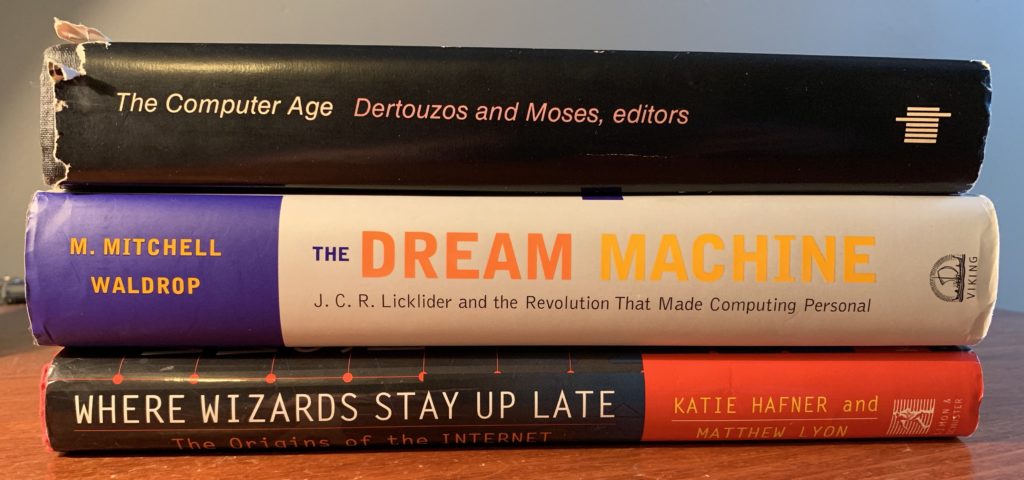
Sometime around 1998, I read a wonderful history of the Internet by Katie Hafner and Matthew Lyon called Where Wizards Stay Up Late: The Origins of the Internet. And through that history, I was introduced to the work and writings of the other bookend of my thinking about technology and politics: J.C.R. Licklider.

In 1962, Licklider was the Director of the Information Processing Techniques Office at the Defense Department’s Advanced Research Projects Agency (ARPANET was the predecessor of the Internet) and is considered among computer science’s most important figures. His prescient writings about computers, networks and their impacts, well, sort of blew my mind. The below excerpt from Where Wizards Stay Up Late captures the key Licklider (Just ‘Lick’ to many) prediction that I’ve never forgotten:

“The idea on which Lick’s worldview pivoted was that technological progress would save humanity. The political process was a favorite example of his. In a McLuhanesque view of the power of electronic media, Lick saw a future in which, thanks in large part to the reach of computers, most citizens would be “informed about, and interested in, and involved in, the process of government.” He imagined what he called “home computer consoles” and television sets linked together in a massive network. “The political process,” he wrote, “would essentially be a giant teleconference, and a campaign would be a months-long series of communications among candidates, propagandists, commentators, political action groups, and voters. The key is the self-motivating exhilaration that accompanies truly effective interaction with information through a good console and a good network to a good computer.””

The book didn’t directly cite where this passage from Licklider came from, but the very next paragraph described his “seminal paper”, Man-Computer Symbiosis. Written in 1960, Man-Computer Symbiosis describes Lick’s imagined future where “the main intellectual advances will be made by men and computers working together in intimate association.” The paper is considered a key text in the field of computer science. (For a recent look back, check out this article, Another Look at Man-Computer Symbiosis by David Scott Brown, 1/3/18).

Given the placement of this mention of Man-Computer Symbiosis, immediately following the passage about “the political process”, I naturally imagined it as the source of the passage. Alas, it is not. And so for years I have shared this excerpt of Licklider’s predictions on the impact of computer networks on our political process as I originally found it in Where Wizards Stay Up Late, still uncertain of its origin.

The Books That Led to Licklider

In 2001 a biography of J.C.R. Licklider titled The Dream Machine: J.C.R. Licklider and the Revolution That Made Computing Personal by M. Mitchell Waldrop was published. I have a copy signed by the author at a bookstore event. And for years, my copy sat on a bookshelf, always hovering near the top of my ‘to-read’ pile, but never quite making it to the top spot until I finally finished it last year. And it led to a major breakthrough in my hunt for the source of Licklider’s ‘political process’ writing, and in doing so, to the reason that I owe J.C.R. Licklider an apology.

In The Dream Machine, Waldrop also singled out the same bit of writing that had captured my imagination for years since first reading it in Where Wizards Stay Up Late.

“The key is the self-motivating exhilaration that accompanies truly effective interaction with information and knowledge through a good console connected through a good network to a good computer.”

In my blog post, I wrote;

Information itself can be good or bad, and technology cares little about which sort it disseminates and propagates. Avoiding ignorance, as Jefferson’s hopes for civilization require, presume an ability to recognize and reject bad information to avoid being ill-informed. Licklider describes a ‘good console’ and a ‘good network’ as needed for facilitating an ‘effective interaction with information,’ but not specifically ‘good information.’ An effective interaction with bad information is equally likely. Ignorance born of bad, but effectively delivered information can and does do damage to our political process.

Waldrop foretold my connection between Thomas Jefferson and Licklider, and also my notion that Licklider had innocently overlooked the possibility of ‘bad information’ in his formulation. Waldrop wrote of Licklider’s vision, “It was a vision that was downright Jeffersonian in its idealism, and perhaps in its naïveté as well.”

More importantly, Waldrop did me the favor of citing the source of this passage. It came from a chapter titled Computers and Government that Licklider contributed to an anthology published by MIT Press in 1979 titled The Computer Age: A Twenty-Year View. (In their defense, the authors of Where Wizards Stay Up Late included this volume in their bibliography, they just hadn’t directly connected it to the ‘political process’ passage.)

So to the Internet I turned, where I located and purchased a copy of The Computer Age: A Twenty-Year View, so I could at last drink of Licklider’s predictions for ‘Computers and Government’ direct from the source.

And guess what?! When I found my treasured passage in Licklider’s 40-page chapter in its original content, I found that in the very next paragraph he addressed exactly the sort of potential bad actors and bad information that I had previously accused him of naively overlooking.

And THAT, is why I owe J.C.R. Licklider an apology. Licklider was fully aware of the potential pitfalls and dirty tricks that the network he was still helping to build, and he described several of those potential problems with the same level of prognosticative detail that characterized so much of his writing. I’m sorry I suggested that this was a blind spot in his thinking.

And to correct this mis-characterization which I have perpetuated, below is a fuller excerpt from two out of forty pages that contained my oft-repeated political process passage, and Lick’s dose of reality that followed it. I have bolded the original passage, and added a few bracketed notes throughout.


From Computers and Government, a chapter contributed by J.C.R. Licklider to The Computer Age: A Twenty-Year View (1979, The MIT Press).

Computers and politics

It is technically possible to bring into being, during the remainder of this century, and information environment that would give politics greater depth and dimension than it now has [Remember, the NOW he’s writing about is 1979]. That environment would be a network environment, with home information centers (which would of course include consoles as well as television sets) as widespread as television sets are now. The political process would essentially be a giant teleconference, and a campaign would be a months-long series of communications among candidates, propagandists, commentators, political action groups, and voters. Many of the communications would be television programs or “spots,” but most would involve sending message via the network or reading, appending to, or setting pointers in information bases. Some of the communications would be real-time, concurrently interactive. The voting records of candidates would be available on-line [Generally speaking, they are], and there would be programs to compare the favorable information about themselves and critical assertions about their opponents. Charges would be documented by pointed to supporting records. Under the watchful control of monitoring protocols, every insertion would be “signed,” dated, and recorded in a publicly accessible audit trail [But who makes and monitors the monitoring protocols?]. Because millions of people would be active participants in this process, almost every element of the accumulating information base would be examined and researched by several proponents, several opponents, and perhaps even a few independent defenders of honesty and truth. Nothing would be beyond question [The opposite has become the norm, EVERYTHING IS QUESTIONED], and the question would go, along with whatever answers were forthcoming, into the accessible record. Interactive politics would function well only to the extent that the citizens were informed, but it would inform them as the had never been informed before.

Such an environment and such a process would undoubtedly open up new vistas for dirty tricks. However, by bringing millions of citizens into active participation through millions of channels, it would make it more difficult for anyone to control and subvert any large fraction of the total information flow. It would give the law of large numbers a chance to operate, and within its domain tricks would be more like vigorous expressions of the feelings of individual citizens – unless, of course, a government [Russia, China] or a syndicate [Facebook] controlled and subverted the whole network. The clandestine artificial-intelligence programs, searching through the data bases, altering files, fabricating records, and erasing their own audit trails, would bring a new meaning to “machine politics.”

It is not likely that any agency of the U.S. government will deliberately develop anything approaching computer-based politics, because congressman have such a reactionary attitude toward meddling with their traditional political process [Not so in today’s hyper partisan atmosphere in Congress]. However, the development of networking for other purposes may create the facilities required for highly participatory political interaction. This is yet another reason for emphasizing the importance of computer system and network security, since it would be absolutely essential to orderly an effective interactive politics; one might even say that the security would have to be Watertight [A Watergate related pun?

Other issues and problems

The theme of government use of computers to control or repress the people deserves much more extensive examination, but the following notions will suggest some of the topics it might pursue:

  1. Programmed instruction subverted to brainwashing in favor of a regime in power [Russian trolls and bots]
  2. Programmed monitoring and censorship, achieved with the aid of natural language understanding programs
  3. An automatic system that appends the government’s refutation to every article or program that is judged by the monitoring program to be critical of the government
  4. Automated checking of adherence to government-prescribed schedules of activity and avoidance of government-proscribed activities
  5. Automated compilation of sociometric association nets, showing who communicates with whom, who participates in what activities, who views which programs, and so on [Facebook]

[then, after much more good and insightful stuff, too much for me to re-type, Licklider concluded his chapter thusly]

Finally, the renewed hope I referred to is more than a feeling in the air. As a few thousand people now know – the people who have been so fortunate as to have had the first reich experience in interactive computing and networking – it is a feeling one experiences at the console. The information revolution is bringing with it a key that may open the door to a new era of involvement and participation. The key is the self-motivating exhilaration that accompanies truly effective interaction with information and knowledge through a good console connected through a good network to a good computer.

In Memory of Jeff Hecker

On Christmas Day 2018, I learned the terrible news that a friend and professional colleague of mine passed away four months earlier. During my eight years as a staffer in the United States Senate, Jeff was my closest colleague and friend. But I left the Hill in 2000, and Jeff did as well a few years later, moving to Florida. And so for years our interactions were reduced to their lowest common denominator of annual birthday greetings on Facebook. So my sadness at Jeff’s passing is compounded by my regret of having mostly lost contact.

Seeking to do something meaningful in his memory, and true to his very unique character, a fellow former colleague and I considered a few options, but then he nailed it with a four-letter type reply… SETI. If you knew Jeff, then you’ll likely be quick to understand and agree. But if you didn’t, then let me share this about Jeff;

If you work on Capitol Hill, your access to information is greater because of Jeff.

If you work in digital advocacy, your tools, emails, petitions, websites, streaming media, and sharing were innovated by Jeff.

If you sometimes see only clowns to your left, and jokers to your right, but bemusedly press on in the search for intelligence on earth, Jeff was stuck there in the middle with you and could laugh about it.

And if you believe in the power of technology to help boost that intelligence, to better ourselves as individuals and for all humanity, and if you hold out hope that there IS intelligence to be found in the universe, then you share a core conviction with Jeff that drove his work day to day.

So I invite you to join me in making a small contribution to a worthy cause in Jeff’s memory. Were he here Jeff would demur the effort. But he’s not, and it’s for us that we do this in his memory. And I know that Jeff would appreciate that whatever modest amount we might raise, is still more than nothing, and that is something. Thank you.

Master of my Domain

“Are you Master of your Domain?”
“I am King of the County. You?”
“Lord of the Manor.”
“I’m Queen of the castle!”
– Jerry, George and Elaine, in “The Contest“, Seinfeld, aired 11/18/92

I didn’t know her. Her name was Kathleen Creighton, but she went by ‘Casey’, presumably a reference to her initials. Kathleen was well known on one of the earliest online communities, The Well (her WELL username was ‘casey’). She was the BBS/online service reviewer for the San Francisco Bay Area computer newspaper MicroTimes, and a contributor to WIRED magazine’s Street Cred section. And, she was a tech savvy online pioneer who staked a digital claim on the domain name ‘casey.com’ when she registered it in August of 1994. It was a time when the word, domain, would for many first bring to mind an episode of Seinfeld which added ‘master of my domain’ into our modern lexicon. But speak of an internet ‘domain name’, and you’d likely draw a blank stare.

That’s what writer Joshua Quittner found and reported in his October ‘94 WIRED magazine article “Billions Registered”, in which he described the surprising number of Fortune 500 companies who had not registered their domain names, many of which had no idea what a domain name was or why they would want one. To demonstrate his point, Quittner registered the domain ‘mcdonalds.com’ in the process of educating the McDonalds Corporation what it was and why they should care. He ended that article inviting readers to email him at ronald@mcdonalds.com to offer suggestions on what he should do with the domain. He eventually relinquished it to McDonalds in return for a $3,500 donation to a Brooklyn school for computers and internet access. McDonalds was lucky.

Sadly, Kathleen Creighton passed away just a few months after she registered ‘casey.com’, before she ever had an opportunity to make any use of it. There was no web site, no email addresses, just a WHOIS registration record with a contact name and email address to whom my inquires went unanswered. When I next sent my inquiry to the technical contact on the registration record, they informed me of Kathleen’s recent demise, and transferred the domain to me. I had just happened to be the next ‘Casey’ who was interested in staking the same digital claim that Kathleen had, and the domain became mine. Was I lucky? If so, it’s always come with the sad reminder that it came from somebody’s passing.

The oldest capture of casey.com by the Internet Archive Wayback Machine is from December 27, 1996. And it’s a picture of the landing page of the Internet provider I used at the time (Capital Area Internet Service). The next capture is almost two years later, on December 2, 1998, shows a full website, and it’s awesome! A photoshop filter accident as the main image, image mapped navigation (WITH alternate text links), an animated GIF fake traffic counter, and YES, that’s some Comic Sans! So when did casey.com launch on the World Wide Web? The clue is there under the the ‘last updated’ link in the upper left corner. Casey.com launched on January 24, 1998.

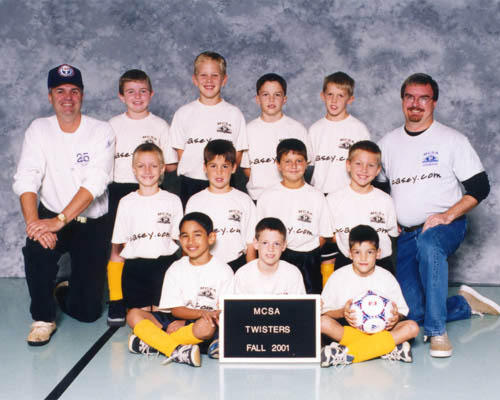
In the 20 years since, casey.com has evolved from a personal website, to a company site (during my self-employment phase when casey.com even sponsored my kids soccer teams), to a blog, and then to a neglected blog. Somewhere along the way social media diminished my necessity of having a personal website. Homesteading online has gotten simpler, and generic online tract housing now swamps the now old little houses on the digital prairie.

02_cardinals01_twisters

Even better than a URL, has been having an @casey.com email address. My ‘Contacts’ application reveals how friends emails have changed over the years; @aol, @erols, @earthlink, @hotmail, @verizon, @gmail and so on as providers and their offerings come and go. It doesn’t suck having an email address that’s yours forever. One that rolls as easily as your name, because it’s your name. Sorry to all the other Chris Casey’s out there, but I’m chris@casey.com and have been for more than 20 years. More recently it was a thrill to give my new daughter-in-law her own casey.com email address.

A couple times each month, I receive inquiries not unlike my outreach to Kathleen Creighton those many years ago, asking if I’d be willing to sell casey.com. The short answer is “No, casey.com is not for sale”. A longer more honest answer is, “Everything has a price. If your offer means a life of wealth and leisure, I’m listening.”  Who knows? Plenty of domain names have sold for that much and more (though they tend to be nouns, not names). But that’s just a nice daydream. Deep down my real domain dream is that casey.com, my little slice of digital real estate, remains in my family for their use for many years to come.

In the updated (2000) version of his book, The Virtual Community: Homesteading on the Electronic Frontier, Howard Rheingold (Master of his domain at rheingold.com) wrote about the passing of his friend and collaborator on The Well, Kathleen Creighton, aka ‘Casey’.

“The day the news of Casey’s death was announced, people started testifying online. Dozens of people revealed that their first welcoming email came from Casey, and that she had provided free, unpublicized technical support as they learned their way around the WELL. At her funeral, her family was surprised to find Casey’s family and face-to-face friends outnumbered by a factor of ten by all these people she had known “through the Internet”.

My day will come too. But there are all kinds of Caseys; first name Caseys, last name Caseys, nickname Caseys, businesses named Casey… and whether it’s my own family or someone else who becomes its new master, casey.com will carry on after me. Until that time, with gratitude to Kathleen, to Casey, my turn as Lord of the Virtual Manor that is casey.com continues.

Kramer: "I'm Out!"

This Salsa Sucks!

this_salsa_sucks_2500

Coca-Cola paved the way. When a company launches a new version of their product, and it sucks, they sheepishly re-offer the original version and call it “Classic”, as Coca-Cola did 31 years ago after customer backlash following the launch of New Coke.

I recently learned that Salsa has done the same with their online advocacy tools.

I’m not new to Salsa. I actually worked for a competing vendor, NGP VAN, for seven years. Since then, I have had extensive opportunities to use Salsa’s tools. I learned through that experience that they didn’t suck. Salsa had strengths and weaknesses when compared against what I was familiar with, but I came to learn and appreciate what was good about them, and to use them effectively.

When I recently started in a new job and sought online advocacy tools to use, I did a quick review of alternatives, but lazily went with Salsa as it was what I had used most recently. I had no reason to suspect that I was purchasing something different than the Salsa tools familiar to me. Their website describes simply “Online Advocacy Software”. So when I signed a contract purchasing “SalsaEngage”, I expected I was buying the familiar tools that I told their sales rep I had used for years. When I first launched and began to explore them, I found a different looking interface, but just assumed they had been upgraded (I’ve looked at that ‘I want the new interface’ login screen checkbox for a long time already).

Instead, over the course of two months, I found that SalsaEngage was a completely new product. And I found it to suck. From the very start, the most fundamental first step of importing new contact records and attempting to assign them to a group code (now called a segment) proved ridiculously challenging. Attempts to learn how to do this from Salsa’s support only compounded my frustration… “Yes, I have already read the online documentation that it took you two days to refer me to, and No, it still doesn’t answer the question I asked.”

That was only the beginning. I soon learned that the only batch option for making edits to multiple records was to DELETE THEM ALL (maybe adding a group code, or updating some other common field would be useful instead of deleting them all?). I also found that the reporting on A/B testing of emails in one view didn’t match the results shown in another view of Salsa’s interface (who clicked? who unsubscribed? If Salsa Engage has these answers, I couldn’t find them.)

My patience exhausted, I informed Salsa that I wished to terminate our contract and requested a refund for the remaining 10 months of unused service for the year that we had prepaid. And I received the following reply,

“Thank you for your message. Yes, we did receive your message and I was speaking with my supervisor before getting back to you. SalsaEngage is a stripped down, very on-rails tools that we offer for users who are not looking for a ton of customization or flexibility with their email, advocacy, and fundraising needs. After reviewing your concerns and frustrations, I believe that SalsaClassic would be a much better fit for you and your organization, and would be more than happy to setup a time to show you a demo of the tool to ensure that it can and will meet your needs. What’s more, after speaking to my supervisor, I can offer you SalsaClassic at the same price you were paying for SalsaEngage, which is at a discount.”

And there it was, Classic Coke! For the first time a distinction was made between the product I was given, SalsaEngage, and the product I believed I had purchased, Salsa “Classic”. Despite the fact that I had described myself as an experienced Salsa user, there had been no previous mention that I was buying a “stripped down” version of the tools I expected. Would I now like to receive what I had originally asked for? My response was simply, “No! Thanks for the offer, but NO! It’s too late.” To which I received the below reply from my Salsa “Client Success Agent”:

I completely understand the frustrations that you experienced and I want to apologize again that you were not shown the SalsaClassic tool initially when you were looking at our services. However, after speaking with the upper management team, because your organization signed a contract with Salsa for 12 months of service, we are not going to be able to cancel your account. We can, however, offer you the SalsaClassic platform, at the rate you’re currently paying for SalsaEngage – and, I got approval for us to credit your organization for the two months that you spent on SalsaEngage that you feel like was a waste.

Really Salsa? Is this how you do business?

Contractually, Salsa may be able enforce our 12-month contract. Ethically, they misled me into purchasing a product that was not what I had every reason to expect I was getting. Then only after I had wasted my time learning how badly SalsaEngage sucks, offered me their never before mentioned “Classic” version.

I let my Salsa “Client Success Agent” know that I wanted to speak with someone in their “upper management”, and after a week of silence, I repeated that request. I was contacted by Salsa’s “Director of Client Success”, and made clear that the only successful outcome for me would be a terminated contract with a refund of the unused amount. He said that would be a “heavy lift”, but that he’d see what he can do. That was a month ago, and I’ve heard nothing back.

I wish Salsa had done the right thing by offering me an apology and a refund. They chose instead to hold me hostage as a customer, bound either to an inadequate product or an outdated one. They can do that. My responsibility to our community is to share this story of my experience as a cautionary tale.

Something’s gone very wrong in the Labs. And I want you to know, in my humble opinion, this Salsa Sucks.

Tell Chris to Walk the Dog!

Hey Friends,

I’m playing around with some online advocacy tools and I created this petition as an experiment. If you’re reading this, help me out and sign the petition.

Thanks!

Chris (and yes, I’ll walk the dog, I promise)

UPDATE: I walked the dog.

wrigley_walk

1 2 3 6