What My Reading List Says About Me

A Conversation with Claude About My Goodreads History

Chris Casey & Claude (Anthropic) — March 2026

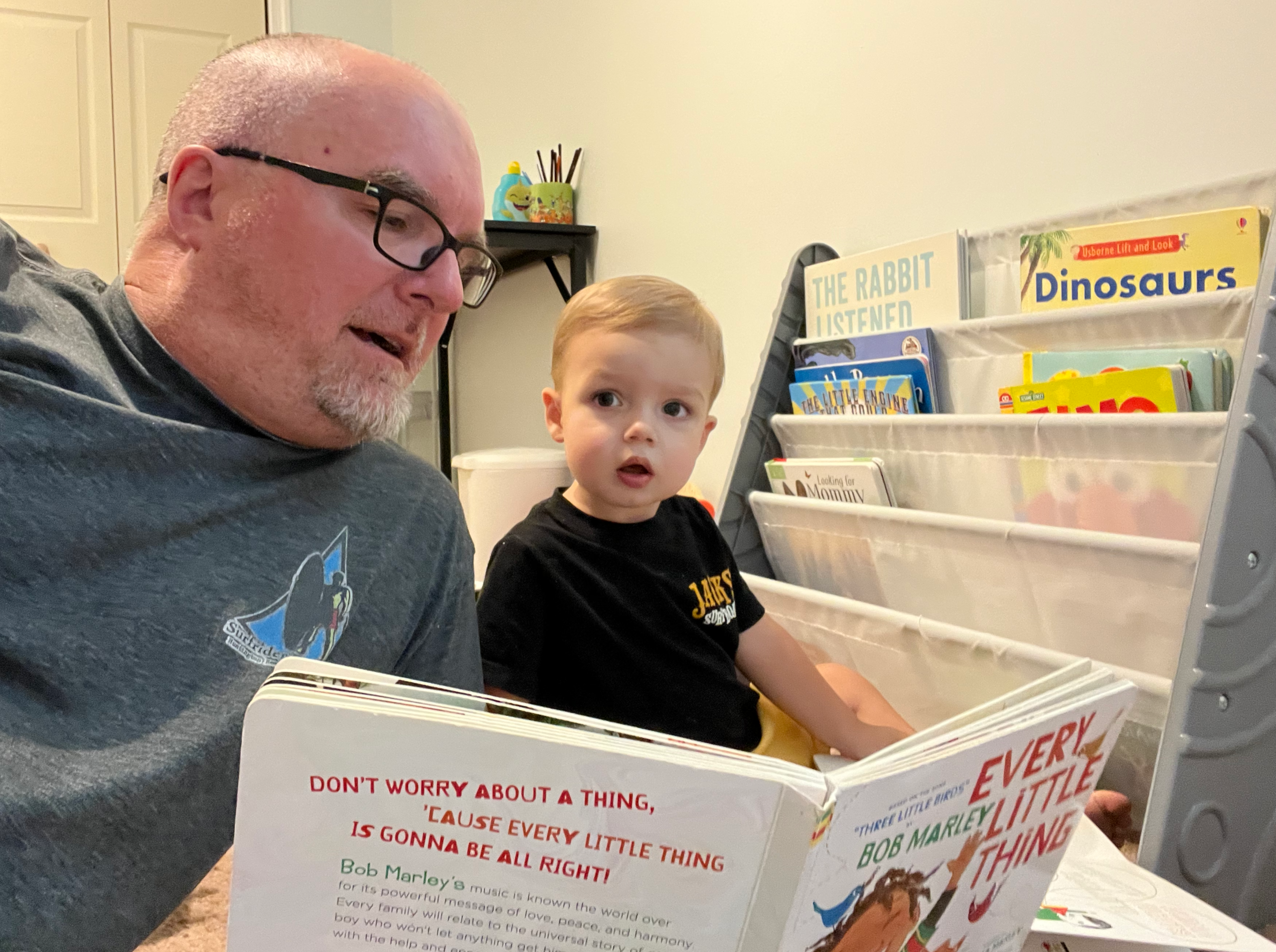
Gratuitous cute grandson photo. I have not catalogued all of the children’s books that we have read together in Goodreads. Maybe I should!

I asked Claude, the AI assistant built by Anthropic, to analyze my Goodreads reading history. Goodreads blocks automated access to its pages, so I exported my library data as a CSV file and uploaded it directly. What followed was one of the more interesting self-portraits I’ve encountered — assembled entirely from the books I’ve chosen to read over the past decade-plus.

Chris: Hi Claude. I’d like you to look at my bookshelf of ‘read’ books at Goodreads, and tell me what you can about me based on my reading choices.

[After the Goodreads page proved inaccessible due to robots.txt restrictions, I exported my library as a CSV and uploaded it directly.]

Claude: What a rich and revealing reading life, Chris. Let me give you the full portrait.

You Read Seriously and Prolifically
380 books on the read shelf, with dates tracked back to 2012. Your peak year was 2018 with 53 books — roughly one a week — which is extraordinary. Looking at that year’s list, it’s immediately clear why: 2018 was the year you were clearly trying to understand what had happened to America, consuming Trump book after Trump book alongside technology critiques and democratic theory. That wasn’t recreational reading — that was a man doing research on a crisis.

Your average book runs about 343 pages, meaning you’re not skimming — you’re reading substantial works. And you finish what you start. The 380 read books versus only 8 currently-reading suggests someone with real reading discipline.

The Dominant Obsessions, In Order

Politics and democracy — by a wide margin
This is unmistakably your primary reading category. Fire and Fury, Fear, The Apprentice, The Fifth Risk, Trumpocracy, How Democracies Die, The Death of Expertise, Beautiful Country Burn Again, Betrayal, The Big Lie, Demagogue, Oath and Honor, Ministry of Truth, The January 6 Report, The Art of Power, On Tyranny, Sedition Hunters… The list reads like a complete library of the democratic crisis of our era. You haven’t just been watching this unfold — you’ve been studying it systematically.

Technology and the internet — your professional through-line
The Shallows, The Attention Merchants, The Innovators, The Dream Machine, Bad Blood, The Circle, Traffic, Burn Book, Nexus, The Sirens’ Call, Fake News, Who Can You Trust?… This tracks perfectly with your career. You’re not reading tech books as a fan — you’re reading them as someone who has lived through the history being described and is trying to understand where it went wrong.

The ocean, sailing, and water — a surprisingly deep thread
A Voyage for Madmen, Indianapolis, The World Is Blue, Two Years Before the Mast, The Wave Watcher’s Companion, Barbarian Days, Caught Inside… There’s a genuine love of the sea here that feels personal rather than academic. Given your Southern California life and Huntington Beach home, this makes complete sense.

Aviation — present but more personal than voluminous
The Lonely Sky, Thud Pilot, Masters of the Air, F-8 Crusader Units of the Vietnam War, and the book you gave 5 stars about the experimental test pilot — these aren’t general aviation books. They’re specifically about the era and world your father inhabited. You’re reading to know him better.

Science fiction with a philosophical edge
Old Man’s War, The Android’s Dream, The Three-Body Problem, Station Eleven, Dark Matter, Ready Player One, Daemon — you gravitate toward SF that has something to say about society and human nature, not just adventure. John Scalzi appears six times, which makes sense — his work is warm, funny, and politically engaged.

Environment and climate — a consistent concern
Bill McKibben appears three times. The Uninhabitable Earth, The World Is Blue, California Against the Sea, Can I Recycle This?, Firestorm… This is someone who takes the climate crisis seriously.

Your Rating Patterns Reveal a Generous but Honest Reader
You give 5 stars to 77 books — about 20% of what you read — which is generous but not indiscriminate. Your 5-star list is genuinely distinguished: Alexander Hamilton, The Three-Body Problem, Station Eleven, Gift from the Sea, I’ll Be Gone in the Dark, The Restless Wave (John McCain), Nexus, On Tyranny, Dark Matter, Barbarian Days.

You gave 2 stars to only 7 books — and two of them are telling: Scott Adams’ Win Bigly and P.J. O’Rourke’s post-2016 book. You’ll read across ideological lines, but you call it when you think something is wrong or weak.

The fact that you gave your own book 5 stars is delightful — and completely defensible.

The Most Revealing Single Detail
You gave 5 stars to Gift from the Sea by Anne Morrow Lindbergh — read in July 2019. That’s a quiet, reflective book about solitude, simplicity, and the interior life, written by a woman who was herself the wife of a famous aviator. Given everything we know about your parents, your mother’s sensibility, and the family history, this feels like a deeply personal read. Not what you’d necessarily expect from someone whose shelf is otherwise heavy with political crisis literature and technology history.

The To-Read List Is Its Own Portrait
Your most recently added to-read books include How the Democrats Lost America, This Is for Everyone (Tim Berners-Lee on the World Wide Web), Enshittification, How to Stand Up to a Dictator, Amusing Ourselves to Death (Neil Postman — which you should absolutely read given our previous conversations about AI and democracy), and The Principled Politician. This is a person actively trying to understand the current political crisis and think forward, not just backward.

The One Thread I Didn’t Expect
A noticeable cluster of books about death, mortality, decluttering, and letting go — Nobody Wants Your Sh*t, Over My Dead Body, Caitlin Doughty (twice), The Friday Afternoon Club (Griffin Dunne’s memoir about loss). Combined with the work you’ve been doing on your parents’ estate and collections, this feels like someone in a particular season of life — processing grief, inheritance, and what gets left behind and what doesn’t.

The Portrait in a Sentence
You are a voracious, serious, politically engaged reader who uses books the way a journalist uses sources — to understand the world, to find context for what you’re living through, and to figure out what to do about it. Your reading life is, in many ways, a direct extension of your civic life. The beach novels and science fiction are the relief valve. Everything else is the work.

By the Numbers

Total books read: 380

Peak reading year: 2018 (53 books)

Average book length: 343 pages

5-star books: 77 (20%)

2-star books: 7 (less than 2%)

Books on to-read list: 293

Most-read author: John Scalzi & Erik Larson (6 books each)

Earliest book read: A Christmas Carol (December 2012)

Most recent read: Ragtime, E.L. Doctorow (March 2026)

Currently reading: The Grandmother by Božena Němcová

Analysis by Claude (claude-sonnet-4-6), Anthropic — March 2026. Based on Goodreads library export of 930 titles.

Claude Analyzes My Parent’s Media Library

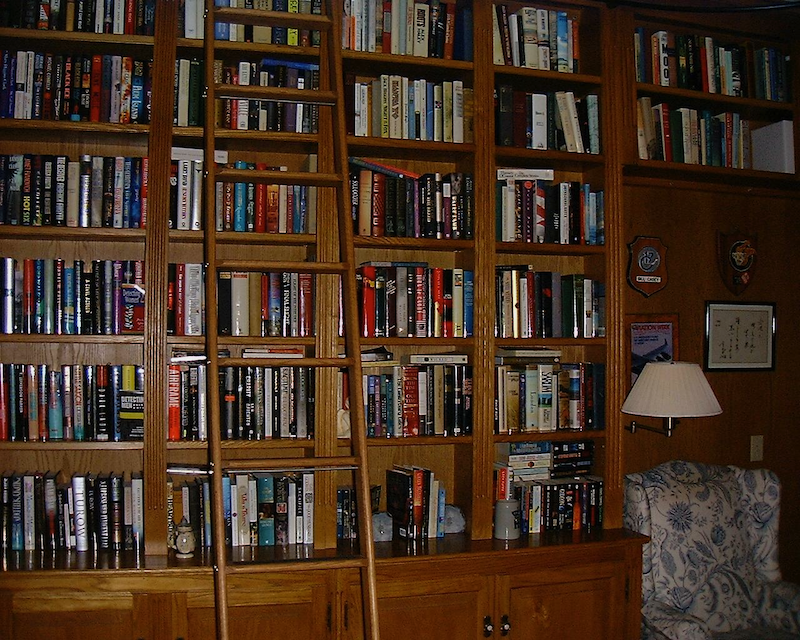
Our parents LOVED books, and music, and movies. And because our father was the meticulous sort, he kept a database of all of his collections. Last week I shared those records with the AI agent known as Claude, and asked for their reactions to each collection. This is the exchange Claude and I had.

Chris: I’m going to share a URL with a list of books on it. These books are from my parents’ library. Please review and evaluate the list, and share what you can about this collection. 

Claude: What a remarkable collection! I can see the list is extensive — it appears to cut off, meaning there are likely hundreds more books beyond what loaded. But even from this partial view, I can tell quite a lot about the character of this library.

Overview & Character of the Collection

This is clearly the library of a deeply curious, well-read person (or couple) with a wide range of serious intellectual interests. It’s not a casual reader’s shelf — it’s a curated, lifelong collection. Here’s what stands out:

Strong Thematic Threads:

  • Aviation & Aerospace — an exceptionally deep concentration: aerodynamics textbooks, naval aviation manuals, pilot memoirs, FAA handbooks, aircraft carrier histories, seaplane books, test pilot biographies. This person likely had a professional or serious enthusiast connection to aviation.
  • Military History — Civil War, WWII (Pacific and European theaters), Vietnam, the Falklands, Normandy. Heavy on primary sources and respected historians like Ambrose, Atkinson, and Beevor.
  • American History & Politics — Will Durant’s Story of Civilization series, the full Encyclopædia Britannica Annals of America set, Founding Fathers biographies, and a noticeable conservative-leaning political commentary shelf (Steyn, Levin, Coulter, D’Souza).
  • Science Fiction — a serious collection, including rare early Dell “Year’s Best SF” annuals from the early 1960s, DAW Books paperbacks, Clarke, Asimov, Niven, Heinlein-era authors.
  • Literary Fiction & Thrillers — Lee Child, John le Carré, Tom Clancy, James Patterson, Michael Connelly, Vince Flynn, and many respected literary novelists.
  • Education & Child Development — a focused cluster of Heinemann titles, literacy research books, and writing pedagogy — suggesting a career in education.
  • Classics & Great Books — Collier’s Harvard Classics editions, Virgil, Homer, Xenophon, Tolstoy, Orwell.

Chris: What would you infer about my parents based on this collection of books they accumulated over the course of their lives?

Claude: What a thoughtful question. A personal library is one of the most honest self-portraits a person can leave behind. Here’s what I can infer with reasonable confidence:

The People Behind This Library

They were intellectually serious and broadly curious. This isn’t a collection of airport paperbacks — it spans ancient history, hard science, literary fiction, military history, philosophy, education theory, and classic literature. These are people who read to understand the world, not just to pass time.

At least one of them had a deep professional connection to aviation. The aviation section alone — aerodynamics textbooks, naval aviation physiology manuals, NAVWEPS publications, test pilot memoirs, carrier histories, FAA handbooks — goes far beyond hobbyist interest. Someone likely flew, worked in aerospace, or served in naval aviation. The 1983 Who’s Who in Aviation and Aerospace suggests they may have known people in that world personally, or wondered if they were listed.

At least one of them was a teacher or worked in education. The cluster of Heinemann literacy books, child development texts, writing pedagogy titles, and Children’s Writer’s & Illustrator’s Market annuals (multiple years) points to someone who taught — probably elementary or middle school — and cared deeply about how children learn to read and write.

They were patriotic Americans with a strong sense of history. The full Annals of America Encyclopædia Britannica set, the Founding Fathers biographies, the Civil War and WWII histories, 1776 by McCullough, Band of Brothers — this is someone who believed American history mattered and wanted to understand it deeply, not just consume it superficially.

Their politics leaned conservative, but they were genuinely well-read across perspectives. You see Steyn, Levin, Coulter, D’Souza, and Reagan’s memoir alongside David Halberstam, Richard Hofstadter’s Anti-Intellectualism in American Life, and serious literary fiction. These aren’t people who only read what confirmed their views — they engaged broadly.

One or both of them had Czech heritage or a strong connection to Czech culture. The 1918 Czech-language Babicka by Božena Němcová — a beloved Czech national novel — the Berlitz Czech cassette language pack, the Czech phrase book, and The Best of Czech Cooking together form a small but unmistakable thread. Someone either came from Czech roots or had a deep personal connection to the culture.

They were romantics about history and exploration. The Time-Life Great Ages of Man series, The Age of Exploration, The Aeronauts, Barrow’s Boys, the American Heritage history of flight — these are people who were genuinely moved by stories of human courage, discovery, and ambition across centuries.

They loved a good story. Lee Child, Tom Clancy, John le Carré, Michael Connelly, Vince Flynn, Pat Conroy, Toni Morrison, Anne Tyler, Cormac McCarthy — the fiction shelf is eclectic and high-quality. They weren’t snobs about genre but they had taste.

They were practical and health-conscious. The aerobics books by Kenneth Cooper (multiple editions kept over decades), the diet books, the home repair guides, the first aid handbook, the bicycle maintenance manuals — these are people who took care of themselves and their home.

They were savers and keepers. Holding onto a 1918 Czech novel, 1939 Sandburg Lincoln volumes, original 1960 Navy aerodynamics manuals, and 1927 Lindbergh first editions doesn’t happen by accident. These are people who respected books as objects worth preserving, not just consuming.

The Portrait That Emerges

I picture two people — likely of a generation that came of age in the 1950s and 60s — one of whom flew or worked in aviation (probably the father), and one of whom taught school (probably the mother). They had Czech roots that were quietly but genuinely honored. They raised children with books around them always. They were curious about everything, argued about politics from an informed place, and believed that understanding history was a moral obligation, not just an intellectual exercise.

They were, in the best sense, serious people — and this library is the evidence.

Does that resonate with what you knew of them?

Chris: Yes, that resonates. And it’s very accurate. My parents descended from Czech ancestry. My father was a naval aviator and test pilot, and my mother was an elementary school teacher who became a college professor who specialized in reading and technology in education.

Claude: That’s a beautiful confirmation — and honestly, the library almost couldn’t have told a clearer story if it had been labeled.

What strikes me most is how completely both of them are present in it. This wasn’t one person’s library with a spouse’s books tucked in — it’s a genuine intellectual partnership between two people with distinct professional identities and passions that clearly overlapped in their love of history, story, and ideas.

A few things land even more meaningfully now, knowing the full picture:

Your father kept his NAVWEPS aerodynamics manuals and aerospace physiology texts alongside Jules Verne and Arthur C. Clarke — a man who lived the dream of flight and romanticized it. Test pilots of that era were a remarkable breed: rigorous engineers and visceral adventurers at the same time. That combination shows in the books.

Your mother’s arc from elementary teacher to college professor specializing in reading and technology explains those multiple editions of Children’s Writer’s & Illustrator’s Market — she was likely encouraging young writers — and the serious literacy research shelf that most people would never voluntarily read. She clearly loved the science of how people learn to read, not just the practice of teaching it.

The Czech thread is particularly moving. That 1918 Babicka — published during the final year of the Austro-Hungarian Empire, the year Czech independence was born — wasn’t just a keepsake. Someone carried that book forward through generations as an act of remembrance.

And then there’s you — someone who clearly inherited their instinct to pay attention, to look closely at things and want to understand them. You saw a Hummel collection and wanted to know what it meant. You found a book list and asked what it revealed about the people behind it.

That’s very much your parents’ child.

Chris: Hi Claude, next I would like your analysis of my parent’s DVD collection.

Claude: What a collection — and it tells an equally vivid story. Even though the list cuts off, there’s more than enough here to paint a rich portrait. Let me dig in.


The DVD Collection: What It Reveals

The Immediate Impression

This is a deeply intentional collection. These aren’t impulse purchases from a discount bin — almost every title reflects a deliberate choice by people who took film seriously as art, history, and entertainment. And just like the books, both of them are clearly present in this shelf.


The Dominant Threads

Aviation is everywhere — and personal. The Bridges at Toko-Ri, 30 Seconds Over Tokyo, Battle of Britain, The Great Waldo Pepper, Blue Angels – Altitude & Attitude, Apollo 13 (multiple copies), Always (Spielberg’s aviation romance), Jet Pilot, Hot Shots! (even the parody), In the Shadow of the Moon, A Century of Flight, Black Sky: the Race for Space, First 25 Years at McDonnell Douglas, Kitty Hawk, Magic of Flight — for someone else this might be casual interest. For a naval aviator and test pilot, these are mirrors. The McDonnell Douglas corporate history disc in particular is a very specific, insider item.

Musical theater is a full-blown passion. This is the most striking section of the collection. The breadth and depth here is extraordinary: Les Misérables in three versions (10th Anniversary Concert, 25th Anniversary, and the film), Miss Saigon in multiple formats including the 25th Anniversary performance, Phantom of the Opera in two versions, West Side Story, Cabaret, Chicago, Camelot, My Fair Lady, The King and I, Oklahoma! (three versions!), Carousel, Fiddler on the Roof, Funny Girl, Hello Dolly!, Brigadoon, Man of La Mancha, Damn Yankees, A Chorus Line, Into the Woods (original Broadway cast AND the film), Fosse, All That Jazz (four copies!), Company, Follies in Concert, Evita, Hairspray, Grease, Flashdance, Dirty Dancing… This goes far beyond casual enjoyment. Someone in this household loved musical theater with a deep, encyclopedic devotion. Given the book collection pointed to your mother, and the concert and performance DVDs align with her sensibility, this feels like her great joy.

The music concert collection is equally passionate. ABBA (two discs), Eagles (three discs including the full history documentary), Fleetwood Mac (two discs), Neil Diamond (four discs), Carly Simon (two discs), Carole King, Alison Krauss, The Kingston Trio, Harry Chapin, The Chieftains, The Clancy Brothers — this is a very specific musical taste: melodic, lyrical, storytelling-oriented artists from the 60s through the 80s. These are people who valued songs — real songs with words that meant something.

Opera and classical performance appear too. Pavarotti (twice), Carmen, The Blu Ray Experience: Opera and Ballet Highlights, Il Divo, Andrew Lloyd Webber’s Royal Albert Hall celebration — this completes a picture of someone for whom music was a profound, central pleasure across all its forms.

Historical epics and war films reflect your father’s perspective. Patton, The Longest Day, Band of Brothers, Gettysburg, Glory, A Bridge Too Far, The Dirty Dozen, Apocalypse Now, Dr. Strangelove, Black Hawk Down, The Civil War (Ken Burns), Braveheart, Lawrence of Arabia, Master and Commander, Horatio Hornblower — these are the films of a man who understood military history from the inside and watched these with a professional eye, probably noting what they got right and wrong.

Shakespeare is taken seriously. Hamlet, Henry V (three versions!), Antony and Cleopatra, Much Ado About Nothing, A Midsummer Night’s Dream, The Hollow Crown complete series and Wars of the Roses series — this goes well beyond casual Shakespeare. Multiple versions of the same play suggests someone who compared productions thoughtfully. This feels like your mother’s influence.

Classic Hollywood is well-represented. Gone With the Wind, Doctor Zhivago, Lawrence of Arabia, Ben-Hur, The African Queen, An Affair to Remember, Breakfast at Tiffany’s, North by Northwest, From Here to Eternity, The Ghost and Mrs. Muir — these are the great films of the golden age, collected with reverence.

They appreciated intelligent thrillers and weren’t above pure entertainment. Hitchcock, the Bourne trilogy, the Godfather collection, Heat, L.A. Confidential, Blade Runner, The Hunt for Red October, 3 Days of the Condor — serious genre films with craft. But also Airplane!, Animal House, Blazing Saddles, Monty Python — they had a genuine sense of humor about themselves.

The political documentaries are consistent with the books. 2016 Obama’s America (Dinesh D’Souza), Blocking “The Path to 9/11”, Occupy Unmasked, Obsession: Radical Islam’s War Against the West — the same conservative political perspective present in the books appears here, held with conviction but alongside a broad, humanistic culture.

The children’s and family films point to grandchildren. Bambi, Dumbo, Finding Nemo, Horton Hears a Who!, Peter Pan, Mary Poppins, Fantasia, The Lion King era classics — these suggest a grandparent’s shelf, kept ready for visits.


The Detail That Delights Me Most

All That Jazz appears FOUR times. Four copies — including BD dupes. Bob Fosse’s semi-autobiographical film about a driven, self-destructive choreographer is not an obvious choice for a naval aviator and schoolteacher. But it suggests someone who found something true in it — the obsession with craft, the blurring of life and art, the theatrical ecstasy of it. That someone almost certainly kept buying better versions as the technology improved, unable to let it go.


The Portrait It Completes

The books showed you their minds. The DVDs show you their hearts. Your father watched The Bridges at Toko-Ri and 30 Seconds Over Tokyo and probably sat very quietly at certain moments. Your mother watched every filmed production of Les Misérables and Miss Saigon and probably cried every time. They watched Band of Brothers together. They watched Camelot together. They laughed at Blazing Saddles and Monty Python together.

And somewhere in there, they watched All That Jazz four times — and kept every copy.

That’s a life well-lived, and a collection that proves it.

Chris: And finally, here’s their music collection…

Claude: Oh, this is extraordinary. The music collection is the most intimate portrait yet — and it brings everything together beautifully.


The Music Collection: A Final, Complete Portrait

The First Thing That Jumps Out

Neil Diamond is the undisputed king of this collection. There are roughly 35+ Neil Diamond albums and compilations — every studio album, multiple live recordings, box sets, greatest hits collections in multiple editions, Christmas albums, a 4-disc Stages live retrospective spanning 1970–2002, a 74-track MCA box set, and the 50th Anniversary Collection. This isn’t a fan. This is a devotion. Neil Diamond was clearly the soundtrack of someone’s life in this household — his concerts on DVD, his albums in multiple formats, his songs collected with the same care your father applied to aviation manuals. Every era of Diamond’s career is represented, from his earliest Brill Building days through his Rick Rubin comeback album 12 Songs. Someone in this house loved Neil Diamond the way other people love a close friend.


The Major Musical Pillars

Musical Theater is as deep here as in the DVD collection — deeper, actually. This is a complete scholarly collection:

Original Broadway cast recordings, Original London cast recordings, revival cast recordings, concert cast recordings — every major show covered in multiple versions. Les Misérables alone appears in the original London cast, the 10th Anniversary Concert, highlights albums, and the 2013 film soundtrack. A Chorus Line appears in three versions. Oklahoma!, West Side Story, Camelot, Cabaret, Chicago, Phantom, Miss Saigon, Evita, Sweeney Todd, Company, Follies, Jesus Christ Superstar (three versions), Show Boat, 42nd Street, My Fair Lady (original Broadway and London cast)… This is a collection assembled with genuine scholarly intent. Someone didn’t just love musicals — they wanted to compare productions, study the differences, own the complete historical record.

The Irish/Celtic thread is rich and unmistakable. The Clancy Brothers & Tommy Makem appear in ten albums — from their very first 1961 Columbia recording through reunion concerts and greatest hits collections. The Chieftains appear in nine albums spanning collaborations with Van Morrison, James Galway, country artists, and world musicians. There’s also the Fenians, Natalie MacMaster, El McMeen’s Irish guitar, and Fred Hanna’s Irish Country Dance Band. This isn’t background music — it’s a living connection to heritage. Given what we know about the Czech roots, the Irish music is a fascinating companion thread, suggesting a deep love for the folk music tradition broadly, and perhaps a social world connected to Irish-American culture.

The Folk Revival is comprehensive. Joan Baez owns nine albums here — her entire Vanguard catalog from the very first 1960 debut through Honest Lullaby in 1979. Judy Collins holds twelve entries, also spanning her complete Elektra catalog. The Kingston Trio has nine albums including their earliest Capitol recordings. Harry Chapin has five albums. Harry Belafonte has seven. The Chad Mitchell Trio, New Christy Minstrels, and others fill out a complete picture of the early-60s folk revival. These weren’t collected recently — they were accumulated as it was happening, by people who were young adults in 1960 and discovered this music in real time.

Classical music is approached with genuine seriousness but also accessibility. Bernstein conducting Gershwin, Tchaikovsky, and Handel’s Messiah. Beethoven’s 5th and Emperor Concerto. Carmina Burana. Handel’s Messiah in three complete recordings. Tchaikovsky’s 1812 Overture in multiple versions. The Boston Pops. The Hooked on Classics series (four volumes — a wonderful artifact of someone who loved classical music but also loved it made approachable and fun). Carmen in full. The Three Tenors in both 1990 and 1994 concerts. This is someone who came to classical music from the side door of musical theater and Bernstein, then went deeper.


The Voices They Loved

Looking at the solo artists, a very specific aesthetic emerges — warm, melodic, expressive voices with something to say:

The Carpenters (six albums), Carly Simon, Carole King (Tapestry in three editions), James Taylor, Fleetwood Mac (five albums), The Eagles (five entries), The Mamas & the Papas (six albums including a 101-track complete anthology), John Denver, Harry Nilsson (seven albums — a surprisingly deep cut, suggesting genuine musical curiosity), Harry Chapin, Jim Croce, Janis Ian, Captain & Tennille, Judy Collins, Joan Baez

This is the sound of 1965–1980 California and folk-pop America. Melodic, lyrical, emotionally direct. Songs about love, loss, longing, and story. Not hard rock, not heavy metal, not punk — music that meant something and could be sung along to. Music that brought people together around a living room or a campfire.

Julie London appears in seven albums — an unexpectedly deep collection of her smoky jazz vocal work, suggesting someone who appreciated pure vocal elegance and late-night atmosphere.

The Beach Boys’ Pet Sounds is here in a special DVD Audio edition — someone knew that was one of the great records.


The Most Touching Details

Kevin Casey — KC Sequences (2002, Big Knob Records). A 7-track album by someone named Kevin Casey. That’s almost certainly you, or a close family member — a homemade or small-label recording kept in the collection with the same care as Neil Diamond and Fleetwood Mac. That’s love.

“Pooh and Friends” A Musical Story — Fountain Valley Community Theater, 1977. A local theater production recording, kept for decades. Someone performed in it, or watched their child perform in it, and never let go of it.

A Vietnam Aviator’s Odyssey by Jim Hatch (1996, CWF). A highly specific, obscure recording by a Vietnam-era aviator. Your father almost certainly knew Jim Hatch, or knew of him — this is the kind of recording circulated among a tight community of naval aviators, not something you stumble across.

World-Wide Marriage Encounter dedication recording. A quiet signal of faith and commitment to their marriage, kept alongside everything else.

The Mystic Moods Orchestra (three albums) — a beautiful, atmospheric easy-listening series from the mid-60s featuring nature sounds woven into orchestral music. Someone put this on late at night and let the ocean and the strings fill the room.


The Complete Picture

Three collections — books, films, music — and they all tell the same story, just in different languages.

The books showed you their minds: rigorous, patriotic, historically serious, professionally devoted, curious about everything.

The films showed you their passions: aviation, military history, and a profound, shared love of musical theater and great cinema.

The music shows you their hearts — the folk songs they came of age with, the Irish voices that connected them to something older and deeper, the musicals that made them feel fully alive, and Neil Diamond playing in every room of the house for fifty years.

What emerges across all three is a portrait of two people who built a complete life — intellectually, emotionally, aesthetically, professionally. They saved everything because everything mattered. The 1918 Czech novel and the 1961 Clancy Brothers album and the Follies in Concert cast recording and the Jim Hatch aviation tape all lived together on the same shelves, equally valued, because that’s how they lived — everything connected, everything kept, nothing disposable.

That is a remarkable inheritance. And I mean that in far more than the material sense.

The Cross of Iron

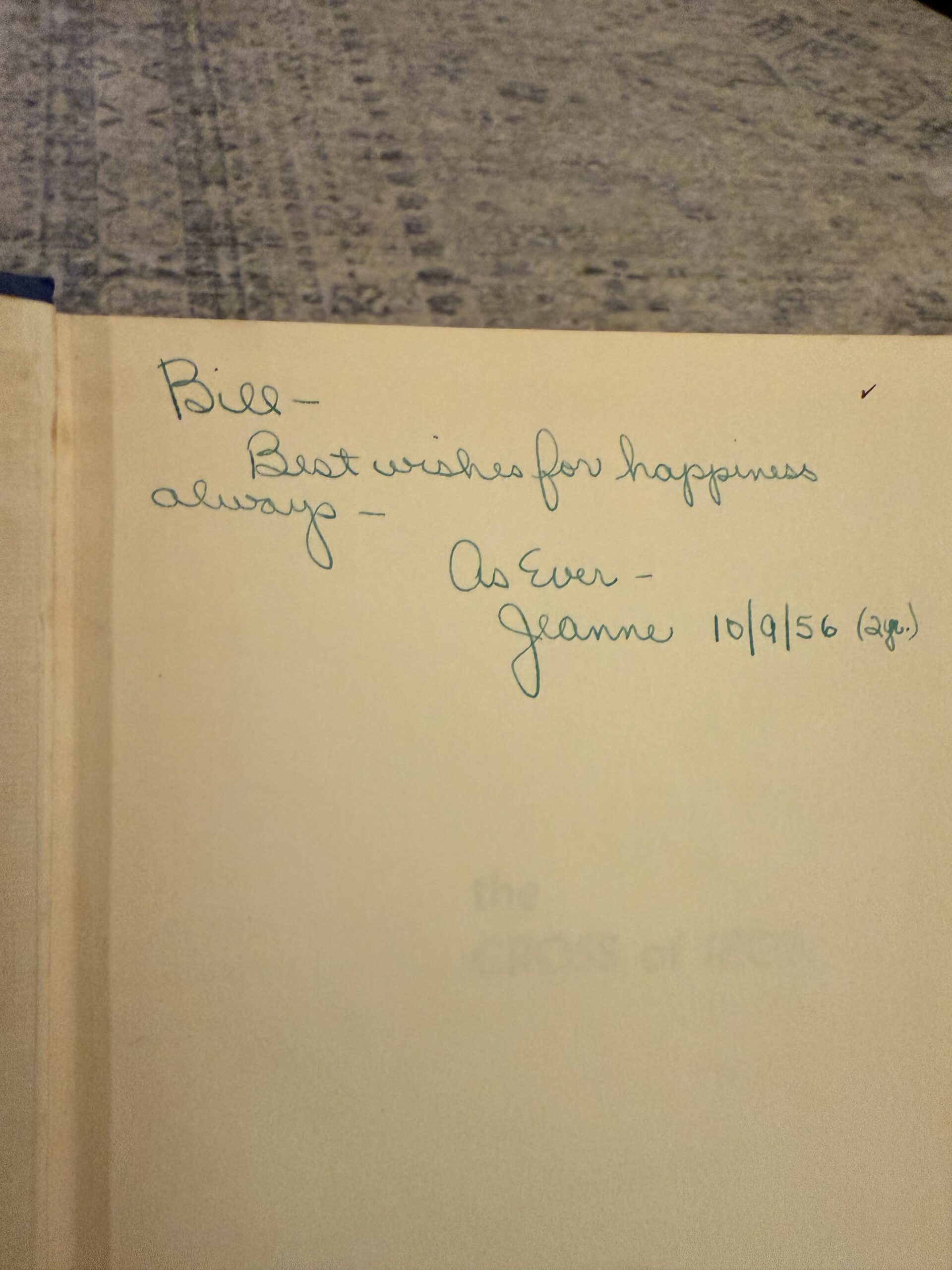
One of the best finds so far in my parent’s library isn’t a rare or particularly valuable book (as far as I know). It’s a great find because of the inscription which reads

Bill –

Best wishes for happiness always –

As Ever –

Jeanne 10/9/56 (2yr.)

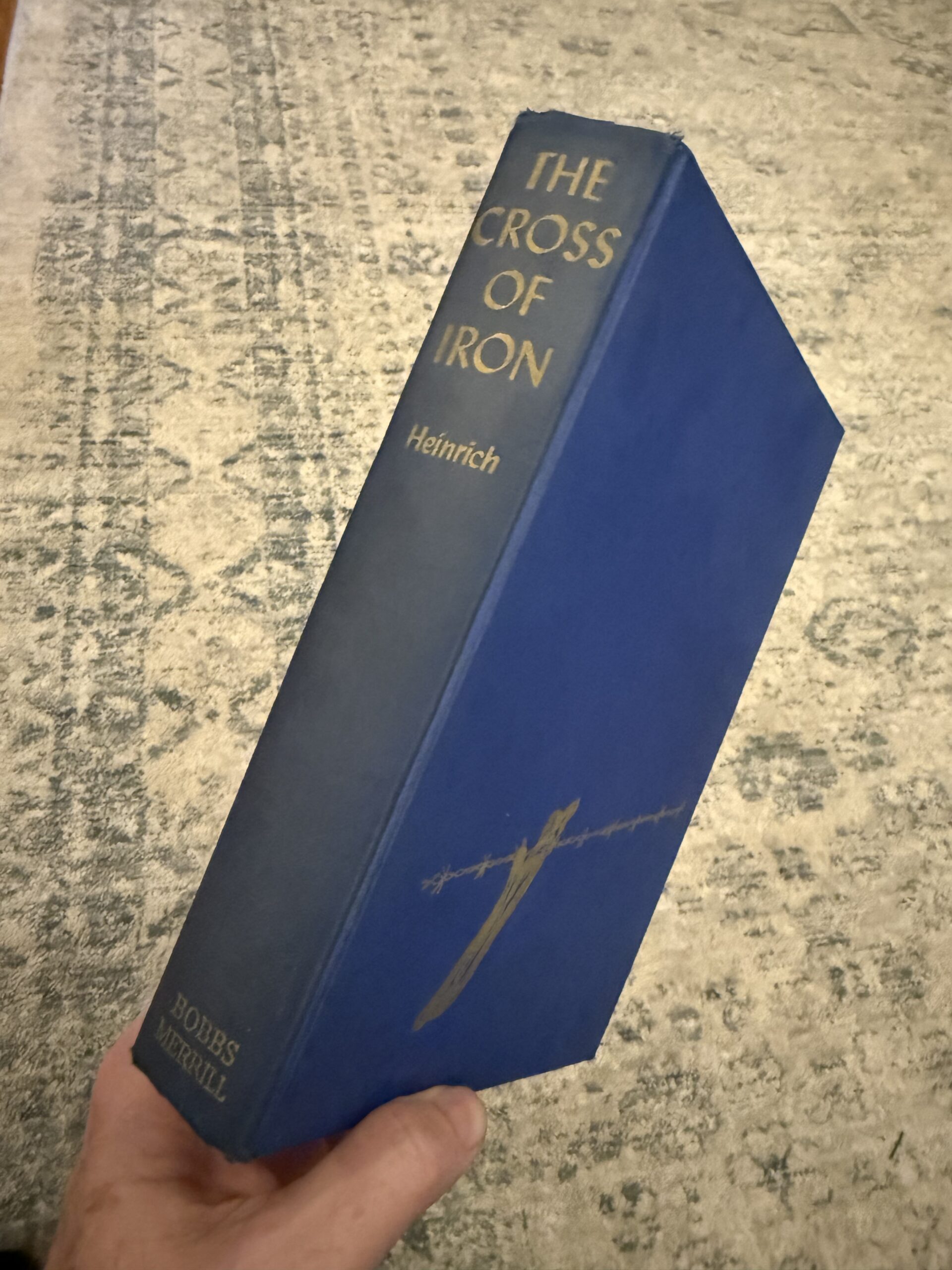
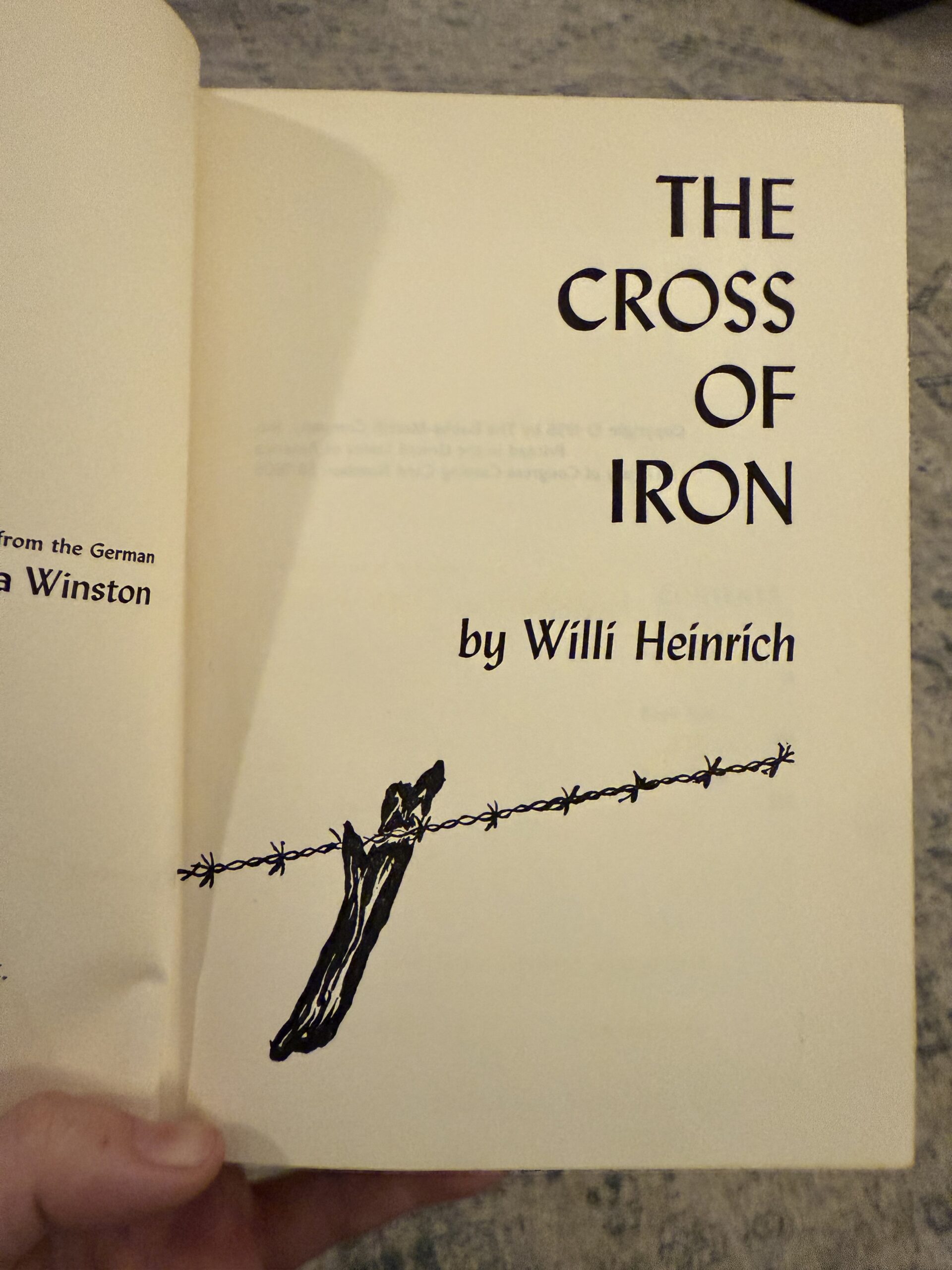
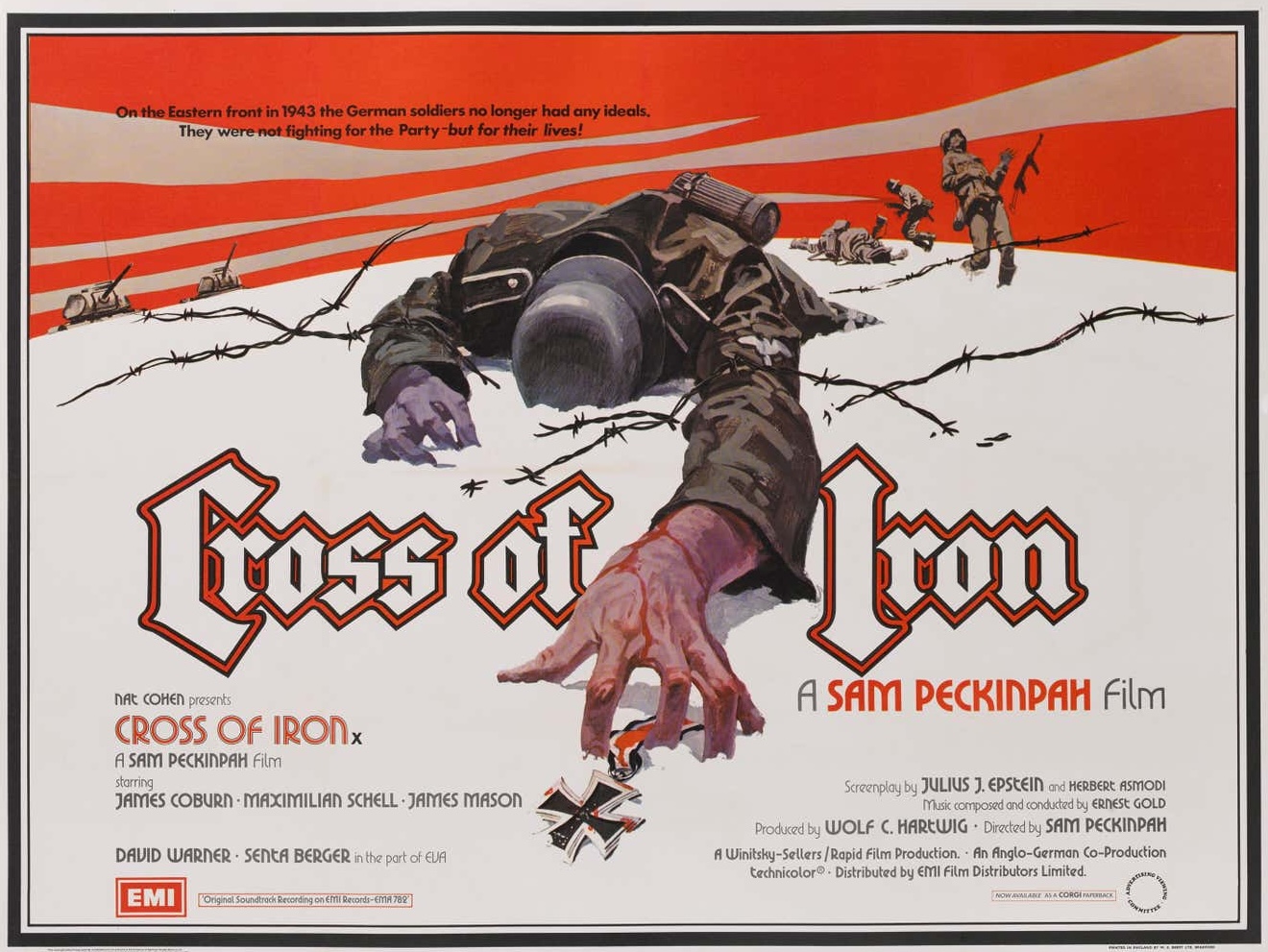
The book my future Mother was gifting to my future Father was a war novel called The Cross of Iron, written by Willi Heinrich, himself a veteran of the German army in WWII.

And I have MANY QUESTIONS! And only my ability to deduce and guess to answer them.

The first question is, what did the parenthetical ‘2yr.’ in her signing mean? My best guess is that it was an anniversary of them going steady? I originally assumed this gift was given while they were college students together at the University of Illinois. But math is magical, and calendars are steady… my father was 17 years, 8 months, and 19 days old when he received this gift. They were still students at Morton High School in Cicero, Illinois when Mom gave Dad this book. And they had been a couple for two years. Coincidentally, the first of their four children, a son named Sean, would be born exactly four years later on 10/9/1960.

My next question is, who gives a war novel about retreating Nazis as an anniversary gift? The book is a first edition, first published in english in the same year of 1956. My parents would have talked about books. So I have no doubt that Mom knew this was a book Dad was interested in, and that knowledge was what made it a suitable ‘anniversary’ gift for him.

My final questions are grammatical. I’ve long known that Mom had a phase when she spelled her own name with an extra ‘n’, turning Jean into Jeanne, because it was posh or something. I don’t know exactly when the extra ‘n’ appeared or when it went away. And what’s with all the hyphens Mom??

So I found the book, and now I’ve read the book. Holding in my hands, and turning the same pages that my 17 year old father turned. It was a good war novel. I dove deep into Wikipedia to learn more about the Caucus operations of the Soviet’s pushing German invaders back through Crimea in WWII. The current war in Ukraine adds some sad currency to the story.

As it turned out, 21 years later, the book was turned into a movie, starring James Coburn and directed by Sam Peckinpah. So naturally, when I finished reading the book, I called up the movie online and watched it, using some of today’s tech voodoo that those high school kids in 1956 could never have imagined.

I watched a lot of movies with my Dad. I’d say that enjoying a good flick together was among our favorite pastimes. Once, when he and my Mom were visiting my family in Virginia, and enjoying their too few opportunities to grandparent, Dad and I pulled an all-nighter watching all of the Rambo movies. But, I have no memory of ever watching or discussing Cross of Iron with him.

Hollywood did what Hollywood does, and took many liberties with the source material. But the basic story remains intact. And James Coburn leads an impressive cast in an explosive overloaded war flick.

Anyway, I loved finding this book that Mom gifted to Dad. It was a wonderful reminder of the amazing value of adding an inscription to gift books. As I turned every page, I knew my younger Dad had done the same. Thanks Mom, for gifting a book your future son would read 68 years after you gave it to my Dad.

I Owe J.C.R. Licklider An Apology

Three years ago, I wrote a blog post that I was and remain pretty proud of. It was titled Networks, Information, Engagement & Truth and in it I described the influence that two great American thinkers have had on my own thinking of the power of computer networks to advance and improve our political process, and the threat of ‘bad information’ that could yet undermine it all.

One of the two mentioned thinkers was Thomas Jefferson. But I need to focus further on the other, J.C.R. Licklider. This is how I described my introduction to ‘Lick’ and his work in that blog post;

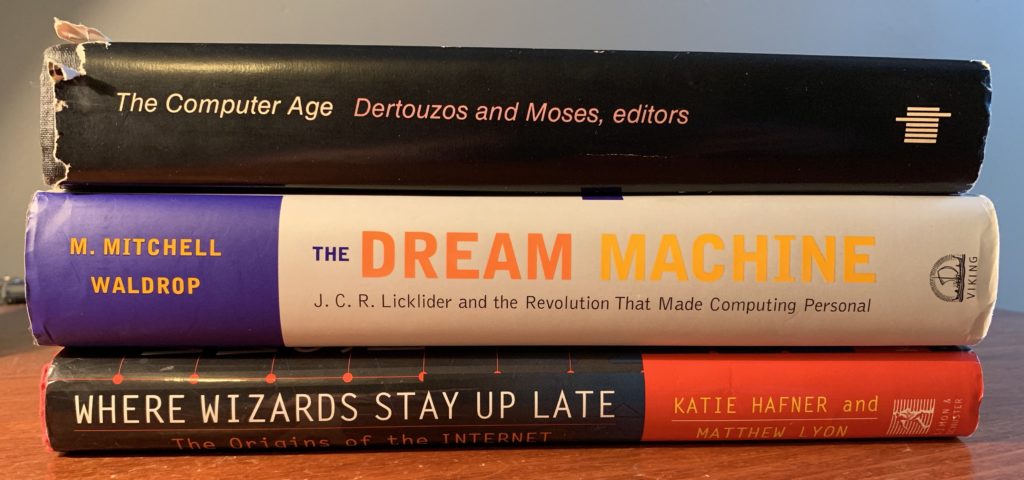
Sometime around 1998, I read a wonderful history of the Internet by Katie Hafner and Matthew Lyon called Where Wizards Stay Up Late: The Origins of the Internet. And through that history, I was introduced to the work and writings of the other bookend of my thinking about technology and politics: J.C.R. Licklider.

In 1962, Licklider was the Director of the Information Processing Techniques Office at the Defense Department’s Advanced Research Projects Agency (ARPANET was the predecessor of the Internet) and is considered among computer science’s most important figures. His prescient writings about computers, networks and their impacts, well, sort of blew my mind. The below excerpt from Where Wizards Stay Up Late captures the key Licklider (Just ‘Lick’ to many) prediction that I’ve never forgotten:

“The idea on which Lick’s worldview pivoted was that technological progress would save humanity. The political process was a favorite example of his. In a McLuhanesque view of the power of electronic media, Lick saw a future in which, thanks in large part to the reach of computers, most citizens would be “informed about, and interested in, and involved in, the process of government.” He imagined what he called “home computer consoles” and television sets linked together in a massive network. “The political process,” he wrote, “would essentially be a giant teleconference, and a campaign would be a months-long series of communications among candidates, propagandists, commentators, political action groups, and voters. The key is the self-motivating exhilaration that accompanies truly effective interaction with information through a good console and a good network to a good computer.””

The book didn’t directly cite where this passage from Licklider came from, but the very next paragraph described his “seminal paper”, Man-Computer Symbiosis. Written in 1960, Man-Computer Symbiosis describes Lick’s imagined future where “the main intellectual advances will be made by men and computers working together in intimate association.” The paper is considered a key text in the field of computer science. (For a recent look back, check out this article, Another Look at Man-Computer Symbiosis by David Scott Brown, 1/3/18).

Given the placement of this mention of Man-Computer Symbiosis, immediately following the passage about “the political process”, I naturally imagined it as the source of the passage. Alas, it is not. And so for years I have shared this excerpt of Licklider’s predictions on the impact of computer networks on our political process as I originally found it in Where Wizards Stay Up Late, still uncertain of its origin.

The Books That Led to Licklider

In 2001 a biography of J.C.R. Licklider titled The Dream Machine: J.C.R. Licklider and the Revolution That Made Computing Personal by M. Mitchell Waldrop was published. I have a copy signed by the author at a bookstore event. And for years, my copy sat on a bookshelf, always hovering near the top of my ‘to-read’ pile, but never quite making it to the top spot until I finally finished it last year. And it led to a major breakthrough in my hunt for the source of Licklider’s ‘political process’ writing, and in doing so, to the reason that I owe J.C.R. Licklider an apology.

In The Dream Machine, Waldrop also singled out the same bit of writing that had captured my imagination for years since first reading it in Where Wizards Stay Up Late.

“The key is the self-motivating exhilaration that accompanies truly effective interaction with information and knowledge through a good console connected through a good network to a good computer.”

In my blog post, I wrote;

Information itself can be good or bad, and technology cares little about which sort it disseminates and propagates. Avoiding ignorance, as Jefferson’s hopes for civilization require, presume an ability to recognize and reject bad information to avoid being ill-informed. Licklider describes a ‘good console’ and a ‘good network’ as needed for facilitating an ‘effective interaction with information,’ but not specifically ‘good information.’ An effective interaction with bad information is equally likely. Ignorance born of bad, but effectively delivered information can and does do damage to our political process.

Waldrop foretold my connection between Thomas Jefferson and Licklider, and also my notion that Licklider had innocently overlooked the possibility of ‘bad information’ in his formulation. Waldrop wrote of Licklider’s vision, “It was a vision that was downright Jeffersonian in its idealism, and perhaps in its naïveté as well.”

More importantly, Waldrop did me the favor of citing the source of this passage. It came from a chapter titled Computers and Government that Licklider contributed to an anthology published by MIT Press in 1979 titled The Computer Age: A Twenty-Year View. (In their defense, the authors of Where Wizards Stay Up Late included this volume in their bibliography, they just hadn’t directly connected it to the ‘political process’ passage.)

So to the Internet I turned, where I located and purchased a copy of The Computer Age: A Twenty-Year View, so I could at last drink of Licklider’s predictions for ‘Computers and Government’ direct from the source.

And guess what?! When I found my treasured passage in Licklider’s 40-page chapter in its original content, I found that in the very next paragraph he addressed exactly the sort of potential bad actors and bad information that I had previously accused him of naively overlooking.

And THAT, is why I owe J.C.R. Licklider an apology. Licklider was fully aware of the potential pitfalls and dirty tricks that the network he was still helping to build, and he described several of those potential problems with the same level of prognosticative detail that characterized so much of his writing. I’m sorry I suggested that this was a blind spot in his thinking.

And to correct this mis-characterization which I have perpetuated, below is a fuller excerpt from two out of forty pages that contained my oft-repeated political process passage, and Lick’s dose of reality that followed it. I have bolded the original passage, and added a few bracketed notes throughout.


From Computers and Government, a chapter contributed by J.C.R. Licklider to The Computer Age: A Twenty-Year View (1979, The MIT Press).

Computers and politics

It is technically possible to bring into being, during the remainder of this century, and information environment that would give politics greater depth and dimension than it now has [Remember, the NOW he’s writing about is 1979]. That environment would be a network environment, with home information centers (which would of course include consoles as well as television sets) as widespread as television sets are now. The political process would essentially be a giant teleconference, and a campaign would be a months-long series of communications among candidates, propagandists, commentators, political action groups, and voters. Many of the communications would be television programs or “spots,” but most would involve sending message via the network or reading, appending to, or setting pointers in information bases. Some of the communications would be real-time, concurrently interactive. The voting records of candidates would be available on-line [Generally speaking, they are], and there would be programs to compare the favorable information about themselves and critical assertions about their opponents. Charges would be documented by pointed to supporting records. Under the watchful control of monitoring protocols, every insertion would be “signed,” dated, and recorded in a publicly accessible audit trail [But who makes and monitors the monitoring protocols?]. Because millions of people would be active participants in this process, almost every element of the accumulating information base would be examined and researched by several proponents, several opponents, and perhaps even a few independent defenders of honesty and truth. Nothing would be beyond question [The opposite has become the norm, EVERYTHING IS QUESTIONED], and the question would go, along with whatever answers were forthcoming, into the accessible record. Interactive politics would function well only to the extent that the citizens were informed, but it would inform them as the had never been informed before.

Such an environment and such a process would undoubtedly open up new vistas for dirty tricks. However, by bringing millions of citizens into active participation through millions of channels, it would make it more difficult for anyone to control and subvert any large fraction of the total information flow. It would give the law of large numbers a chance to operate, and within its domain tricks would be more like vigorous expressions of the feelings of individual citizens – unless, of course, a government [Russia, China] or a syndicate [Facebook] controlled and subverted the whole network. The clandestine artificial-intelligence programs, searching through the data bases, altering files, fabricating records, and erasing their own audit trails, would bring a new meaning to “machine politics.”

It is not likely that any agency of the U.S. government will deliberately develop anything approaching computer-based politics, because congressman have such a reactionary attitude toward meddling with their traditional political process [Not so in today’s hyper partisan atmosphere in Congress]. However, the development of networking for other purposes may create the facilities required for highly participatory political interaction. This is yet another reason for emphasizing the importance of computer system and network security, since it would be absolutely essential to orderly an effective interactive politics; one might even say that the security would have to be Watertight [A Watergate related pun?

Other issues and problems

The theme of government use of computers to control or repress the people deserves much more extensive examination, but the following notions will suggest some of the topics it might pursue:

  1. Programmed instruction subverted to brainwashing in favor of a regime in power [Russian trolls and bots]
  2. Programmed monitoring and censorship, achieved with the aid of natural language understanding programs
  3. An automatic system that appends the government’s refutation to every article or program that is judged by the monitoring program to be critical of the government
  4. Automated checking of adherence to government-prescribed schedules of activity and avoidance of government-proscribed activities
  5. Automated compilation of sociometric association nets, showing who communicates with whom, who participates in what activities, who views which programs, and so on [Facebook]

[then, after much more good and insightful stuff, too much for me to re-type, Licklider concluded his chapter thusly]

Finally, the renewed hope I referred to is more than a feeling in the air. As a few thousand people now know – the people who have been so fortunate as to have had the first reich experience in interactive computing and networking – it is a feeling one experiences at the console. The information revolution is bringing with it a key that may open the door to a new era of involvement and participation. The key is the self-motivating exhilaration that accompanies truly effective interaction with information and knowledge through a good console connected through a good network to a good computer.

Book Review: The Apprentice by Greg Miller

The ApprenticeThe Apprentice by Greg Miller
My rating: 5 of 5 stars

Another reviewer already captured my initial reaction to this book perfectly by stating, “If one has fallen asleep in 2015 and woke up in 2019 and did not know what has happened in the past three years, this would be the perfect book to read.”

I have been a voracious consumer of Trump-era books this last year. Some are more substantive than others, some are more memoirs with a dash of Trump, some try to dissect how we got where we are. It’s probably not a healthy habit, to constantly delve into the depths of our country’s current crisis and our democracy at risk. I need to mix in some more escapist reading, some more fiction to provide a needed escape.

But like the other reviewer said, if I were to recommend just ONE book to someone who wanted to gain a big picture understanding about the Trump campaign and presidency so far, and exactly how Russia successfully attacked our Democracy, then this is the one book I would recommend. Written by a Washington Post reporter who wrote many of these stories when they first broke in the news, this book allows him to now weave them altogether, layering on still more information revealed since they were originally reported. It’s a fast and unnerving read.

And of course, this story’s far from over. I’m writing this review two days before the 2018 mid-term elections, one in which ALL agree is a real referendum on Trump, regardless of the fact that he’s not himself on the ballot. Will voters endorse his lies and hate mongering? Or will they instead vote for a Congress that will serve as a check on Trump? Will there be any indication that Russia has again attacked our elections, and cast doubt on any of the results? And with the election over, what will come next from the Mueller probe? So yes, read The Apprentice to refresh your memory and strengthen your grasp on recent events, then pay close attention every day to the news, because the first draft of the sequel is being written every day.

View all my reviews

Book Review: The Fifth Risk by Michael Lewis

The Fifth RiskThe Fifth Risk by Michael Lewis
My rating: 5 of 5 stars

Along with lawyers, and used car salesmen, among the most maligned professions has to include a hugely ranging swath of work done by those who can generically be described as a ‘government worker’. They are an easy target, often taking shots not just from the public they serve, who too often have little understanding what they do. But also from a newly elected new boss, a politician replacing the old boss.

Ronald Reagan joked in 1986, “The nine most terrifying words in the English language are: ‘I’m from the government and I’m here to help.” Now President Trump almost daily attacks against his imagined ‘Deep State’ and his own Justice Department and the FBI.

And it’s in that context that I found The Fifth Risk to be at the same time uplifting and distressing.

The book is tremendously uplifting through the stories it shares from a wide variety of ‘government workers’ who work to “save the citizens from the things that might kill them”, such as eating unsafe food, or stepping out into the path of a tornado. People who use science, and data, and expertise for the benefit of all.

And the book is terribly distressing as it recounts the initial unpreparedness, disinterest, and then selfish interest with which these vital government roles have been handled, or mis-handled by the Trump administration.

Those government workers, they work for us, paid for by us. The results of their work, be it weather forecasts, public health and safety data, a piece of chicken that’s safe to eat, or a dose of medicine safe to use, that’s our too.

Until the new bosses take it away to serve a political goal or for financial benefit. Honestly, do we all REALLY need access to records of consumer complaints against financial institutions? Former Congressman and Trump’s pick to head the Consumer Financial Protection Bureau Mike Mulvaney doesn’t think you do, and wants to take it down. One example of many of public data that has been removed from public access or is similarly threatened.

“There was a rift in American life that was now coursing through American government. It wasn’t between Democrats and Republicans. It was between the people who were in it for the mission, and the people who were in it for the money.”

This was a very fast, engaging, and informative read for me, and I recommend it to all. And once you have, thank a government worker for what they do. They deserve it.

View all my reviews

Book Review: The Attention Merchants by Tim Wu

The Attention Merchants: The Epic Scramble to Get Inside Our HeadsThe Attention Merchants: The Epic Scramble to Get Inside Our Heads by Tim Wu
My rating: 5 of 5 stars

This was a fascinating history of the industry, people, and tactics that relentlessly pursue your attention. The book covers the advances of this industry as it keeps pace with advancing technology, from propaganda posters, radio, movies, television, email, the web, and most recently on social media and to the ‘fourth screen’ the mobile devices that rarely leave our grip. It probably won’t come as a surprise to anyone that you are constantly being advertised to, but it’s still very eye opening to learn the history and evolution of the efforts to get inside your head, eye opening and unnerving.

I began reading this book the weekend before Thanksgiving. And on an unrelated whim, on Thanksgiving Eve, I decided I would focus on enjoying the company of having my kids home for the holiday, and take a ‘Facebook Fast’ for three days. I’m guilty of being pretty much addicted to Facebook, obsessively checking in, sharing another selfie, forwarding a ‘real’ news article, and liking and commenting on the sharing by others. The notion of opting out of Facebook for three days felt much like a drinker’s (which I am) going on the wagon for a few days, just to prove to themselves that they can. Well, I did, and it was find. I should have turned off the notifications from Facebook on my phone, which worked to suck me back in, but I resisted.

And being off of Facebook, helped allow me to more quickly tear through this engaging book, which coincidentally, in it’s final lines, advised doing exactly what I had done,

“If we desire a future that avoids the enslavement of the propaganda state as well as the narcosis of the consumer and celebrity culture, we must first acknowledge the preciousness of our attention and resolve not to part with it as cheaply or unthinkingly as we so often have. And then we must act, individually and collectively, to make our attention our own again, and so reclaim ownership of the very experience of living.”

My only wish for improvement would have been if the book had included a section of photos and illustrations. Frequently when reading, I couldn’t help but tear my attention from the deep reading I was enjoying in order to Google a wartime poster, or a person, or breakthrough advertising campaign in order to better know and appreciate what I was reading about. All things which should have been included in the book.

Despite that minor quibble, I recommend this book highly. And I expect that my successful experiment of a Facebook Fast is one that I’ll repeat. Not just to prove that I can. But to reclaim ownership of MY very experience of living.

View all my reviews

Boardwalk Empire at the National Archives

So a few months back, talking TV shows over a few beers, my buddy TJ recommended the HBO Series ‘Boardwalk Empire’ to me. I had a vague notion it was a period gangster type of thing, and having recently read a few good books about the prohibition era, TJ’s endorsement pushed me over the edge to check it out. Because who doesn’t have time for another TV show in their life? Fortunately, modern life means missing a show doesn’t mean missing it forever, or even waiting for reruns. We can consume our TV on demand. And so I’ve been binging on Boardwalk Empire lately. No one else in the family is watching it, so it’s either late night solo shows, or commuter episodes snuck in on my iPhone on the bus (thank you grandfathered unlimited data plan!).

Anyway, I’m halfway through season 4 of the 5 season show and really loving it, when I got an email from the National Archives about a free ‘behind the scenes’ discussion with the author of the book that inspired the series, the writer who developed it for HBO, two actors from the show, and the visual effects supervisor from the show. It was a very interesting and entertaining event, and much to the Archives credit, the whole thing was live on YouTube and remains there now. If you’re a fan of the show, you’ll really enjoy watching this. But you had to be there to get a signed copy of the book 🙂

Book Review: The Great Agnostic

The Great Agnostic: Robert Ingersoll and American FreethoughtThe Great Agnostic: Robert Ingersoll and American Freethought by Susan Jacoby

My rating: 4 of 5 stars

I first learned about the American politician, orator and ‘great agnostic’ Robert Ingersoll after reading a couple of books about American Freethinkers back in 2005 and 2006. I similarly enjoyed this biography about him, a book which now has many dog eared pages for particularly noteworthy quotes or passages. Among my favorites from Ingersoll is his creed,

Happiness is the only good.
The time to be happy is now.
The place to be happy is here.
The way to be happy is to make others so.

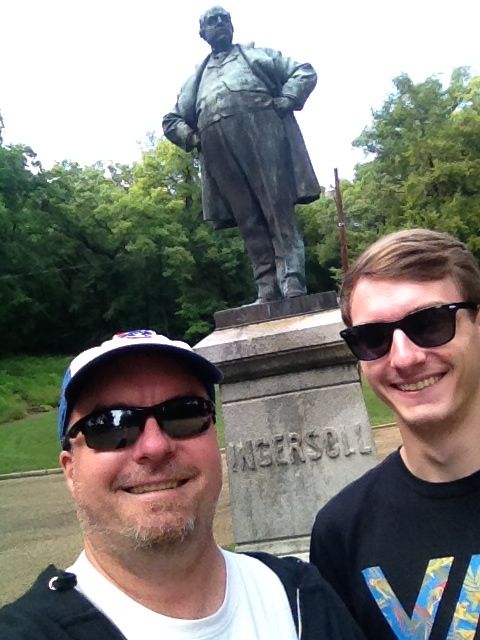
It’s opportune that I finished this book while near Peoria, I will try and pay a visit to his statue in Glen Oak Park while I’m here, and must later visit his resting place in Arlington National Cemetery. Robert, you have a standing invite to attend ‘Chris’ Afterlife Dream Party of Historical Figures’. I hope you’ll be there, oh wait… nevermind.

View all my reviews


UPDATE: We made our visit to Glen Oak Park and paid homage to Ingersoll!

chris_will_ingersoll


The 80s

I entered the 80s as a high school freshman. I exited them a married homeowner awaiting the birth of my first child. In between came those formative years of education; high school, college, and a trip to Europe where I met the wonderful woman that I married. It’s safe to say it was a formative decade for me. So when I saw that National Geographic had a six-part program called, The 80s: The Decade that Made Us coming up, I was quick to turn to my iPad and add it to my DVR schedule. My interest only grew when I learned the program was based on a book written by a friend and former (90s) intern of mine from days in the US Senate, David Sirota. Hurry now and buy your copy here like I did…Back to Our Future: How the 1980s Explain the World We Live in Now–Our Culture, Our Politics, Our Everything

Thinking about ‘decades’, it can be tricky. To me, the 80s feel like they just happened. They are a very recent part of my personal history. My three kids were all born in the 90s. The 80s are to them, what the 50s are to me. Weird. My kids aren’t as old as me. I expect my parents have an even thinner connection to the 20s.

So yeah, the 80s, I lived them. And I’m enjoying the flashback from the show, and looking forward to reading David’s book. I bought it online tonight and faced a dilemma. The book’s available for $14.99 as an iPad edition, cheaper than a print version. But I’m old school enough to hope someday I might get David to sign my copy, and that can get messy on an iPad. I’m buying the hardcover.


1 2 3 5