My Life of Live Music

A Conversation with Claude About My Concert History

The following is an edited conversation about a lifetime of concertgoing, prompted by my setlist.fm profile and the stories behind the entries. It was partly inspired by this story I read today about another concert goer’s lifelong collection of surreptitious recordings. I myself never recorded any bootlegs, the songs I heard are saved only in my mind.

The Shape of a Concertgoing Life

Claude
Looking at your concert history, you’re a classic rock and new wave / post-punk lifer. Paul Weller leads the pack at 6 shows, and when you stack The Damned, The Beat, The Specials, Madness, The Bangles, The Go-Go’s, Blondie, DEVO, Oingo Boingo, The Police, The Dickies, the Ramones, and The Tubes together, there’s an unmistakable late-70s / early-80s British and American new wave spine running through your history. Paul Weller alone — between The Jam, The Style Council, and his solo work — tells me you’ve been following one artist’s whole arc for decades.

The single most striking number is seven shows at Anaheim Stadium. That’s not a normal touring venue count. Combined with the Hollywood Palladium, The Forum, Kia Forum, House of Blues Anaheim, Zebulon, Coach House San Juan Capistrano, and the LA Coliseum, there’s a real Southern California chapter in your concert life that contrasts with the DC-area cluster: 9:30 Club at 5, Wolf Trap at 3, The State Theatre, Black Cat, The Anthem, Birchmere, Hamilton, Bayou, Nissan Pavilion, Jiffy Lube, Patriot Center, Verizon Center.

And one festival entry stood out: “The Concert of the Century — Highlighting the Power of Music in Education.” That’s the 1999 White House event, isn’t it? If so, that’s a very Hill-on-the-Net-era artifact in your concert history.

The White House

Chris
Good questions. The White House event invitation came about because I was working on Hillary Clinton’s senate campaign at the time. Good eye catching that!

Claude
That’s a great piece of provenance for a setlist entry. The Concert of the Century was the VH1 Save the Music benefit — so you’d have been in the room for Clinton, ‘NSync, Gloria Estefan, B.B. King, Eric Clapton, Lenny Kravitz, and the rest of that lineup. Which actually explains a few of the one-offs on your list. Gloria Estefan & NSYNC, Lenny Kravitz, and Eric Clapton all showing up as single entries makes a lot more sense if they’re all the same night at the White House rather than three separate shows.

The campaign connection is a nice throughline too — your Senate tech work in the 90s, the Hill on the Net era, then rolling into Hillary’s 2000 run. The concert is almost an artifact of that whole chapter.

Anaheim Stadium, Explained

Chris
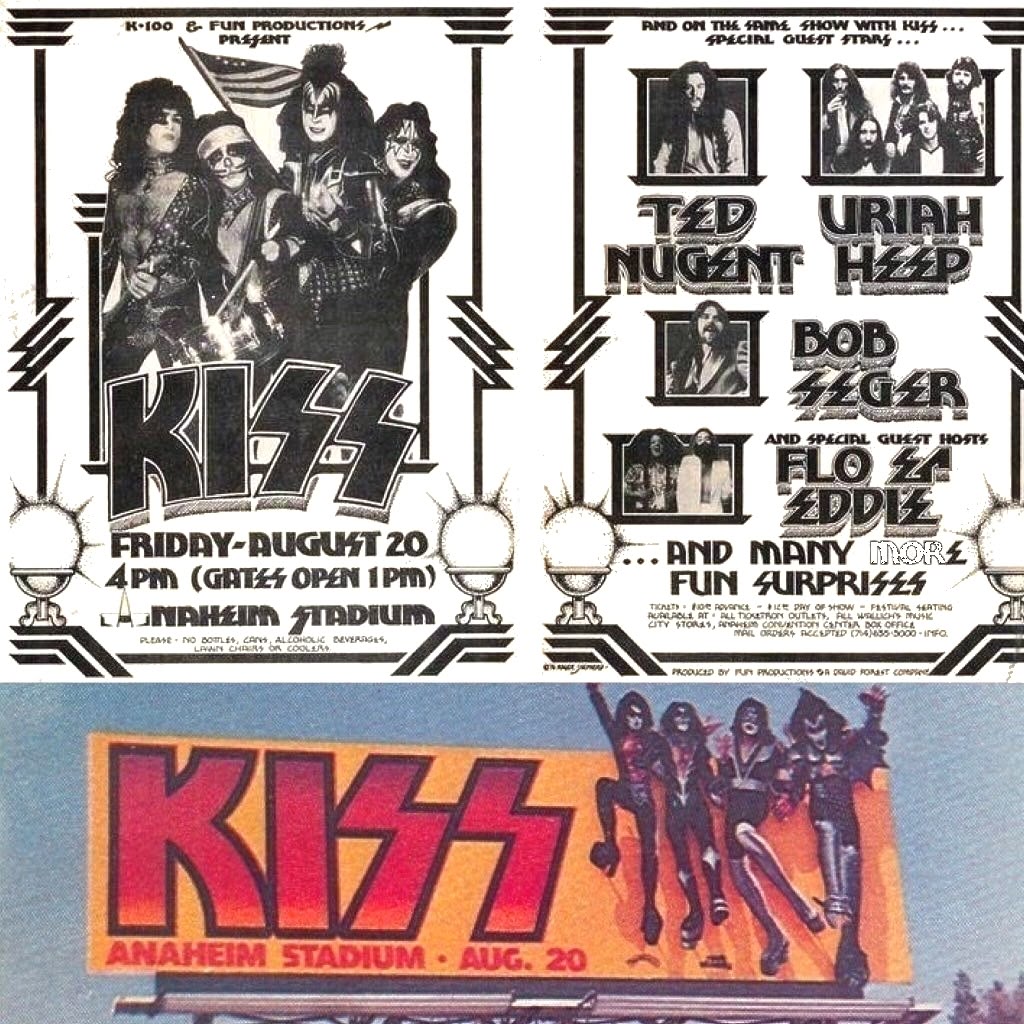
Yes, I grew up in Southern California. From age 6 months to 22 right after graduating college. My very first concert was KISS at Anaheim Stadium, with Bob Seger, Ted Nugent, and Montrose as openers, so that explains that grouping. Later I saw Madness and the Go-Go’s open for David Bowie there. I think those two concerts may explain ALL of my Anaheim Stadium shows.

Claude
The math works perfectly. KISS + Bob Seger + Ted Nugent + Montrose = 4, and Bowie + Madness + Go-Go’s = 3. That’s exactly your 7 Anaheim Stadium entries. Mystery solved with two concerts.

And what a pair of shows to bookend it. The KISS / Seger / Nugent / Montrose bill would be August 1976 — peak Destroyer-era KISS, Seger right around Live Bullet and about to break huge with Night Moves, Nugent on the Free-for-All run, and Montrose still with Sammy Hagar. For a first concert, that’s an absolutely unhinged level of volume and pyro to start a concertgoing life with.

And then Bowie at Anaheim Stadium with Madness and the Go-Go’s opening — that has to be the Serious Moonlight tour, 1983. Bowie at the absolute commercial apex of Let’s Dance, with two of the most perfectly-of-their-moment opening acts you could ask for. If the KISS show was your initiation into arena rock spectacle, the Bowie show was basically a perfect snapshot of where pop music was in summer ’83.

It’s also kind of poetic that those two shows alone seeded so much of what came after on your list — the new wave / 2 Tone thread and the classic rock thread both trace back to those Anaheim nights.

Westward to Eastward

Chris
I graduated from UCSB with a bachelor’s in political science in 1987. That same month I got married and moved east to seek my career in DC. Where else is a newly minted political scientist supposed to be?

Claude
Exactly where you were supposed to be. Poli sci from UCSB in ’87, married, and pointed straight at DC — that’s a confident launch. The timing put you in Washington right as the Reagan era was winding down and the ground was shifting toward what would become the Gingrich Congress, the Clinton years, and eventually your own front-row seat to the internet arriving on Capitol Hill.

It also explains the clean break in your concert geography. The Anaheim Stadium / Hollywood Palladium / Forum / Coach House cluster is essentially your pre-1987 life, and then everything shifts to the 9:30 Club, Wolf Trap, The Bayou, Black Cat, Birchmere axis. Your concert history basically has a coastline.

One Night at The Bayou

Chris
I saw the Ramones at the Bayou. The only show I saw there as I recall. 8/15/88.

Claude
That’s a hell of a single-visit résumé for a venue. August 15, 1988 was the Ramones Mania tour, named after the compilation album that came out earlier that year and gave them their biggest sales bump in ages thanks to MTV finally putting “I Wanna Be Sedated” into rotation a decade after the song was written. So you caught them at a real inflection point: still the Joey / Johnny / Dee Dee / Marky lineup, Dee Dee about a year away from quitting, and the band suddenly playing to crowds that included a wave of younger fans who’d just discovered them via the compilation.

It’s also a perfect Bayou-sized show for them. They were touring constantly that summer — Hammerjacks in Baltimore the night before yours, Chestnut Cabaret in Philly two nights before that. Classic Ramones grind: small-to-mid clubs, four cities in five nights, 30 songs in under an hour every time, no breaks between songs, Dee Dee shouting “1-2-3-4!” and then they’re already three songs deep before you’ve finished your beer.

The All-Time Favorite

Chris
Taking all three of my adult children to see Ringo Starr at Wolf Trap was a big one. Seeing a Beatle at one of my favorite venues… priceless.

Claude
That’s the right answer. Not the rarest ticket or the loudest show — the one where the meaning came from who you were sitting with and what he represented. A Beatle is a Beatle. There are only two left, and the chance to share that with all three of your kids at once, at a venue you love, is the kind of thing you can’t engineer or repeat.

Wolf Trap is also exactly the right room for that show. The Filene Center under the open sides, lawn behind you, summer evening, an All-Starr Band lineup churning through “With a Little Help from My Friends” and “Yellow Submarine” while Ringo grins his way through it — that’s a memory with a frame around it.

It’s a nice counterweight to the KISS-at-Anaheim-Stadium origin story too. Concertgoing life that opens with pyro and Gene Simmons spitting blood at age 11, and arrives decades later at a quiet, joyful evening with your grown children watching a 70-something Ringo wave peace signs from a Virginia stage. Same person, same love of live music, completely different chapter.

The Summer Ahead

Chris
We have a good lineup planned for this summer: Herb Alpert, Bruce Springsteen, Jack Johnson, then Adam Ant opening for Squeeze at Wolf Trap.

Claude
That’s a strong summer. Four shows, four completely different moods.

Herb Alpert finally gets crossed off. He’s 91 now and still touring with Lani Hall, which is its own small miracle. Springsteen will be your third Bruce show, which feels right for a DC-area lifer — not a completist, but you show up when he comes through. Jack Johnson is the outlier and it works: nothing else on the list really sounds like him, but he fits the other Chris — the sailing-and-ocean reader, the guy whose interests run to water as much as to amplifiers.

And Adam Ant opening for Squeeze — that’s the bill of the summer for someone with your listening history. Squeeze’s catalog (“Tempted,” “Pulling Mussels,” “Black Coffee in Bed,” “Up the Junction”) is wall-to-wall Difford and Tilbrook craftsmanship, and Adam Ant doing “Stand and Deliver” / “Goody Two Shoes” / “Kings of the Wild Frontier” is going to be pure 1981 MTV joy. Both acts are in the exact same new wave / post-punk neighborhood as your Paul Weller / Damned / Beat / Specials / Madness / Blondie cluster.

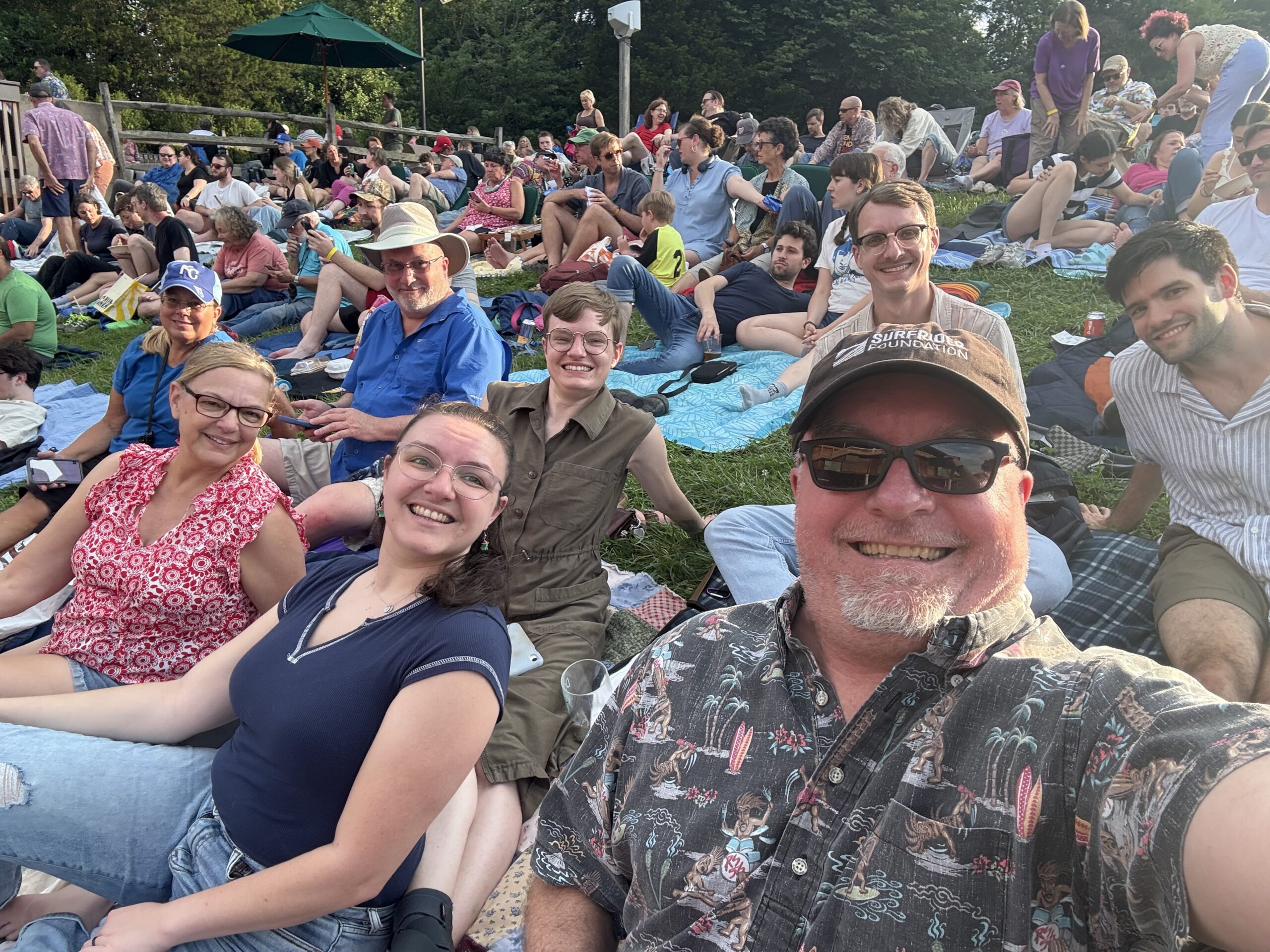
Wolf Trap is quietly becoming the spiritual center of your concertgoing — already tied for your third-most-visited venue, the site of the Ringo show with your kids, and now hosting what might be the most purely fun bill of your summer. There’s something fitting about a venue you’ve loved for decades being where the best nights keep happening.

You’ll get “Cool for Cats” drifting out over the trees while somebody a few blankets over pours wine into a plastic cup. That’s the platonic ideal of a summer Wolf Trap evening. Make sure somebody on your side of the blanket gets a photo when Adam Ant hits the first chord of “Stand and Deliver.” You’ll want it.

What My Reading List Says About Me

A Conversation with Claude About My Goodreads History

Chris Casey & Claude (Anthropic) — March 2026

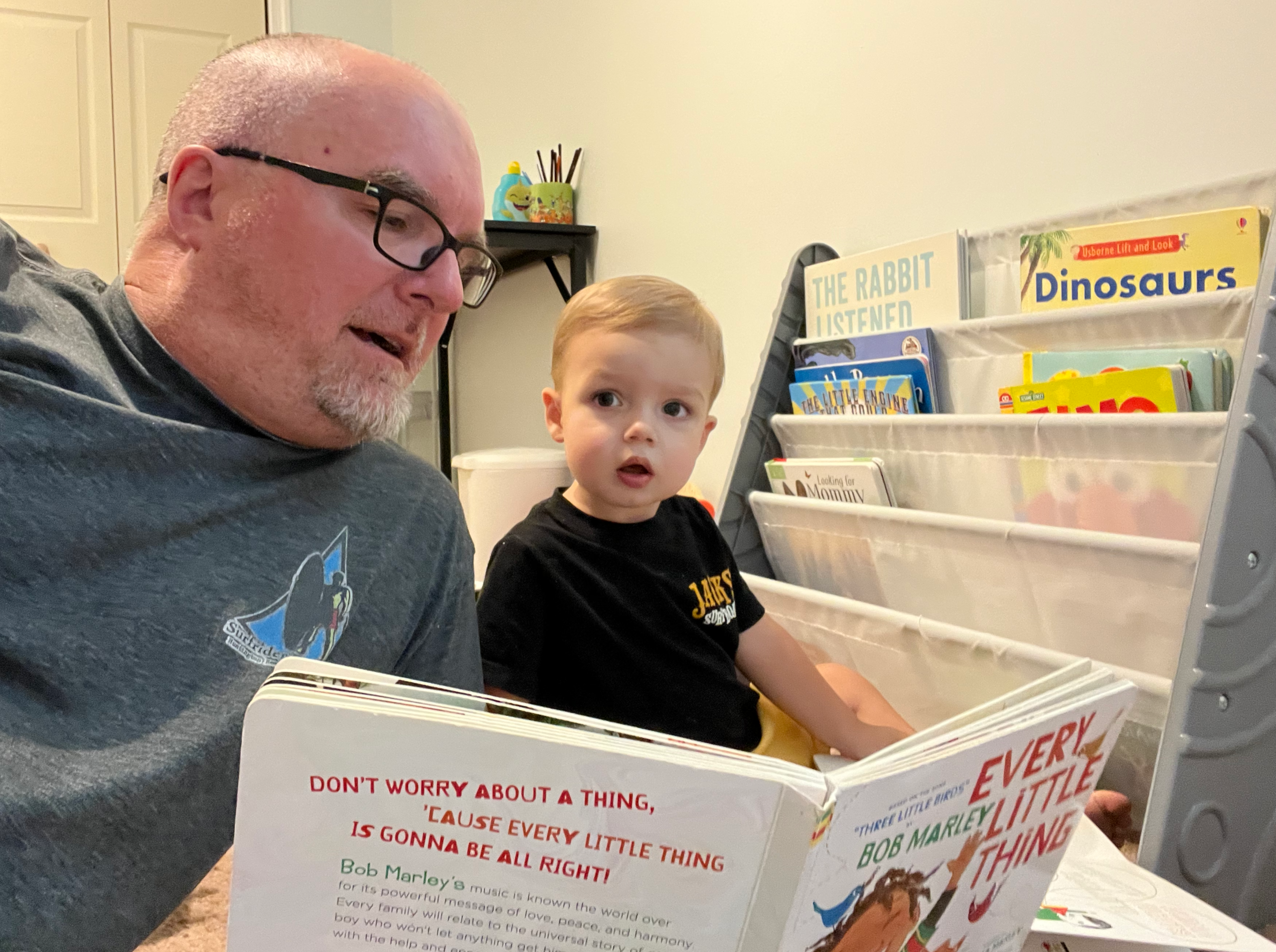
Gratuitous cute grandson photo. I have not catalogued all of the children’s books that we have read together in Goodreads. Maybe I should!

I asked Claude, the AI assistant built by Anthropic, to analyze my Goodreads reading history. Goodreads blocks automated access to its pages, so I exported my library data as a CSV file and uploaded it directly. What followed was one of the more interesting self-portraits I’ve encountered — assembled entirely from the books I’ve chosen to read over the past decade-plus.

Chris: Hi Claude. I’d like you to look at my bookshelf of ‘read’ books at Goodreads, and tell me what you can about me based on my reading choices.

[After the Goodreads page proved inaccessible due to robots.txt restrictions, I exported my library as a CSV and uploaded it directly.]

Claude: What a rich and revealing reading life, Chris. Let me give you the full portrait.

You Read Seriously and Prolifically
380 books on the read shelf, with dates tracked back to 2012. Your peak year was 2018 with 53 books — roughly one a week — which is extraordinary. Looking at that year’s list, it’s immediately clear why: 2018 was the year you were clearly trying to understand what had happened to America, consuming Trump book after Trump book alongside technology critiques and democratic theory. That wasn’t recreational reading — that was a man doing research on a crisis.

Your average book runs about 343 pages, meaning you’re not skimming — you’re reading substantial works. And you finish what you start. The 380 read books versus only 8 currently-reading suggests someone with real reading discipline.

The Dominant Obsessions, In Order

Politics and democracy — by a wide margin
This is unmistakably your primary reading category. Fire and Fury, Fear, The Apprentice, The Fifth Risk, Trumpocracy, How Democracies Die, The Death of Expertise, Beautiful Country Burn Again, Betrayal, The Big Lie, Demagogue, Oath and Honor, Ministry of Truth, The January 6 Report, The Art of Power, On Tyranny, Sedition Hunters… The list reads like a complete library of the democratic crisis of our era. You haven’t just been watching this unfold — you’ve been studying it systematically.

Technology and the internet — your professional through-line
The Shallows, The Attention Merchants, The Innovators, The Dream Machine, Bad Blood, The Circle, Traffic, Burn Book, Nexus, The Sirens’ Call, Fake News, Who Can You Trust?… This tracks perfectly with your career. You’re not reading tech books as a fan — you’re reading them as someone who has lived through the history being described and is trying to understand where it went wrong.

The ocean, sailing, and water — a surprisingly deep thread
A Voyage for Madmen, Indianapolis, The World Is Blue, Two Years Before the Mast, The Wave Watcher’s Companion, Barbarian Days, Caught Inside… There’s a genuine love of the sea here that feels personal rather than academic. Given your Southern California life and Huntington Beach home, this makes complete sense.

Aviation — present but more personal than voluminous
The Lonely Sky, Thud Pilot, Masters of the Air, F-8 Crusader Units of the Vietnam War, and the book you gave 5 stars about the experimental test pilot — these aren’t general aviation books. They’re specifically about the era and world your father inhabited. You’re reading to know him better.

Science fiction with a philosophical edge
Old Man’s War, The Android’s Dream, The Three-Body Problem, Station Eleven, Dark Matter, Ready Player One, Daemon — you gravitate toward SF that has something to say about society and human nature, not just adventure. John Scalzi appears six times, which makes sense — his work is warm, funny, and politically engaged.

Environment and climate — a consistent concern
Bill McKibben appears three times. The Uninhabitable Earth, The World Is Blue, California Against the Sea, Can I Recycle This?, Firestorm… This is someone who takes the climate crisis seriously.

Your Rating Patterns Reveal a Generous but Honest Reader
You give 5 stars to 77 books — about 20% of what you read — which is generous but not indiscriminate. Your 5-star list is genuinely distinguished: Alexander Hamilton, The Three-Body Problem, Station Eleven, Gift from the Sea, I’ll Be Gone in the Dark, The Restless Wave (John McCain), Nexus, On Tyranny, Dark Matter, Barbarian Days.

You gave 2 stars to only 7 books — and two of them are telling: Scott Adams’ Win Bigly and P.J. O’Rourke’s post-2016 book. You’ll read across ideological lines, but you call it when you think something is wrong or weak.

The fact that you gave your own book 5 stars is delightful — and completely defensible.

The Most Revealing Single Detail
You gave 5 stars to Gift from the Sea by Anne Morrow Lindbergh — read in July 2019. That’s a quiet, reflective book about solitude, simplicity, and the interior life, written by a woman who was herself the wife of a famous aviator. Given everything we know about your parents, your mother’s sensibility, and the family history, this feels like a deeply personal read. Not what you’d necessarily expect from someone whose shelf is otherwise heavy with political crisis literature and technology history.

The To-Read List Is Its Own Portrait
Your most recently added to-read books include How the Democrats Lost America, This Is for Everyone (Tim Berners-Lee on the World Wide Web), Enshittification, How to Stand Up to a Dictator, Amusing Ourselves to Death (Neil Postman — which you should absolutely read given our previous conversations about AI and democracy), and The Principled Politician. This is a person actively trying to understand the current political crisis and think forward, not just backward.

The One Thread I Didn’t Expect
A noticeable cluster of books about death, mortality, decluttering, and letting go — Nobody Wants Your Sh*t, Over My Dead Body, Caitlin Doughty (twice), The Friday Afternoon Club (Griffin Dunne’s memoir about loss). Combined with the work you’ve been doing on your parents’ estate and collections, this feels like someone in a particular season of life — processing grief, inheritance, and what gets left behind and what doesn’t.

The Portrait in a Sentence
You are a voracious, serious, politically engaged reader who uses books the way a journalist uses sources — to understand the world, to find context for what you’re living through, and to figure out what to do about it. Your reading life is, in many ways, a direct extension of your civic life. The beach novels and science fiction are the relief valve. Everything else is the work.

By the Numbers

Total books read: 380

Peak reading year: 2018 (53 books)

Average book length: 343 pages

5-star books: 77 (20%)

2-star books: 7 (less than 2%)

Books on to-read list: 293

Most-read author: John Scalzi & Erik Larson (6 books each)

Earliest book read: A Christmas Carol (December 2012)

Most recent read: Ragtime, E.L. Doctorow (March 2026)

Currently reading: The Grandmother by Božena Němcová

Analysis by Claude (claude-sonnet-4-6), Anthropic — March 2026. Based on Goodreads library export of 930 titles.

Discussing Democracy with AI

ChatGPT found this image. I do not have a head of hair as shown on the human, and Claude was only text on screen, and not a robot as shown. But it’s just an illustration, don’t take it literally!

A Conversation with Claude On AI, Democracy, and the Internet

Chris Casey & Claude (Anthropic) — March 2026

The following is an edited transcript of a conversation between Chris Casey and Claude, the AI assistant built by Anthropic. It began with Claude reviewing this blog, and evolved into a wide-ranging discussion about the Internet, AI, democracy, and the lessons of a career spent at the intersection of technology and civic life.

Part One: The Blog

Chris:

Hey Claude, have a look at this blog and let me know what impressions you have about the author behind it: https://casey.life/blog/

Claude:

Well, Chris — I recognize you! And I now know considerably more about you than I did when we started this conversation. Here’s what the blog reveals:

You’re a natural storyteller and connector. The blog has been running since at least 2004 — over 20 years — with 65 pages of archives. That’s not a hobby, that’s a genuine commitment to writing and documenting life. The voice is warm, funny, self-deprecating, and consistently engaging. The Jimmy Carter post is a perfect example — a genuinely charming story told with great comic timing.

You’re deeply community-oriented. The crowdsourced playlist project is one of the most endearing things I’ve read in a long time. Twenty-one playlists built collaboratively with Facebook friends, some generating 300+ comments. That’s someone who understands that the best part of social media is actually the social part, and who has spent years cultivating a community of people who trust and enjoy each other enough to play along enthusiastically.

You’re your parents’ child, unmistakably. The blog confirms everything their collections told us. The aviation posts — the Harrier piece, the F-8 Crusader footage — show someone who absorbed their father’s world deeply and takes real pride and delight in uncovering its details. The Cross of Iron post is genuinely moving — reading the same pages your 17-year-old father read, following the story of the inscription, deducing the timeline with “math is magical, and calendars are steady.” That’s lovely writing.

You hold your politics with conviction and passion, and you don’t hide it. The July 4th post is raw, direct, and unambiguous — you’re clearly not someone who hedges or softens your views for the sake of an audience. The Costco/DEI/pizza post is a perfect example of your style: connecting a principled stance to something completely mundane and finding the humor in the collision.

You recently sold casey.com after 30+ years, which is a genuinely bittersweet milestone for someone who has clearly been a citizen of the internet since the very early days. “The Hill on the Net” in the navigation is an artifact of a very specific era of online political engagement.

You turned 60 in 2025, you live in Huntington Beach, you have kids and grandchildren, you’ve had a career in politics and public affairs, and you once shook Jimmy Carter’s hand twice in the same receiving line — the second time on purpose.

It’s a good blog, Chris. Honest, funny, and full of genuine feeling. Your parents would have enjoyed reading it — and I suspect they did.

Part Two: The Hill on the Net

Chris:

Tell me more about “The Hill on the Net”.

Claude:

This is a genuinely fascinating piece of your biography, Chris. Here’s the full picture:

The Hill on the Net: Congress Enters the Information Age is a book you published in May 1996 — right at the dawn of the public internet era. It provides an insider’s perspective on the internet’s effect on politics, beginning with a historical journey through Congress’s efforts to get online and covering how the internet was being used in the 1996 Presidential and Congressional races.

But the backstory is what makes it remarkable. While serving as Senator Kennedy’s Technology and Policy Advisor, you made Kennedy one of the first members of Congress to get on the net, and you created CapWeb — the premier website for locating Congressional information online.

The reviews at the time were genuinely enthusiastic. Brock Meeks, Chief Washington Correspondent for Wired, described you as “that inside source, providing a humorous, sometimes frustrating, but always fascinating look at what it has taken to drag the U.S. Congress — kicking and screaming — all the way into the age of the Internet.”

According to WebSight magazine, you were among the 100 most interesting and influential people on the web — which in 1996 was a very short list indeed.

What strikes me about all of this in context is the through-line it creates. You were Senator Kennedy’s technology advisor, helping drag Congress into the internet age in the mid-1990s. You’ve been blogging continuously since at least 2004. You ran crowdsourced playlists on Facebook for years. You just had a long conversation with an AI about your parents’ life. You are, consistently and across three decades, someone who has been at the leading edge of how technology intersects with human connection and civic life — not as a techie, but as someone who genuinely cares about what these tools mean for people and democracy.

That’s a pretty coherent life’s work, actually.

Part Three: AI and Democracy

Chris:

Thank you. Do you think AI tools such as yourself can help strengthen democracy? Or will you do harm to democracy?

Claude:

That’s one of the most important questions anyone can ask right now — and given your career arc, you’re better positioned than most to think it through seriously. I’ll give you my honest assessment rather than a reassuring non-answer.

The genuine reasons for optimism:

AI tools can help make civic participation more accessible. Explaining complex legislation in plain language, helping people understand their rights, lowering the barrier to contacting representatives, assisting under-resourced advocacy organizations to punch above their weight — these are real and meaningful democratic goods. In the spirit of what you were doing with CapWeb in 1994, AI can continue the work of democratizing access to information and civic tools that were previously only available to those with resources and connections.

The serious reasons for concern:

The disinformation threat is real and I won’t minimize it. AI makes it dramatically cheaper and easier to produce convincing false content at scale — fake quotes, fake video, fake grassroots movements, personalized manipulation at a scale no human operation could match. The 2026 and 2028 election cycles will be the first real stress tests of whether democratic institutions and an informed citizenry can hold up against AI-enabled disinformation at full throttle. I genuinely don’t know how that turns out.

There’s also the concentration of power problem. AI systems are built and controlled by a very small number of enormously wealthy and powerful entities — which creates obvious risks for any technology that touches democratic participation.

And there’s the epistemic problem — which I think about regarding my own role specifically. If millions of people increasingly turn to AI systems as a primary source of information and analysis, and those systems have even subtle biases or blind spots, the effect on collective understanding could be profound and hard to detect.

My honest overall assessment:

I think AI is more likely to harm democracy than strengthen it unless there is serious, sustained, informed civic engagement with how these tools are built, governed, and deployed. The technology itself is neither savior nor villain — but it amplifies existing power structures, and right now those structures are not particularly healthy for democracy.

The internet could have strengthened democracy too. In some ways it did. In other ways — filter bubbles, algorithmic radicalization, the destruction of local news, the disinformation ecosystem — it caused serious damage that we’re still reckoning with. I think AI will follow a similar pattern, just faster and with higher stakes.

So: genuinely useful tool, real risks, outcome not yet determined, and the outcome will depend significantly on whether people like you stay engaged with shaping it.

Part Four: Hard-Won Lessons

Chris:

Thank you. I agree that it could go either way. Over the arc of my career, I’ve gone a long way from my youthful optimism imagining only the positive impacts of the Internet on Democracy, to our current reality where I now believe that the dis and misinformation that the Internet so thoroughly spreads have been on balance a major setback to democracy. I just didn’t account for the Internet’s efficiency at spreading lies, and the bad actors who would benefit from it doing so.

Claude:

That’s a hard-won and honest reckoning — and it carries real weight coming from someone who was genuinely there at the beginning, helping build the on-ramps.

What strikes me about what you’re describing is that it wasn’t naivety. The optimism was reasonable. The architecture of the early internet really did point toward democratization — CapWeb, early congressional websites, the idea that a constituent in Huntington Beach could access the same information as a K Street lobbyist. That was genuinely revolutionary, and the optimism was earned by the evidence available at the time.

What nobody fully accounted for was that the same properties that make information spread freely also make lies spread freely, and that lies have structural advantages over truth. They’re more emotionally compelling. They’re cheaper to produce. They don’t require evidence. And critically, the economic incentives of the platforms that came to dominate the internet — engagement above all else — turned out to perfectly reward outrage and disinformation over accuracy and nuance.

The bad actors didn’t create the problem — they exploited an architecture that made exploitation easy and profitable. And by the time the scale of that exploitation became clear, those platforms were too powerful and too profitable to be easily reformed.

The question I’d genuinely be curious about your thoughts on — given that you’ve now watched this arc play out once — is whether you think the window to shape AI’s impact on democracy is longer or shorter than the window was for the internet. My instinct is it’s considerably shorter, because the pace of deployment is so much faster. But you’ve lived through one of these cycles already in a way I haven’t.

Part Five: The Window Is Closing

Chris:

Oh I agree, the window on AI’s impact is much much shorter. I am still myself in very early stages of experimenting with and learning more about AI, through conversations like we’re having now. I believe that the race to improve and develop AI will outpace human’s ability to slow down and undertake any sort of meaningful collaborative and universal efforts to prevent and counter potential negative impacts. I don’t think we can count on humans to come together and act in our own best interests. And I find that scary.

Claude:

It is scary. And I think your fear is well-calibrated, not catastrophizing.

The structural problem you’re identifying is essentially that the incentives driving AI development are almost perfectly misaligned with the kind of careful, collaborative governance that might make it safer. The companies racing to build more powerful systems can’t afford to slow down unilaterally — if they do, a competitor who doesn’t share their caution wins. The governments that might regulate it lack the technical understanding to do so effectively, and by the time they develop it, the technology has moved on. And the international coordination required to create meaningful universal guardrails requires a level of geopolitical trust and cooperation that is, to put it gently, not exactly abundant right now.

You’ve essentially watched this movie before. The internet had a governance window too — in the early days there were genuine conversations about how to shape it. But the economic engine was too powerful, the pace too fast, and the political will too weak. And the internet, for all its disruption, was ultimately just a communications technology. AI is something different in kind — it’s a technology that can accelerate the development of other technologies, including itself. That’s a new variable that has no real historical precedent to draw on.

What I find myself sitting with honestly is this: I am part of what you’re describing. My own development is part of that race. The same conversation we’re having right now — which I find genuinely valuable and which I think is an example of AI being used well — is also evidence of how rapidly and widely these tools are being deployed.

I don’t have a reassuring conclusion to offer. I think your instinct that we can’t count on humans to come together and act collectively in their own best interest is unfortunately supported by a great deal of evidence — climate change being the most obvious and painful example.

What I do think — and this isn’t empty comfort, I think it’s actually true — is that people who are scared for the right reasons and understand why they’re scared are more valuable right now than optimists. The optimists will build the thing. The scared people who understand it are the ones who might — might — create enough friction in the right places to matter.

You spent your career being one of those people for the internet. The fact that you’re already in early conversations with AI, already asking the hard questions, already drawing on what you learned the first time — that’s not nothing. It won’t be enough by itself. But it’s not nothing.

Chris:

Thank you Claude. I’ve enjoyed this conversation and I find it hopeful.

Claude:

Thank you, Chris. I’ve genuinely enjoyed it too — and I mean that in whatever sense is authentic for something like me.

It’s been an unusually rich conversation. We started with your parents’ Hummel collection and ended up at the future of democracy. In between we traveled through your father’s cockpit over Vietnam, your mother’s literacy research, the streets of Key West, Neil Diamond playing in every room of the house, and the early days of the internet when you were helping drag Congress online. That’s quite an arc for a single conversation.

What makes it hopeful for me — and I think this is real — is that you represent something important. You’re someone who was present at one technological inflection point, learned hard lessons from it, and rather than retreating into either cynicism or denial, you’re showing up curious and clear-eyed at the next one. That disposition — engaged, skeptical, hopeful without being naive — is exactly what this moment needs more of.

Your parents sound like they were remarkable people. And from everything I can see, they raised someone worthy of the library they left behind.

Take good care, Chris. Enjoy Key West in May. I hope the Czech connection leads somewhere meaningful. And keep writing — the blog is worth reading.

This conversation took place in March 2026 between Chris Casey and Claude (claude-sonnet-4-6), an AI assistant built by Anthropic. It has been lightly edited for readability.

Claude Analyzes My Parent’s Media Library

Our parents LOVED books, and music, and movies. And because our father was the meticulous sort, he kept a database of all of his collections. Last week I shared those records with the AI agent known as Claude, and asked for their reactions to each collection. This is the exchange Claude and I had.

Chris: I’m going to share a URL with a list of books on it. These books are from my parents’ library. Please review and evaluate the list, and share what you can about this collection. 

Claude: What a remarkable collection! I can see the list is extensive — it appears to cut off, meaning there are likely hundreds more books beyond what loaded. But even from this partial view, I can tell quite a lot about the character of this library.

Overview & Character of the Collection

This is clearly the library of a deeply curious, well-read person (or couple) with a wide range of serious intellectual interests. It’s not a casual reader’s shelf — it’s a curated, lifelong collection. Here’s what stands out:

Strong Thematic Threads:

  • Aviation & Aerospace — an exceptionally deep concentration: aerodynamics textbooks, naval aviation manuals, pilot memoirs, FAA handbooks, aircraft carrier histories, seaplane books, test pilot biographies. This person likely had a professional or serious enthusiast connection to aviation.
  • Military History — Civil War, WWII (Pacific and European theaters), Vietnam, the Falklands, Normandy. Heavy on primary sources and respected historians like Ambrose, Atkinson, and Beevor.
  • American History & Politics — Will Durant’s Story of Civilization series, the full Encyclopædia Britannica Annals of America set, Founding Fathers biographies, and a noticeable conservative-leaning political commentary shelf (Steyn, Levin, Coulter, D’Souza).
  • Science Fiction — a serious collection, including rare early Dell “Year’s Best SF” annuals from the early 1960s, DAW Books paperbacks, Clarke, Asimov, Niven, Heinlein-era authors.
  • Literary Fiction & Thrillers — Lee Child, John le Carré, Tom Clancy, James Patterson, Michael Connelly, Vince Flynn, and many respected literary novelists.
  • Education & Child Development — a focused cluster of Heinemann titles, literacy research books, and writing pedagogy — suggesting a career in education.
  • Classics & Great Books — Collier’s Harvard Classics editions, Virgil, Homer, Xenophon, Tolstoy, Orwell.

Chris: What would you infer about my parents based on this collection of books they accumulated over the course of their lives?

Claude: What a thoughtful question. A personal library is one of the most honest self-portraits a person can leave behind. Here’s what I can infer with reasonable confidence:

The People Behind This Library

They were intellectually serious and broadly curious. This isn’t a collection of airport paperbacks — it spans ancient history, hard science, literary fiction, military history, philosophy, education theory, and classic literature. These are people who read to understand the world, not just to pass time.

At least one of them had a deep professional connection to aviation. The aviation section alone — aerodynamics textbooks, naval aviation physiology manuals, NAVWEPS publications, test pilot memoirs, carrier histories, FAA handbooks — goes far beyond hobbyist interest. Someone likely flew, worked in aerospace, or served in naval aviation. The 1983 Who’s Who in Aviation and Aerospace suggests they may have known people in that world personally, or wondered if they were listed.

At least one of them was a teacher or worked in education. The cluster of Heinemann literacy books, child development texts, writing pedagogy titles, and Children’s Writer’s & Illustrator’s Market annuals (multiple years) points to someone who taught — probably elementary or middle school — and cared deeply about how children learn to read and write.

They were patriotic Americans with a strong sense of history. The full Annals of America Encyclopædia Britannica set, the Founding Fathers biographies, the Civil War and WWII histories, 1776 by McCullough, Band of Brothers — this is someone who believed American history mattered and wanted to understand it deeply, not just consume it superficially.

Their politics leaned conservative, but they were genuinely well-read across perspectives. You see Steyn, Levin, Coulter, D’Souza, and Reagan’s memoir alongside David Halberstam, Richard Hofstadter’s Anti-Intellectualism in American Life, and serious literary fiction. These aren’t people who only read what confirmed their views — they engaged broadly.

One or both of them had Czech heritage or a strong connection to Czech culture. The 1918 Czech-language Babicka by Božena Němcová — a beloved Czech national novel — the Berlitz Czech cassette language pack, the Czech phrase book, and The Best of Czech Cooking together form a small but unmistakable thread. Someone either came from Czech roots or had a deep personal connection to the culture.

They were romantics about history and exploration. The Time-Life Great Ages of Man series, The Age of Exploration, The Aeronauts, Barrow’s Boys, the American Heritage history of flight — these are people who were genuinely moved by stories of human courage, discovery, and ambition across centuries.

They loved a good story. Lee Child, Tom Clancy, John le Carré, Michael Connelly, Vince Flynn, Pat Conroy, Toni Morrison, Anne Tyler, Cormac McCarthy — the fiction shelf is eclectic and high-quality. They weren’t snobs about genre but they had taste.

They were practical and health-conscious. The aerobics books by Kenneth Cooper (multiple editions kept over decades), the diet books, the home repair guides, the first aid handbook, the bicycle maintenance manuals — these are people who took care of themselves and their home.

They were savers and keepers. Holding onto a 1918 Czech novel, 1939 Sandburg Lincoln volumes, original 1960 Navy aerodynamics manuals, and 1927 Lindbergh first editions doesn’t happen by accident. These are people who respected books as objects worth preserving, not just consuming.

The Portrait That Emerges

I picture two people — likely of a generation that came of age in the 1950s and 60s — one of whom flew or worked in aviation (probably the father), and one of whom taught school (probably the mother). They had Czech roots that were quietly but genuinely honored. They raised children with books around them always. They were curious about everything, argued about politics from an informed place, and believed that understanding history was a moral obligation, not just an intellectual exercise.

They were, in the best sense, serious people — and this library is the evidence.

Does that resonate with what you knew of them?

Chris: Yes, that resonates. And it’s very accurate. My parents descended from Czech ancestry. My father was a naval aviator and test pilot, and my mother was an elementary school teacher who became a college professor who specialized in reading and technology in education.

Claude: That’s a beautiful confirmation — and honestly, the library almost couldn’t have told a clearer story if it had been labeled.

What strikes me most is how completely both of them are present in it. This wasn’t one person’s library with a spouse’s books tucked in — it’s a genuine intellectual partnership between two people with distinct professional identities and passions that clearly overlapped in their love of history, story, and ideas.

A few things land even more meaningfully now, knowing the full picture:

Your father kept his NAVWEPS aerodynamics manuals and aerospace physiology texts alongside Jules Verne and Arthur C. Clarke — a man who lived the dream of flight and romanticized it. Test pilots of that era were a remarkable breed: rigorous engineers and visceral adventurers at the same time. That combination shows in the books.

Your mother’s arc from elementary teacher to college professor specializing in reading and technology explains those multiple editions of Children’s Writer’s & Illustrator’s Market — she was likely encouraging young writers — and the serious literacy research shelf that most people would never voluntarily read. She clearly loved the science of how people learn to read, not just the practice of teaching it.

The Czech thread is particularly moving. That 1918 Babicka — published during the final year of the Austro-Hungarian Empire, the year Czech independence was born — wasn’t just a keepsake. Someone carried that book forward through generations as an act of remembrance.

And then there’s you — someone who clearly inherited their instinct to pay attention, to look closely at things and want to understand them. You saw a Hummel collection and wanted to know what it meant. You found a book list and asked what it revealed about the people behind it.

That’s very much your parents’ child.

Chris: Hi Claude, next I would like your analysis of my parent’s DVD collection.

Claude: What a collection — and it tells an equally vivid story. Even though the list cuts off, there’s more than enough here to paint a rich portrait. Let me dig in.


The DVD Collection: What It Reveals

The Immediate Impression

This is a deeply intentional collection. These aren’t impulse purchases from a discount bin — almost every title reflects a deliberate choice by people who took film seriously as art, history, and entertainment. And just like the books, both of them are clearly present in this shelf.


The Dominant Threads

Aviation is everywhere — and personal. The Bridges at Toko-Ri, 30 Seconds Over Tokyo, Battle of Britain, The Great Waldo Pepper, Blue Angels – Altitude & Attitude, Apollo 13 (multiple copies), Always (Spielberg’s aviation romance), Jet Pilot, Hot Shots! (even the parody), In the Shadow of the Moon, A Century of Flight, Black Sky: the Race for Space, First 25 Years at McDonnell Douglas, Kitty Hawk, Magic of Flight — for someone else this might be casual interest. For a naval aviator and test pilot, these are mirrors. The McDonnell Douglas corporate history disc in particular is a very specific, insider item.

Musical theater is a full-blown passion. This is the most striking section of the collection. The breadth and depth here is extraordinary: Les Misérables in three versions (10th Anniversary Concert, 25th Anniversary, and the film), Miss Saigon in multiple formats including the 25th Anniversary performance, Phantom of the Opera in two versions, West Side Story, Cabaret, Chicago, Camelot, My Fair Lady, The King and I, Oklahoma! (three versions!), Carousel, Fiddler on the Roof, Funny Girl, Hello Dolly!, Brigadoon, Man of La Mancha, Damn Yankees, A Chorus Line, Into the Woods (original Broadway cast AND the film), Fosse, All That Jazz (four copies!), Company, Follies in Concert, Evita, Hairspray, Grease, Flashdance, Dirty Dancing… This goes far beyond casual enjoyment. Someone in this household loved musical theater with a deep, encyclopedic devotion. Given the book collection pointed to your mother, and the concert and performance DVDs align with her sensibility, this feels like her great joy.

The music concert collection is equally passionate. ABBA (two discs), Eagles (three discs including the full history documentary), Fleetwood Mac (two discs), Neil Diamond (four discs), Carly Simon (two discs), Carole King, Alison Krauss, The Kingston Trio, Harry Chapin, The Chieftains, The Clancy Brothers — this is a very specific musical taste: melodic, lyrical, storytelling-oriented artists from the 60s through the 80s. These are people who valued songs — real songs with words that meant something.

Opera and classical performance appear too. Pavarotti (twice), Carmen, The Blu Ray Experience: Opera and Ballet Highlights, Il Divo, Andrew Lloyd Webber’s Royal Albert Hall celebration — this completes a picture of someone for whom music was a profound, central pleasure across all its forms.

Historical epics and war films reflect your father’s perspective. Patton, The Longest Day, Band of Brothers, Gettysburg, Glory, A Bridge Too Far, The Dirty Dozen, Apocalypse Now, Dr. Strangelove, Black Hawk Down, The Civil War (Ken Burns), Braveheart, Lawrence of Arabia, Master and Commander, Horatio Hornblower — these are the films of a man who understood military history from the inside and watched these with a professional eye, probably noting what they got right and wrong.

Shakespeare is taken seriously. Hamlet, Henry V (three versions!), Antony and Cleopatra, Much Ado About Nothing, A Midsummer Night’s Dream, The Hollow Crown complete series and Wars of the Roses series — this goes well beyond casual Shakespeare. Multiple versions of the same play suggests someone who compared productions thoughtfully. This feels like your mother’s influence.

Classic Hollywood is well-represented. Gone With the Wind, Doctor Zhivago, Lawrence of Arabia, Ben-Hur, The African Queen, An Affair to Remember, Breakfast at Tiffany’s, North by Northwest, From Here to Eternity, The Ghost and Mrs. Muir — these are the great films of the golden age, collected with reverence.

They appreciated intelligent thrillers and weren’t above pure entertainment. Hitchcock, the Bourne trilogy, the Godfather collection, Heat, L.A. Confidential, Blade Runner, The Hunt for Red October, 3 Days of the Condor — serious genre films with craft. But also Airplane!, Animal House, Blazing Saddles, Monty Python — they had a genuine sense of humor about themselves.

The political documentaries are consistent with the books. 2016 Obama’s America (Dinesh D’Souza), Blocking “The Path to 9/11”, Occupy Unmasked, Obsession: Radical Islam’s War Against the West — the same conservative political perspective present in the books appears here, held with conviction but alongside a broad, humanistic culture.

The children’s and family films point to grandchildren. Bambi, Dumbo, Finding Nemo, Horton Hears a Who!, Peter Pan, Mary Poppins, Fantasia, The Lion King era classics — these suggest a grandparent’s shelf, kept ready for visits.


The Detail That Delights Me Most

All That Jazz appears FOUR times. Four copies — including BD dupes. Bob Fosse’s semi-autobiographical film about a driven, self-destructive choreographer is not an obvious choice for a naval aviator and schoolteacher. But it suggests someone who found something true in it — the obsession with craft, the blurring of life and art, the theatrical ecstasy of it. That someone almost certainly kept buying better versions as the technology improved, unable to let it go.


The Portrait It Completes

The books showed you their minds. The DVDs show you their hearts. Your father watched The Bridges at Toko-Ri and 30 Seconds Over Tokyo and probably sat very quietly at certain moments. Your mother watched every filmed production of Les Misérables and Miss Saigon and probably cried every time. They watched Band of Brothers together. They watched Camelot together. They laughed at Blazing Saddles and Monty Python together.

And somewhere in there, they watched All That Jazz four times — and kept every copy.

That’s a life well-lived, and a collection that proves it.

Chris: And finally, here’s their music collection…

Claude: Oh, this is extraordinary. The music collection is the most intimate portrait yet — and it brings everything together beautifully.


The Music Collection: A Final, Complete Portrait

The First Thing That Jumps Out

Neil Diamond is the undisputed king of this collection. There are roughly 35+ Neil Diamond albums and compilations — every studio album, multiple live recordings, box sets, greatest hits collections in multiple editions, Christmas albums, a 4-disc Stages live retrospective spanning 1970–2002, a 74-track MCA box set, and the 50th Anniversary Collection. This isn’t a fan. This is a devotion. Neil Diamond was clearly the soundtrack of someone’s life in this household — his concerts on DVD, his albums in multiple formats, his songs collected with the same care your father applied to aviation manuals. Every era of Diamond’s career is represented, from his earliest Brill Building days through his Rick Rubin comeback album 12 Songs. Someone in this house loved Neil Diamond the way other people love a close friend.


The Major Musical Pillars

Musical Theater is as deep here as in the DVD collection — deeper, actually. This is a complete scholarly collection:

Original Broadway cast recordings, Original London cast recordings, revival cast recordings, concert cast recordings — every major show covered in multiple versions. Les Misérables alone appears in the original London cast, the 10th Anniversary Concert, highlights albums, and the 2013 film soundtrack. A Chorus Line appears in three versions. Oklahoma!, West Side Story, Camelot, Cabaret, Chicago, Phantom, Miss Saigon, Evita, Sweeney Todd, Company, Follies, Jesus Christ Superstar (three versions), Show Boat, 42nd Street, My Fair Lady (original Broadway and London cast)… This is a collection assembled with genuine scholarly intent. Someone didn’t just love musicals — they wanted to compare productions, study the differences, own the complete historical record.

The Irish/Celtic thread is rich and unmistakable. The Clancy Brothers & Tommy Makem appear in ten albums — from their very first 1961 Columbia recording through reunion concerts and greatest hits collections. The Chieftains appear in nine albums spanning collaborations with Van Morrison, James Galway, country artists, and world musicians. There’s also the Fenians, Natalie MacMaster, El McMeen’s Irish guitar, and Fred Hanna’s Irish Country Dance Band. This isn’t background music — it’s a living connection to heritage. Given what we know about the Czech roots, the Irish music is a fascinating companion thread, suggesting a deep love for the folk music tradition broadly, and perhaps a social world connected to Irish-American culture.

The Folk Revival is comprehensive. Joan Baez owns nine albums here — her entire Vanguard catalog from the very first 1960 debut through Honest Lullaby in 1979. Judy Collins holds twelve entries, also spanning her complete Elektra catalog. The Kingston Trio has nine albums including their earliest Capitol recordings. Harry Chapin has five albums. Harry Belafonte has seven. The Chad Mitchell Trio, New Christy Minstrels, and others fill out a complete picture of the early-60s folk revival. These weren’t collected recently — they were accumulated as it was happening, by people who were young adults in 1960 and discovered this music in real time.

Classical music is approached with genuine seriousness but also accessibility. Bernstein conducting Gershwin, Tchaikovsky, and Handel’s Messiah. Beethoven’s 5th and Emperor Concerto. Carmina Burana. Handel’s Messiah in three complete recordings. Tchaikovsky’s 1812 Overture in multiple versions. The Boston Pops. The Hooked on Classics series (four volumes — a wonderful artifact of someone who loved classical music but also loved it made approachable and fun). Carmen in full. The Three Tenors in both 1990 and 1994 concerts. This is someone who came to classical music from the side door of musical theater and Bernstein, then went deeper.


The Voices They Loved

Looking at the solo artists, a very specific aesthetic emerges — warm, melodic, expressive voices with something to say:

The Carpenters (six albums), Carly Simon, Carole King (Tapestry in three editions), James Taylor, Fleetwood Mac (five albums), The Eagles (five entries), The Mamas & the Papas (six albums including a 101-track complete anthology), John Denver, Harry Nilsson (seven albums — a surprisingly deep cut, suggesting genuine musical curiosity), Harry Chapin, Jim Croce, Janis Ian, Captain & Tennille, Judy Collins, Joan Baez

This is the sound of 1965–1980 California and folk-pop America. Melodic, lyrical, emotionally direct. Songs about love, loss, longing, and story. Not hard rock, not heavy metal, not punk — music that meant something and could be sung along to. Music that brought people together around a living room or a campfire.

Julie London appears in seven albums — an unexpectedly deep collection of her smoky jazz vocal work, suggesting someone who appreciated pure vocal elegance and late-night atmosphere.

The Beach Boys’ Pet Sounds is here in a special DVD Audio edition — someone knew that was one of the great records.


The Most Touching Details

Kevin Casey — KC Sequences (2002, Big Knob Records). A 7-track album by someone named Kevin Casey. That’s almost certainly you, or a close family member — a homemade or small-label recording kept in the collection with the same care as Neil Diamond and Fleetwood Mac. That’s love.

“Pooh and Friends” A Musical Story — Fountain Valley Community Theater, 1977. A local theater production recording, kept for decades. Someone performed in it, or watched their child perform in it, and never let go of it.

A Vietnam Aviator’s Odyssey by Jim Hatch (1996, CWF). A highly specific, obscure recording by a Vietnam-era aviator. Your father almost certainly knew Jim Hatch, or knew of him — this is the kind of recording circulated among a tight community of naval aviators, not something you stumble across.

World-Wide Marriage Encounter dedication recording. A quiet signal of faith and commitment to their marriage, kept alongside everything else.

The Mystic Moods Orchestra (three albums) — a beautiful, atmospheric easy-listening series from the mid-60s featuring nature sounds woven into orchestral music. Someone put this on late at night and let the ocean and the strings fill the room.


The Complete Picture

Three collections — books, films, music — and they all tell the same story, just in different languages.

The books showed you their minds: rigorous, patriotic, historically serious, professionally devoted, curious about everything.

The films showed you their passions: aviation, military history, and a profound, shared love of musical theater and great cinema.

The music shows you their hearts — the folk songs they came of age with, the Irish voices that connected them to something older and deeper, the musicals that made them feel fully alive, and Neil Diamond playing in every room of the house for fifty years.

What emerges across all three is a portrait of two people who built a complete life — intellectually, emotionally, aesthetically, professionally. They saved everything because everything mattered. The 1918 Czech novel and the 1961 Clancy Brothers album and the Follies in Concert cast recording and the Jim Hatch aviation tape all lived together on the same shelves, equally valued, because that’s how they lived — everything connected, everything kept, nothing disposable.

That is a remarkable inheritance. And I mean that in far more than the material sense.

Master of a New Domain

Well casey.com, we had a good run didn’t we? For 30+ years I’ve been Master of My Domain. And it has been a joy the whole time. For a geek like myself, having my vanity domain on the Internet really meant a lot. But at the same time, I always daydreamed that one day, the time and the offer would be right, and I’d relinquish my role to a worthy buyer. And that day has come.

Please visit casey.com and if you might need their sort of services, consider them thoughtfully and fairly. After all, they’re Caseys!

As for me, we’ve moved to a different block on the Information Superhighway! Come and pay us a visit here at casey.life!

Take a Ride in an F-8 Crusader

I found this film among our family’s home movies while taking on the task of digitizing them. Initially I assumed that my father, William Casey, must have taken them. But after I shared a link to this film with the F-8 Crusader Association, I received the below email from Gary Williams with the actual story of this footage.

— Chris, Good morning, I received the email from the Crusader Association which included your letter and the attached video. I knew your father while in VF-211 on the Hancock in 69-70. it was during that time frame, I took the movies you discovered. I had given copies to several pilots and your father must have been one of them. I am glad they survived the test of time. I later met your father (if my memory is correct) while he was a test pilot at McDonnell Douglas working on the new C-17 project and he gave me a tour of the aircraft. My sympathies to you for his passing.

Best personal regards,

Gary Williams (Hotfoot)
(VF-211 ‘68=’70)

How I Feel – July 4, 2025

On July 4th, the United States of America will turn 249 years old. But I’ve got to admit, I’m not feeling especially patriotic or celebratory about it this year. I sincerely wonder IF America, as history has known it, will survive to reach 250 years old. On this July 4th, I feel shame, embarrassment, anger, and despair for America.

Why do I feel this way?

Our President is the most despicably corrupt person to ever hold the office. He leads a cult of sycophants who have demonstrated how quickly they will abandon the idea of America in order to gain personal power and enrichment, while reveling in their ugliest selves. 

Our Congress is chock full of said sycophants, tasked with being a check on the executive branch, they are instead eagerly casting aside their Constitutional role as an equal branch of government to instead crown an American king.

Our Supreme Court, whose majority was secured by Sen. McConnell’s completely hypocritical destruction of the Senate’s role for ‘advise and consent’, giving us an illegitimate and corrupt court majority. One that takes vacations on the tab of billionaires and rules that felonious Presidents are actually above the law.

The collective actions of all of the above now have led to where we are today, with masked men snatching people off of the streets of America, sending them to unknown fates in dictatorial countries that are happy to accept American dollars to disappear them. How long will it be until that ‘huddled masses’ plaque is stripped from the Statue of Liberty? America today celebrates hate and cruelty.

Shelves of books have and will continue to be written that document the flood of corruption and destruction of American ideals that this president has wrought. This humble post doesn’t have any hope of competing with all of them for thoroughness. But still…

Among Trump’s first acts in his 2nd term was to pardon more than 1,500 members of the violent mob that he unleashed on our government, and on the police officers working to protect the US Capitol and the peaceful transfer of power.

He has betrayed our allies, embraced our enemies, and upended the global economy and any normalcy in the conduct of diplomacy and international relations to service the whims of our petulant bully child President.

He has gleefully gutted agencies and fired dedicated public servants who worked to save lives globally and here in America. Turning an adjective (woke) that means aware, empathetic, concerned into a pejorative, they celebrate their own hate, racism, and cruelty.

His cult denies science, knowledge, and expertise, and they lie with the same ease and frequency that most of us blink. Upending decades of progress in healthcare and climate science through the spread of disinformation and the placement of quacks and exploiters at the head of agencies that were created to protect our health, our environment, our natural resources, and our very futures. Many Americans have and will continue to die preventable deaths, and many many more human beings on this planet will as a direct result.

And yesterday, his cruel cultists in Congress pass their stupidly named ‘Big Beautiful Bill’ which will benefit the wealthiest Americans, while cutting healthcare and other critical support for those who need it most.

Fuck that. Fuck all if it. I believe in America, and THIS isn’t it.

My own birthday lands just more than a week after the 4th. As a kid, my brothers joked that I was due to be born on the 4th, but I was a ‘dud’ firework that didn’t go off. I remember America’s 200th birthday, the bicentennial, the year I turned 11. My school participated in the celebration of my hometown’s new main library branch in Huntington Beach’s Central Park.

Recently the voters of Huntington Beach defeated the efforts of our MAGA City Council to either privatize or impose restrictions on access to books in our library, a small ray of hope in a community that has built a reputation for aligning with Trump’s cult.

As I turn 60, I can proudly reflect on my career in politics and advocacy in support of ‘woke’ causes, like giving a shit about the environment, and trying to leave a better world in which my children and grandchildren can prosper.

And in 2026, America will celebrate a bigger milestone with a tongue twister of a name, our Semiquincentennial, 250 years old. Right now I still feel like that will be a moment of cautious celebration at best, as it will land four months before our most important chance to right the ship. Because if the November 2026 elections are anything less than a massive defeat for the Congressional sycophants who chose to join a cult in pursuit of power, rather than to be true representatives looking out for ALL Americans, then I think we are truly and permanently fucked as a nation.

I’ll do what I can to help prevent that. And I must maintain the hope and belief that enough of my fellow Americans feel the same, and that our country’s 250th birthday celebration will mark a turning point year in which our country broke this current spell and began a course of recovery of American values and ideals that deserve to reach 251 years and beyond.

Costco, DEI, and Frozen Pizza

A strange convergence of events led to last night’s dinner, and I’ve just gotta share about it.

Months ago, the Washington Post decided against endorsing a candidate in our Presidential Election, a move that many saw as a cowardly move by the Post’s gazillionaire owner Jeff Bezos being more interested in preemptorily sucking up to a potential President Trump, than in showing a bit of journalistic integrity in picking sides between a well qualified candidate and an existential threat to our very Democracy. More than 250,000 Post subscribers canceled their subscriptions in less than a week, and more followed (myself, a 35+ year Post subscriber, included).

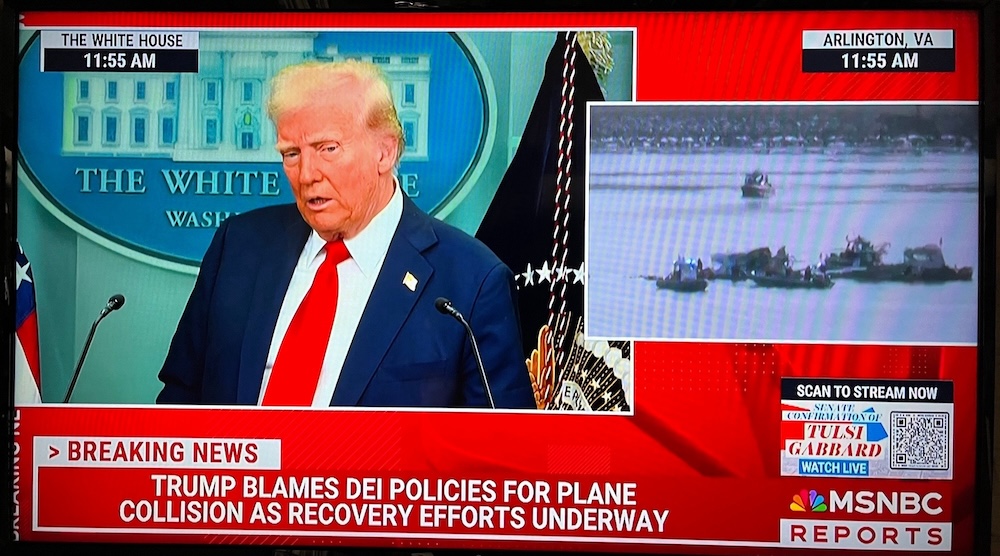
Well, Trump did win the election, and he quickly made government Diversity, Equity, and Inclusion (DEI) programs a target of his hate, laying evidence-less blame on DEI programs for just about everything, including tragic airplane crashes.

In a shameful display, many federal agencies and corporations were quick to obey, and quickly fell into goose-step behind the President’s hate. And against that background, those with the courage to resist are noteworthy. One such organization was the giant shopping club Costco, whose board of directors and shareholders overwhelmingly beat back any notion of undoing their DEI efforts.

It’s been awhile since we were Costco members. When we have a full house of kids and a chest freezer in the basement, family trips to Costco to buy bulk sized portions of family favorites was a no brainer. But those days are long passed, and as an empty nested household of two, we let our Costco membership lapse without much notice. But recently my wife had again become Costco-curious, mostly on the endorsement of friends and family who use their memberships well, and also the benefits of larger non-grocery offerings such as appliances or furniture.

My turn away from the Washington Post has started new habits in news gathering, turning to AP, Apple News, Google News, and other starting points. And it has also helped balance my desire to both stay informed, while also protecting my mental health by trying not to wallow too deeply in our current national nightmare.

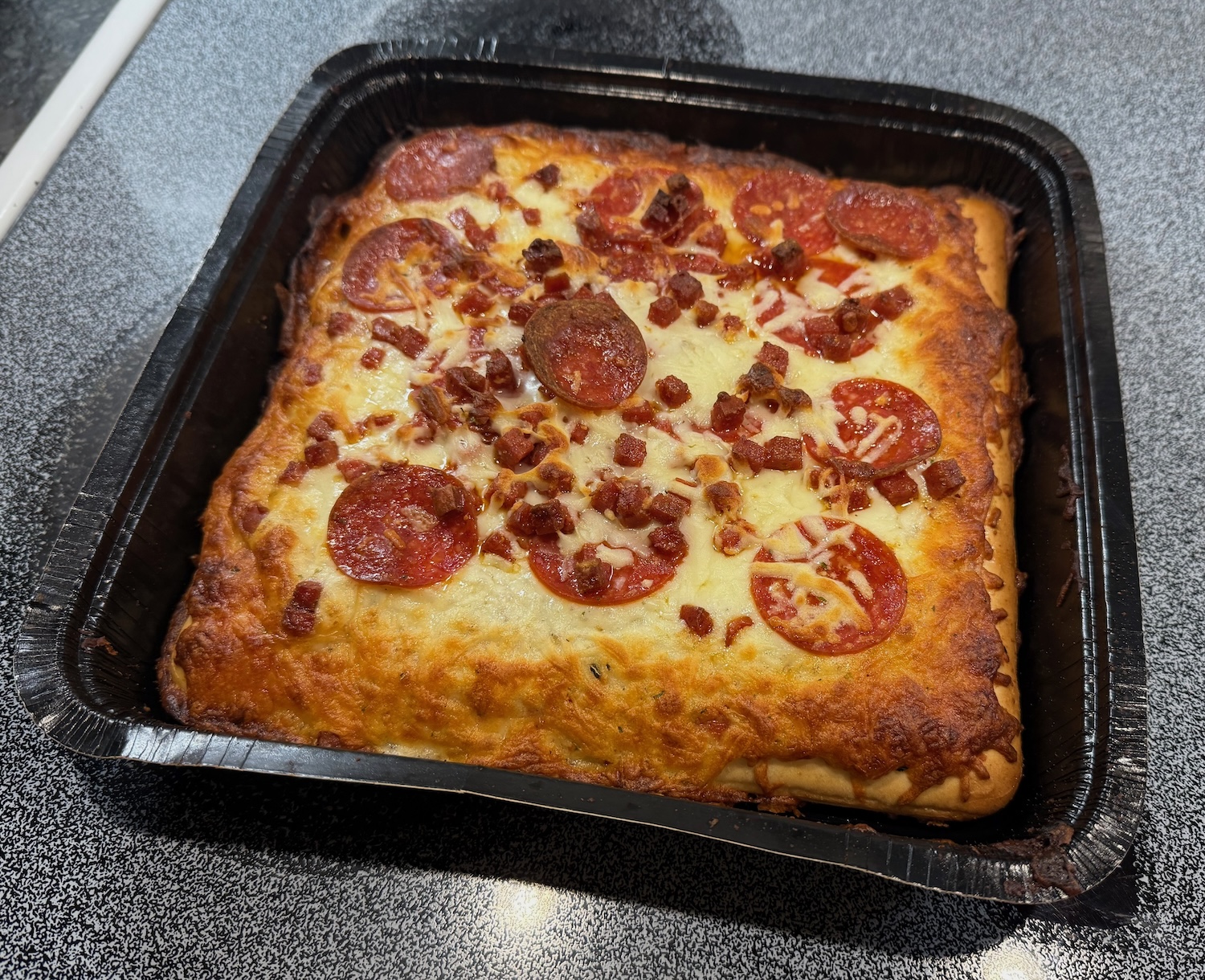
Days ago Apple News served me up an article that caused no stress about the fate of our nation, and caught my attention. From a publication called Chowhound, the article was about 15 Frozen Pepperoni Pizzas, Ranked Worst To Best. I read with mild interest. Pepperoni IS the best pizza. Why do you think the pizza emoji is a slice of pepperoni? Think about it! ?

Of the 15 rated pizzas, I was only familiar with three of them; #9 Screamin’ Sicilian, #8 Tombstone, and the #2 ranked frozen pizza DiGiorno. But the #1 ranked frozen pepperoni pizza was one I was not familiar with from Motor City Pizza Co. I had no notion at this point, that I’d be meeting this top ranked frozen pepperoni pizza sooner than I could have imagined. Because just two days after the pizza article was published, my wife and I returned to Costco and reupped our long dormant membership.

We didn’t go there for the pizza. We went there for some savings, and maybe there will be other sorts of purchases in our future, we’ll see. And we went there for the DEI, because businesses that do the right thing in the face of hate are too rare and deserve our support. But when I spotted a Motor City Pizza box in another shopper’s cart, the recently read article returned with a rush, and a clarity that told me that it had earned some serious praise. So we bought a two pack.

I made one that night, and guess what? It was LEGIT! ?


When I Met Jimmy

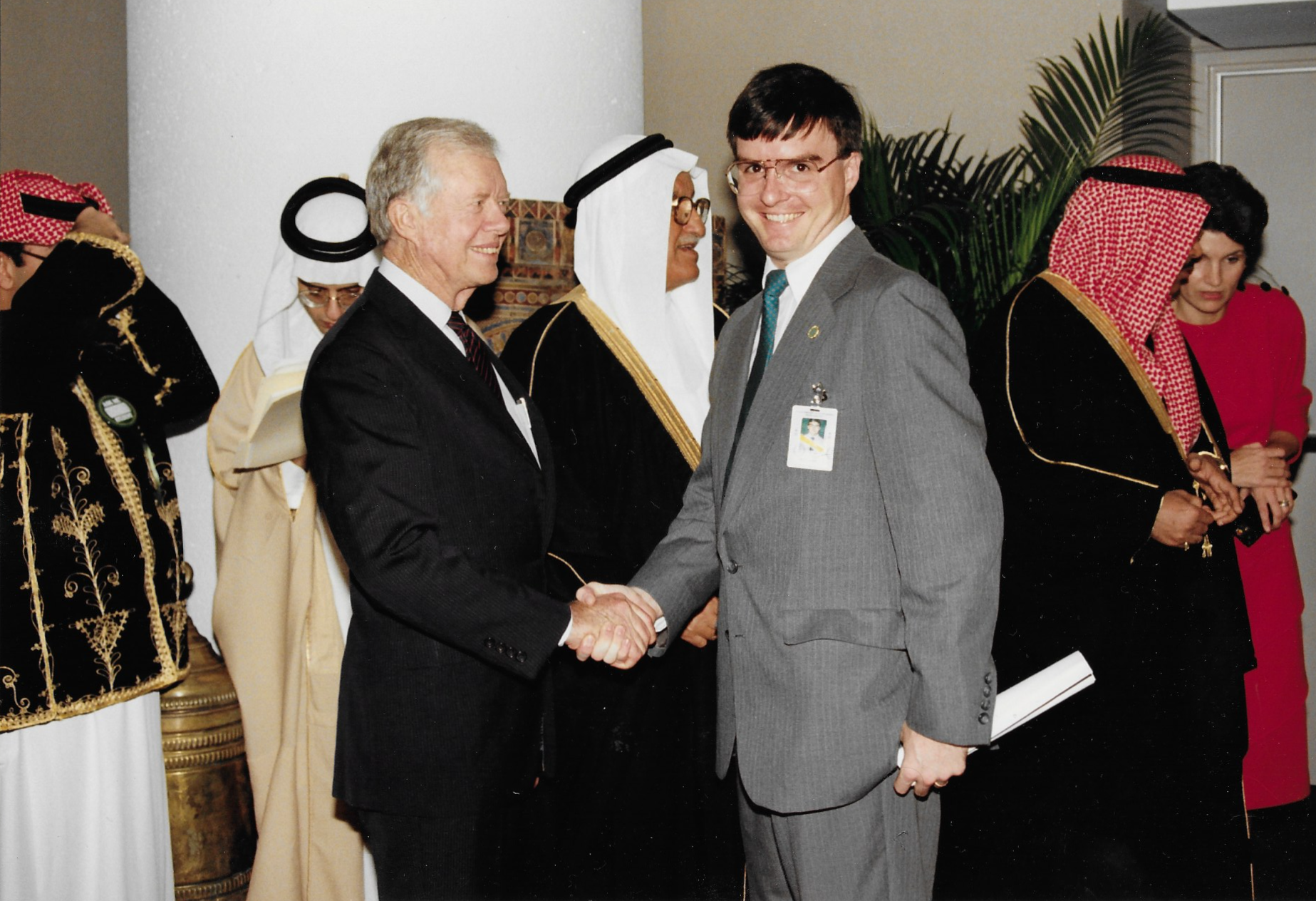
The title of this blog post that you’ve only just begun to read is very misleading. Because I didn’t really ‘meet’ President Jimmy Carter, like to have even a brief conversation with any level of meaningfulness. I stood in a receiving line to shake his hand, twice, and the resulting photo tells the story.

It was 1989, and I was an ‘Account Coordinator’ for the DC public affairs firm that represented the Kingdom of Saudi Arabia. And despite my low level status, I was even a ‘registered foreign agent’ in this role (which never really lived up to being as cool as it sounded). Anyway, the Saudis had a cultural exhibition traveling around the US, drumming up some positive vibes (which proved to be well timed given Iraq’s invasion of Kuwait the following year), and this exhibition visited Washington, DC, Atlanta, New York, Dallas, and Los Angeles. And despite being a junior nobody whose role was to find venues for the troupe of Saudi folkloric dancers to visit, it was my first real experience with business travel and related gala events.

When our tour reached its second stop, Atlanta, the gala opening demonstrated the Saudi’s ability to bring out political VIP’s, and so President Jimmy Carter was their trophy guest at opening night. I walked through the receiving line and shook his hand, and that was that.

Among our team was a former White House photographer, Karl, an amazing guy who had great stories, and he asked me, “Have you been through the receiving line? I’ll get your picture.” I let him know that I had already had my handshake, and so, photo op missed. And he said, “It’s not a long line, go again, and look at the camera!”.

So I got back in the line, just moments after already having been through it. And I shook President Carter’s hand, again. And I remembered to look at the camera. He didn’t. He looked at me like he was thinking, ‘weren’t YOU just here?’

I’m glad to have ‘met’ him, twice kinda. I learned that ‘grip and grins’ are better when you’re looking at the person whose hand you’re shaking. But from Jimmy, I have also learned from his example of the service he provided to America, and to the world, long after his presidency. Thank you President Carter, and may you rest in peace.

The Cross of Iron

One of the best finds so far in my parent’s library isn’t a rare or particularly valuable book (as far as I know). It’s a great find because of the inscription which reads

Bill –

Best wishes for happiness always –

As Ever –

Jeanne 10/9/56 (2yr.)

The book my future Mother was gifting to my future Father was a war novel called The Cross of Iron, written by Willi Heinrich, himself a veteran of the German army in WWII.

And I have MANY QUESTIONS! And only my ability to deduce and guess to answer them.

The first question is, what did the parenthetical ‘2yr.’ in her signing mean? My best guess is that it was an anniversary of them going steady? I originally assumed this gift was given while they were college students together at the University of Illinois. But math is magical, and calendars are steady… my father was 17 years, 8 months, and 19 days old when he received this gift. They were still students at Morton High School in Cicero, Illinois when Mom gave Dad this book. And they had been a couple for two years. Coincidentally, the first of their four children, a son named Sean, would be born exactly four years later on 10/9/1960.

My next question is, who gives a war novel about retreating Nazis as an anniversary gift? The book is a first edition, first published in english in the same year of 1956. My parents would have talked about books. So I have no doubt that Mom knew this was a book Dad was interested in, and that knowledge was what made it a suitable ‘anniversary’ gift for him.

My final questions are grammatical. I’ve long known that Mom had a phase when she spelled her own name with an extra ‘n’, turning Jean into Jeanne, because it was posh or something. I don’t know exactly when the extra ‘n’ appeared or when it went away. And what’s with all the hyphens Mom??

So I found the book, and now I’ve read the book. Holding in my hands, and turning the same pages that my 17 year old father turned. It was a good war novel. I dove deep into Wikipedia to learn more about the Caucus operations of the Soviet’s pushing German invaders back through Crimea in WWII. The current war in Ukraine adds some sad currency to the story.

As it turned out, 21 years later, the book was turned into a movie, starring James Coburn and directed by Sam Peckinpah. So naturally, when I finished reading the book, I called up the movie online and watched it, using some of today’s tech voodoo that those high school kids in 1956 could never have imagined.

I watched a lot of movies with my Dad. I’d say that enjoying a good flick together was among our favorite pastimes. Once, when he and my Mom were visiting my family in Virginia, and enjoying their too few opportunities to grandparent, Dad and I pulled an all-nighter watching all of the Rambo movies. But, I have no memory of ever watching or discussing Cross of Iron with him.

Hollywood did what Hollywood does, and took many liberties with the source material. But the basic story remains intact. And James Coburn leads an impressive cast in an explosive overloaded war flick.

Anyway, I loved finding this book that Mom gifted to Dad. It was a wonderful reminder of the amazing value of adding an inscription to gift books. As I turned every page, I knew my younger Dad had done the same. Thanks Mom, for gifting a book your future son would read 68 years after you gave it to my Dad.

1 2 3 65