
New Scrutiny for Online Campaigning?
So far, the Internet has largely received a free pass in terms of federal regulations of online campaign activities. The 2002 Campaign Finance Law’s ‘Electioneering Communications’ provision did not apply to the Internet. Online communications in any form; banner ads, web sites, online commercials, email… all were exempt from regulation. But a Federal judge overturned that exemption and will require the FEC to reconsider its previous hands-off approach to the Internet.
What could that mean? It could mean that forwarding a campaign email to your personal email list, or speaking positively about a campaign in your blog, or linking your web site to a campaign web site could be considered campaign contributions. It could mean a ridiculous attempt to regulate political communications on the Internet.
The success of online campaigning in the 2004 cycle has demonstrated the Internet’s increasingly important role in our elections. The success of online organizing and fundraising, the small but real growth in online political advertising, and the growing impact of bloggers (in some instances, paid by campaigns) are all evidence of this growing impact. As online campaigning continues to mature an it will certainly be subject to greater scrutiny. But an understanding of the unique nature of the Net must be taken into account when trying to regulate it. Old rules just won’t apply. Otherwise, it could be like trying to make airplanes stop at railroad crossings, just because the busses do. It won’t work, and could be disastrous if attempted.
The Coming Crackdown on Blogging
CNET News.com, 3/3/05
Thanks to BOP for the heads up on the CNET article


 Since 1964, a
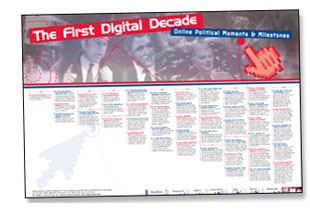 Where does the time go? Ten years ago, thanks to some dumb luck, good help, and fortuitous timing, I helped to make Sen. Edward Kennedy the first member of Congress with a web site. The office had taken its first steps online more than a year previously, first on dial-up bulletin board systems, then an ftp directory, some usenet newsgroups, and eventually onto the Senate’s new gopher server. But 1994 was the year of the web. The letters WWW took on a whole new meaning, and thanks to the efforts of