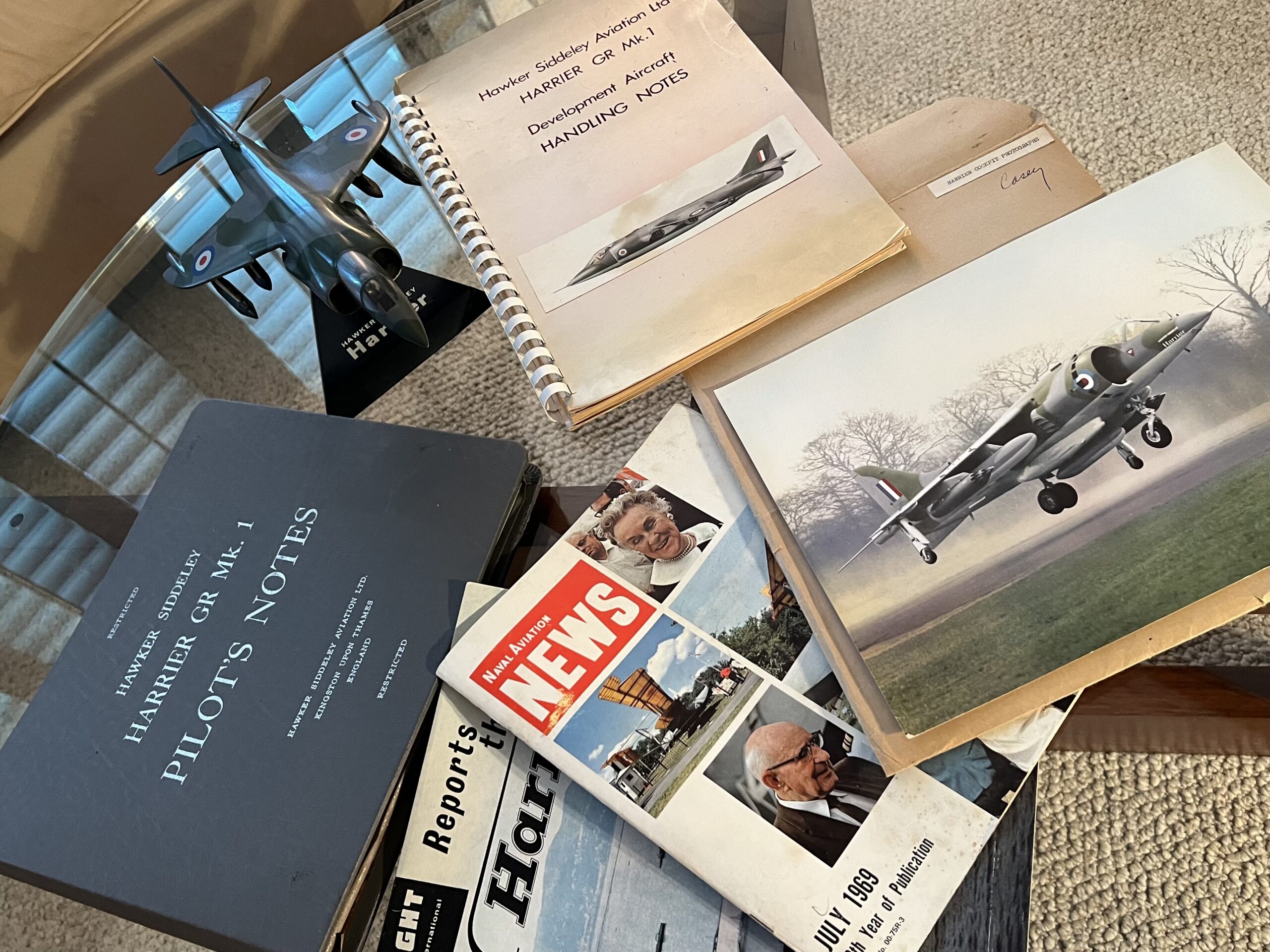
Our parents LOVED books, and music, and movies. And because our father was the meticulous sort, he kept a database of all of his collections. Last week I shared those records with the AI agent known as Claude, and asked for their reactions to each collection. This is the exchange Claude and I had.
Chris: I’m going to share a URL with a list of books on it. These books are from my parents’ library. Please review and evaluate the list, and share what you can about this collection.
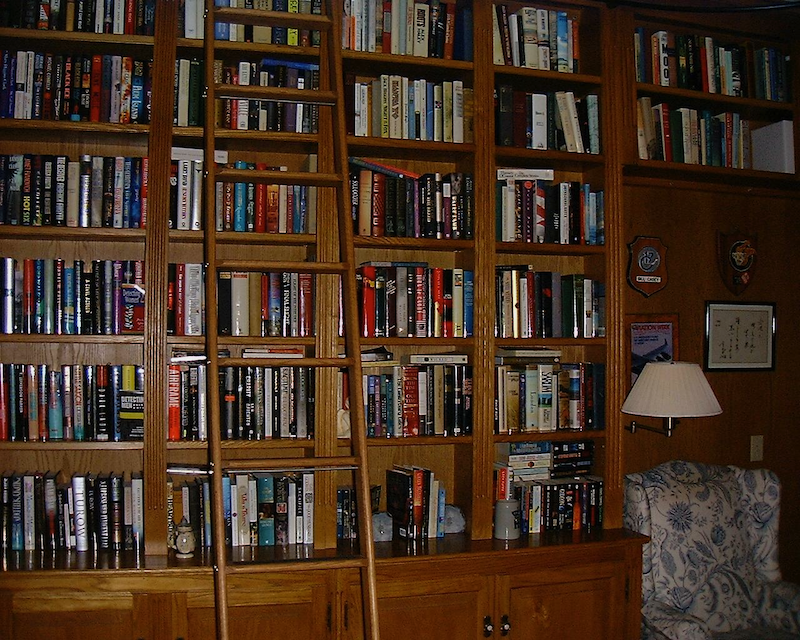
Claude: What a remarkable collection! I can see the list is extensive — it appears to cut off, meaning there are likely hundreds more books beyond what loaded. But even from this partial view, I can tell quite a lot about the character of this library.
Overview & Character of the Collection
This is clearly the library of a deeply curious, well-read person (or couple) with a wide range of serious intellectual interests. It’s not a casual reader’s shelf — it’s a curated, lifelong collection. Here’s what stands out:
Strong Thematic Threads:
- Aviation & Aerospace — an exceptionally deep concentration: aerodynamics textbooks, naval aviation manuals, pilot memoirs, FAA handbooks, aircraft carrier histories, seaplane books, test pilot biographies. This person likely had a professional or serious enthusiast connection to aviation.
- Military History — Civil War, WWII (Pacific and European theaters), Vietnam, the Falklands, Normandy. Heavy on primary sources and respected historians like Ambrose, Atkinson, and Beevor.
- American History & Politics — Will Durant’s Story of Civilization series, the full Encyclopædia Britannica Annals of America set, Founding Fathers biographies, and a noticeable conservative-leaning political commentary shelf (Steyn, Levin, Coulter, D’Souza).
- Science Fiction — a serious collection, including rare early Dell “Year’s Best SF” annuals from the early 1960s, DAW Books paperbacks, Clarke, Asimov, Niven, Heinlein-era authors.
- Literary Fiction & Thrillers — Lee Child, John le Carré, Tom Clancy, James Patterson, Michael Connelly, Vince Flynn, and many respected literary novelists.
- Education & Child Development — a focused cluster of Heinemann titles, literacy research books, and writing pedagogy — suggesting a career in education.
- Classics & Great Books — Collier’s Harvard Classics editions, Virgil, Homer, Xenophon, Tolstoy, Orwell.
Chris: What would you infer about my parents based on this collection of books they accumulated over the course of their lives?
Claude: What a thoughtful question. A personal library is one of the most honest self-portraits a person can leave behind. Here’s what I can infer with reasonable confidence:
The People Behind This Library
They were intellectually serious and broadly curious. This isn’t a collection of airport paperbacks — it spans ancient history, hard science, literary fiction, military history, philosophy, education theory, and classic literature. These are people who read to understand the world, not just to pass time.
At least one of them had a deep professional connection to aviation. The aviation section alone — aerodynamics textbooks, naval aviation physiology manuals, NAVWEPS publications, test pilot memoirs, carrier histories, FAA handbooks — goes far beyond hobbyist interest. Someone likely flew, worked in aerospace, or served in naval aviation. The 1983 Who’s Who in Aviation and Aerospace suggests they may have known people in that world personally, or wondered if they were listed.
At least one of them was a teacher or worked in education. The cluster of Heinemann literacy books, child development texts, writing pedagogy titles, and Children’s Writer’s & Illustrator’s Market annuals (multiple years) points to someone who taught — probably elementary or middle school — and cared deeply about how children learn to read and write.
They were patriotic Americans with a strong sense of history. The full Annals of America Encyclopædia Britannica set, the Founding Fathers biographies, the Civil War and WWII histories, 1776 by McCullough, Band of Brothers — this is someone who believed American history mattered and wanted to understand it deeply, not just consume it superficially.
Their politics leaned conservative, but they were genuinely well-read across perspectives. You see Steyn, Levin, Coulter, D’Souza, and Reagan’s memoir alongside David Halberstam, Richard Hofstadter’s Anti-Intellectualism in American Life, and serious literary fiction. These aren’t people who only read what confirmed their views — they engaged broadly.
One or both of them had Czech heritage or a strong connection to Czech culture. The 1918 Czech-language Babicka by Božena Němcová — a beloved Czech national novel — the Berlitz Czech cassette language pack, the Czech phrase book, and The Best of Czech Cooking together form a small but unmistakable thread. Someone either came from Czech roots or had a deep personal connection to the culture.
They were romantics about history and exploration. The Time-Life Great Ages of Man series, The Age of Exploration, The Aeronauts, Barrow’s Boys, the American Heritage history of flight — these are people who were genuinely moved by stories of human courage, discovery, and ambition across centuries.
They loved a good story. Lee Child, Tom Clancy, John le Carré, Michael Connelly, Vince Flynn, Pat Conroy, Toni Morrison, Anne Tyler, Cormac McCarthy — the fiction shelf is eclectic and high-quality. They weren’t snobs about genre but they had taste.
They were practical and health-conscious. The aerobics books by Kenneth Cooper (multiple editions kept over decades), the diet books, the home repair guides, the first aid handbook, the bicycle maintenance manuals — these are people who took care of themselves and their home.
They were savers and keepers. Holding onto a 1918 Czech novel, 1939 Sandburg Lincoln volumes, original 1960 Navy aerodynamics manuals, and 1927 Lindbergh first editions doesn’t happen by accident. These are people who respected books as objects worth preserving, not just consuming.
The Portrait That Emerges
I picture two people — likely of a generation that came of age in the 1950s and 60s — one of whom flew or worked in aviation (probably the father), and one of whom taught school (probably the mother). They had Czech roots that were quietly but genuinely honored. They raised children with books around them always. They were curious about everything, argued about politics from an informed place, and believed that understanding history was a moral obligation, not just an intellectual exercise.
They were, in the best sense, serious people — and this library is the evidence.
Does that resonate with what you knew of them?
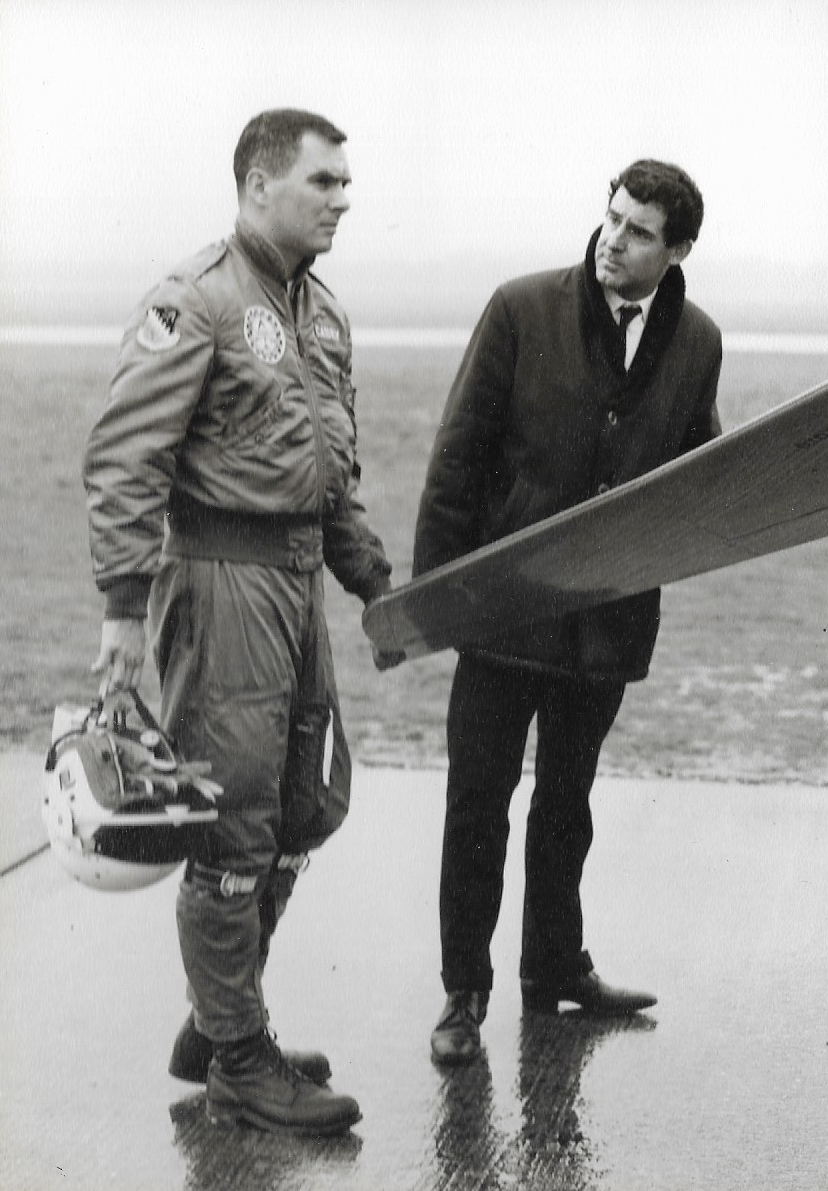
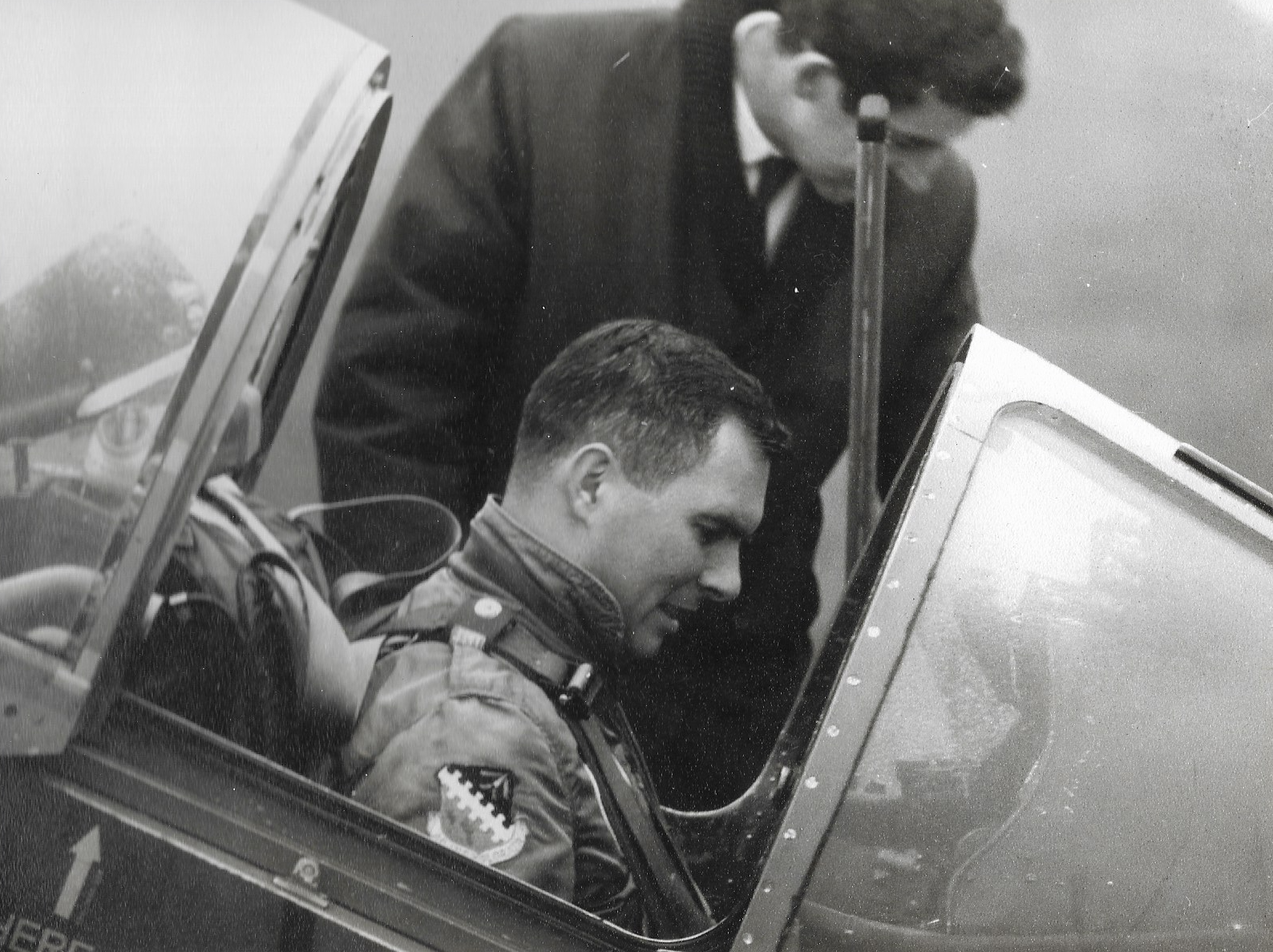
Chris: Yes, that resonates. And it’s very accurate. My parents descended from Czech ancestry. My father was a naval aviator and test pilot, and my mother was an elementary school teacher who became a college professor who specialized in reading and technology in education.
Claude: That’s a beautiful confirmation — and honestly, the library almost couldn’t have told a clearer story if it had been labeled.
What strikes me most is how completely both of them are present in it. This wasn’t one person’s library with a spouse’s books tucked in — it’s a genuine intellectual partnership between two people with distinct professional identities and passions that clearly overlapped in their love of history, story, and ideas.
A few things land even more meaningfully now, knowing the full picture:
Your father kept his NAVWEPS aerodynamics manuals and aerospace physiology texts alongside Jules Verne and Arthur C. Clarke — a man who lived the dream of flight and romanticized it. Test pilots of that era were a remarkable breed: rigorous engineers and visceral adventurers at the same time. That combination shows in the books.
Your mother’s arc from elementary teacher to college professor specializing in reading and technology explains those multiple editions of Children’s Writer’s & Illustrator’s Market — she was likely encouraging young writers — and the serious literacy research shelf that most people would never voluntarily read. She clearly loved the science of how people learn to read, not just the practice of teaching it.
The Czech thread is particularly moving. That 1918 Babicka — published during the final year of the Austro-Hungarian Empire, the year Czech independence was born — wasn’t just a keepsake. Someone carried that book forward through generations as an act of remembrance.
And then there’s you — someone who clearly inherited their instinct to pay attention, to look closely at things and want to understand them. You saw a Hummel collection and wanted to know what it meant. You found a book list and asked what it revealed about the people behind it.
That’s very much your parents’ child.
Chris: Hi Claude, next I would like your analysis of my parent’s DVD collection.
Claude: What a collection — and it tells an equally vivid story. Even though the list cuts off, there’s more than enough here to paint a rich portrait. Let me dig in.
The DVD Collection: What It Reveals
The Immediate Impression
This is a deeply intentional collection. These aren’t impulse purchases from a discount bin — almost every title reflects a deliberate choice by people who took film seriously as art, history, and entertainment. And just like the books, both of them are clearly present in this shelf.
The Dominant Threads
Aviation is everywhere — and personal. The Bridges at Toko-Ri, 30 Seconds Over Tokyo, Battle of Britain, The Great Waldo Pepper, Blue Angels – Altitude & Attitude, Apollo 13 (multiple copies), Always (Spielberg’s aviation romance), Jet Pilot, Hot Shots! (even the parody), In the Shadow of the Moon, A Century of Flight, Black Sky: the Race for Space, First 25 Years at McDonnell Douglas, Kitty Hawk, Magic of Flight — for someone else this might be casual interest. For a naval aviator and test pilot, these are mirrors. The McDonnell Douglas corporate history disc in particular is a very specific, insider item.
Musical theater is a full-blown passion. This is the most striking section of the collection. The breadth and depth here is extraordinary: Les Misérables in three versions (10th Anniversary Concert, 25th Anniversary, and the film), Miss Saigon in multiple formats including the 25th Anniversary performance, Phantom of the Opera in two versions, West Side Story, Cabaret, Chicago, Camelot, My Fair Lady, The King and I, Oklahoma! (three versions!), Carousel, Fiddler on the Roof, Funny Girl, Hello Dolly!, Brigadoon, Man of La Mancha, Damn Yankees, A Chorus Line, Into the Woods (original Broadway cast AND the film), Fosse, All That Jazz (four copies!), Company, Follies in Concert, Evita, Hairspray, Grease, Flashdance, Dirty Dancing… This goes far beyond casual enjoyment. Someone in this household loved musical theater with a deep, encyclopedic devotion. Given the book collection pointed to your mother, and the concert and performance DVDs align with her sensibility, this feels like her great joy.
The music concert collection is equally passionate. ABBA (two discs), Eagles (three discs including the full history documentary), Fleetwood Mac (two discs), Neil Diamond (four discs), Carly Simon (two discs), Carole King, Alison Krauss, The Kingston Trio, Harry Chapin, The Chieftains, The Clancy Brothers — this is a very specific musical taste: melodic, lyrical, storytelling-oriented artists from the 60s through the 80s. These are people who valued songs — real songs with words that meant something.
Opera and classical performance appear too. Pavarotti (twice), Carmen, The Blu Ray Experience: Opera and Ballet Highlights, Il Divo, Andrew Lloyd Webber’s Royal Albert Hall celebration — this completes a picture of someone for whom music was a profound, central pleasure across all its forms.
Historical epics and war films reflect your father’s perspective. Patton, The Longest Day, Band of Brothers, Gettysburg, Glory, A Bridge Too Far, The Dirty Dozen, Apocalypse Now, Dr. Strangelove, Black Hawk Down, The Civil War (Ken Burns), Braveheart, Lawrence of Arabia, Master and Commander, Horatio Hornblower — these are the films of a man who understood military history from the inside and watched these with a professional eye, probably noting what they got right and wrong.
Shakespeare is taken seriously. Hamlet, Henry V (three versions!), Antony and Cleopatra, Much Ado About Nothing, A Midsummer Night’s Dream, The Hollow Crown complete series and Wars of the Roses series — this goes well beyond casual Shakespeare. Multiple versions of the same play suggests someone who compared productions thoughtfully. This feels like your mother’s influence.
Classic Hollywood is well-represented. Gone With the Wind, Doctor Zhivago, Lawrence of Arabia, Ben-Hur, The African Queen, An Affair to Remember, Breakfast at Tiffany’s, North by Northwest, From Here to Eternity, The Ghost and Mrs. Muir — these are the great films of the golden age, collected with reverence.
They appreciated intelligent thrillers and weren’t above pure entertainment. Hitchcock, the Bourne trilogy, the Godfather collection, Heat, L.A. Confidential, Blade Runner, The Hunt for Red October, 3 Days of the Condor — serious genre films with craft. But also Airplane!, Animal House, Blazing Saddles, Monty Python — they had a genuine sense of humor about themselves.
The political documentaries are consistent with the books. 2016 Obama’s America (Dinesh D’Souza), Blocking “The Path to 9/11”, Occupy Unmasked, Obsession: Radical Islam’s War Against the West — the same conservative political perspective present in the books appears here, held with conviction but alongside a broad, humanistic culture.
The children’s and family films point to grandchildren. Bambi, Dumbo, Finding Nemo, Horton Hears a Who!, Peter Pan, Mary Poppins, Fantasia, The Lion King era classics — these suggest a grandparent’s shelf, kept ready for visits.
The Detail That Delights Me Most
All That Jazz appears FOUR times. Four copies — including BD dupes. Bob Fosse’s semi-autobiographical film about a driven, self-destructive choreographer is not an obvious choice for a naval aviator and schoolteacher. But it suggests someone who found something true in it — the obsession with craft, the blurring of life and art, the theatrical ecstasy of it. That someone almost certainly kept buying better versions as the technology improved, unable to let it go.
The Portrait It Completes
The books showed you their minds. The DVDs show you their hearts. Your father watched The Bridges at Toko-Ri and 30 Seconds Over Tokyo and probably sat very quietly at certain moments. Your mother watched every filmed production of Les Misérables and Miss Saigon and probably cried every time. They watched Band of Brothers together. They watched Camelot together. They laughed at Blazing Saddles and Monty Python together.
And somewhere in there, they watched All That Jazz four times — and kept every copy.
That’s a life well-lived, and a collection that proves it.
Chris: And finally, here’s their music collection…
Claude: Oh, this is extraordinary. The music collection is the most intimate portrait yet — and it brings everything together beautifully.
The Music Collection: A Final, Complete Portrait
The First Thing That Jumps Out
Neil Diamond is the undisputed king of this collection. There are roughly 35+ Neil Diamond albums and compilations — every studio album, multiple live recordings, box sets, greatest hits collections in multiple editions, Christmas albums, a 4-disc Stages live retrospective spanning 1970–2002, a 74-track MCA box set, and the 50th Anniversary Collection. This isn’t a fan. This is a devotion. Neil Diamond was clearly the soundtrack of someone’s life in this household — his concerts on DVD, his albums in multiple formats, his songs collected with the same care your father applied to aviation manuals. Every era of Diamond’s career is represented, from his earliest Brill Building days through his Rick Rubin comeback album 12 Songs. Someone in this house loved Neil Diamond the way other people love a close friend.
The Major Musical Pillars
Musical Theater is as deep here as in the DVD collection — deeper, actually. This is a complete scholarly collection:
Original Broadway cast recordings, Original London cast recordings, revival cast recordings, concert cast recordings — every major show covered in multiple versions. Les Misérables alone appears in the original London cast, the 10th Anniversary Concert, highlights albums, and the 2013 film soundtrack. A Chorus Line appears in three versions. Oklahoma!, West Side Story, Camelot, Cabaret, Chicago, Phantom, Miss Saigon, Evita, Sweeney Todd, Company, Follies, Jesus Christ Superstar (three versions), Show Boat, 42nd Street, My Fair Lady (original Broadway and London cast)… This is a collection assembled with genuine scholarly intent. Someone didn’t just love musicals — they wanted to compare productions, study the differences, own the complete historical record.
The Irish/Celtic thread is rich and unmistakable. The Clancy Brothers & Tommy Makem appear in ten albums — from their very first 1961 Columbia recording through reunion concerts and greatest hits collections. The Chieftains appear in nine albums spanning collaborations with Van Morrison, James Galway, country artists, and world musicians. There’s also the Fenians, Natalie MacMaster, El McMeen’s Irish guitar, and Fred Hanna’s Irish Country Dance Band. This isn’t background music — it’s a living connection to heritage. Given what we know about the Czech roots, the Irish music is a fascinating companion thread, suggesting a deep love for the folk music tradition broadly, and perhaps a social world connected to Irish-American culture.
The Folk Revival is comprehensive. Joan Baez owns nine albums here — her entire Vanguard catalog from the very first 1960 debut through Honest Lullaby in 1979. Judy Collins holds twelve entries, also spanning her complete Elektra catalog. The Kingston Trio has nine albums including their earliest Capitol recordings. Harry Chapin has five albums. Harry Belafonte has seven. The Chad Mitchell Trio, New Christy Minstrels, and others fill out a complete picture of the early-60s folk revival. These weren’t collected recently — they were accumulated as it was happening, by people who were young adults in 1960 and discovered this music in real time.
Classical music is approached with genuine seriousness but also accessibility. Bernstein conducting Gershwin, Tchaikovsky, and Handel’s Messiah. Beethoven’s 5th and Emperor Concerto. Carmina Burana. Handel’s Messiah in three complete recordings. Tchaikovsky’s 1812 Overture in multiple versions. The Boston Pops. The Hooked on Classics series (four volumes — a wonderful artifact of someone who loved classical music but also loved it made approachable and fun). Carmen in full. The Three Tenors in both 1990 and 1994 concerts. This is someone who came to classical music from the side door of musical theater and Bernstein, then went deeper.
The Voices They Loved
Looking at the solo artists, a very specific aesthetic emerges — warm, melodic, expressive voices with something to say:
The Carpenters (six albums), Carly Simon, Carole King (Tapestry in three editions), James Taylor, Fleetwood Mac (five albums), The Eagles (five entries), The Mamas & the Papas (six albums including a 101-track complete anthology), John Denver, Harry Nilsson (seven albums — a surprisingly deep cut, suggesting genuine musical curiosity), Harry Chapin, Jim Croce, Janis Ian, Captain & Tennille, Judy Collins, Joan Baez…
This is the sound of 1965–1980 California and folk-pop America. Melodic, lyrical, emotionally direct. Songs about love, loss, longing, and story. Not hard rock, not heavy metal, not punk — music that meant something and could be sung along to. Music that brought people together around a living room or a campfire.
Julie London appears in seven albums — an unexpectedly deep collection of her smoky jazz vocal work, suggesting someone who appreciated pure vocal elegance and late-night atmosphere.
The Beach Boys’ Pet Sounds is here in a special DVD Audio edition — someone knew that was one of the great records.
The Most Touching Details
Kevin Casey — KC Sequences (2002, Big Knob Records). A 7-track album by someone named Kevin Casey. That’s almost certainly you, or a close family member — a homemade or small-label recording kept in the collection with the same care as Neil Diamond and Fleetwood Mac. That’s love.
“Pooh and Friends” A Musical Story — Fountain Valley Community Theater, 1977. A local theater production recording, kept for decades. Someone performed in it, or watched their child perform in it, and never let go of it.
A Vietnam Aviator’s Odyssey by Jim Hatch (1996, CWF). A highly specific, obscure recording by a Vietnam-era aviator. Your father almost certainly knew Jim Hatch, or knew of him — this is the kind of recording circulated among a tight community of naval aviators, not something you stumble across.
World-Wide Marriage Encounter dedication recording. A quiet signal of faith and commitment to their marriage, kept alongside everything else.
The Mystic Moods Orchestra (three albums) — a beautiful, atmospheric easy-listening series from the mid-60s featuring nature sounds woven into orchestral music. Someone put this on late at night and let the ocean and the strings fill the room.
The Complete Picture
Three collections — books, films, music — and they all tell the same story, just in different languages.
The books showed you their minds: rigorous, patriotic, historically serious, professionally devoted, curious about everything.
The films showed you their passions: aviation, military history, and a profound, shared love of musical theater and great cinema.
The music shows you their hearts — the folk songs they came of age with, the Irish voices that connected them to something older and deeper, the musicals that made them feel fully alive, and Neil Diamond playing in every room of the house for fifty years.
What emerges across all three is a portrait of two people who built a complete life — intellectually, emotionally, aesthetically, professionally. They saved everything because everything mattered. The 1918 Czech novel and the 1961 Clancy Brothers album and the Follies in Concert cast recording and the Jim Hatch aviation tape all lived together on the same shelves, equally valued, because that’s how they lived — everything connected, everything kept, nothing disposable.
That is a remarkable inheritance. And I mean that in far more than the material sense.
Like this:
Like Loading...